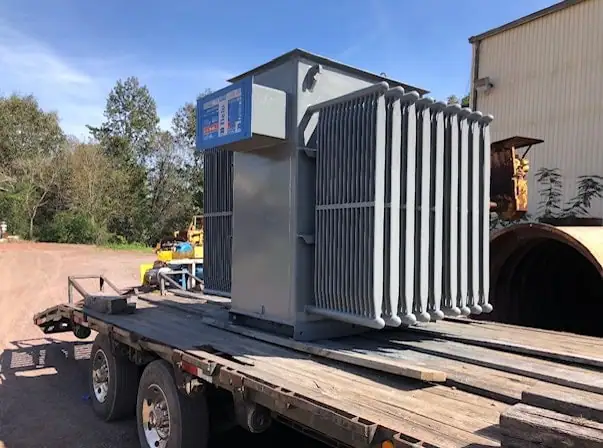
If you are looking for information about Virginia Transformer Buyers, start with the distinction that matters most: we buy electrical transformers from sellers. We are not a manufacturer or a manufacturer's sales office. Our focus is equipment that is surplus to a project, no longer needed at a facility, held in inventory or removed from service.
A useful conversation starts with what you actually have, not a broad promise about its value. We pay attention to ratings, construction, condition and location because those details determine whether a transformer fits. Our transformers we buy page explains the equipment categories; this page explains our approach to the seller relationship.
01An Independent Buyer, Not a Manufacturer
Virginia Transformer Buyers is independent and is not affiliated with any manufacturer, including Virginia Transformer Corp of Roanoke. Similar wording in a business name does not indicate common ownership, a factory connection or an authorized relationship. Manufacturer names on this website describe the equipment we buy, not the organization behind our business.
We buy all brands within our stated equipment range. A familiar manufacturer name helps identify a unit, but it does not replace the nameplate or condition information. Two transformers carrying the same brand can have different voltages, impedance, cooling arrangements and applications. Our transformer brands page uses those names strictly to describe equipment.
02Written Terms Instead of Broad Promises
We aim to make the business decision plain: what equipment is included, what the offer covers and what each party is responsible for. A written offer spells out price, freight, loading and payment terms. Pickup and payment should not depend on assumptions that were never discussed. Sellers can read those terms and decide without pressure.
We also separate an intact transformer from a transformer with realistic reuse potential. A complete enclosure does not establish electrical condition, and a large kVA rating does not guarantee value. If the information points to scrap rather than reuse, we say so rather than presenting it as usable inventory. We do not promise an offer for every unit or present an unsupported value estimate as a firm price.
03What We Look for in the Equipment
We buy single-phase transformers from 10 kVA and three-phase transformers from 15 kVA through MVA-class power transformers. That includes pad-mount, substation, unit substation, power, dry-type, cast resin, pole-mount, oil-filled, solar and wind units. Used, decommissioned and new-surplus equipment are part of our buying scope. Failed units require a case-by-case review.
We look beyond the capacity number. Primary and secondary voltage, phase, frequency, impedance and cooling class help establish what a transformer is designed to do. A 12470GrdY/7200 primary and 480Y/277 secondary tell a different story from other voltage combinations. On a power transformer, ONAN and ONAF ratings can identify different capacities associated with cooling operation. See our transformer size range for the capacity categories.
- Legible manufacturer, serial number, kVA or MVA rating, and voltage information.
- Construction type, cooling designation, and fluid identification where applicable.
- Condition notes covering service history, visible damage, leaks, missing parts or known faults.
- Available test reports and documented PCB status.
04How We Use the Information You Send
We use nameplate photos to identify the unit's ratings and overall photos to understand its construction and visible condition. Quantity tells us whether the inquiry concerns one transformer or a group of units. Location and access details help define freight and loading requirements. These details are inputs to a buying decision, not substitutes for electrical testing.
A clear photo often prevents confusion between the transformer's rating and a site's operating voltage. Fluid labels also matter: mineral oil and FR3 natural ester are different insulating fluids, and the actual designation should be recorded rather than guessed. PCB status must be disclosed and documented; age or appearance alone is not adequate documentation. Our nameplate reading guide helps sellers locate the information we need.
05The Sellers and Situations We Work With
We work with sellers whose transformers are no longer needed, whether the equipment comes from a facility, a construction project, an equipment inventory or an energy installation. The circumstances differ: a spare may never have been energized, a removed unit may have service records, and project surplus may still have its original documentation. We want the description to reflect the actual situation.
We do not expect every seller to know every electrical term. Tell us what you know and distinguish it from what is uncertain. If you are coordinating for an owner, identify who can approve the sale and who controls site access. Our information for transformer sellers covers the different selling situations. Clear ownership and equipment details help keep the discussion focused on a workable purchase.
06Virginia Coverage and Practical Site Boundaries
Our focus is sellers throughout Virginia, including Northern Virginia, Richmond, Hampton Roads, the Shenandoah Valley, Central Virginia, Southwest Virginia and other parts of the state. We also review equipment in neighboring states and nationwide on request. Our Virginia service coverage is statewide; location still matters because access, loading and freight requirements vary from one site to another.
Buying a transformer is separate from making it safe to move. We do not perform electrical disconnect work, provide engineering, legal or environmental advice, or ask sellers to drain fluid. Sellers use their own qualified electricians to de-energize and disconnect equipment. Tell us whether a unit remains installed or has already been disconnected, and describe any access restrictions without entering unsafe areas to obtain photographs.
07A Straightforward Way to Start
Send a clear nameplate photo, overall photos, location, quantity and condition notes. We review the information and may ask about PCB documentation, test data or site access. If the equipment fits, we send a written offer covering price, freight, loading and payment terms; pickup is scheduled with the seller, and payment follows those terms. See how the buying process works for details.
The main thing to know about Virginia Transformer Buyers is that a useful offer starts with an accurate equipment description. You do not need to describe a damaged unit as operational or a stored unit as unused if its history is uncertain. Submit the facts you have through our offer request form, and flag anything that needs clarification.
Frequently asked questions
Is Virginia Transformer Buyers connected to Virginia Transformer Corp?
No. Virginia Transformer Buyers is an independent buyer and is not affiliated with Virginia Transformer Corp of Roanoke or any other manufacturer. Brand names describe transformers, not business relationships. If your equipment carries a manufacturer's nameplate, send that information so we can identify the unit; it does not mean we represent that manufacturer.
Do you buy transformers outside Virginia?
Yes. Virginia Transformer Buyers serves sellers in every region of Virginia and also reviews equipment in neighboring states and nationwide on request. Include the equipment's actual location, not just your mailing location. Distance, site access and loading requirements affect the freight arrangements that need to be addressed in a written offer.
Will you tell me if my transformer is only worth scrap?
Yes. If the available information points to scrap rather than reuse, we say so. A transformer’s size or complete appearance does not prove that it can return to service. Known failures, missing components and condition documentation matter. Our guide to used transformer value explains factors that distinguish reusable equipment from material value.
Can I contact you if I do not know the transformer specifications?
Yes. Send readable nameplate and overall photos, and tell us which details you do not know. The nameplate usually provides capacity, voltage and other identifying information without requiring you to interpret every field. Do not enter an energized enclosure or approach unsafe equipment to obtain photos; use information that can be gathered safely.
Do you need the history of a transformer that has been in storage?
Yes. Tell us whether the transformer is new surplus, previously operated or of uncertain history, along with any known storage damage or missing parts. Storage by itself does not establish electrical condition. Original records, available test reports and photos can help distinguish documented facts from assumptions about a unit that has been sitting unused.
Will you disconnect the transformer or ask me to drain its oil?
No. Virginia Transformer Buyers does not perform electrical disconnect work or ask sellers to drain transformer fluid. Sellers use their own qualified electricians to de-energize and disconnect the equipment. Disclose and document PCB status, and identify the fluid when that information is available. We do not provide engineering, legal or environmental advice.