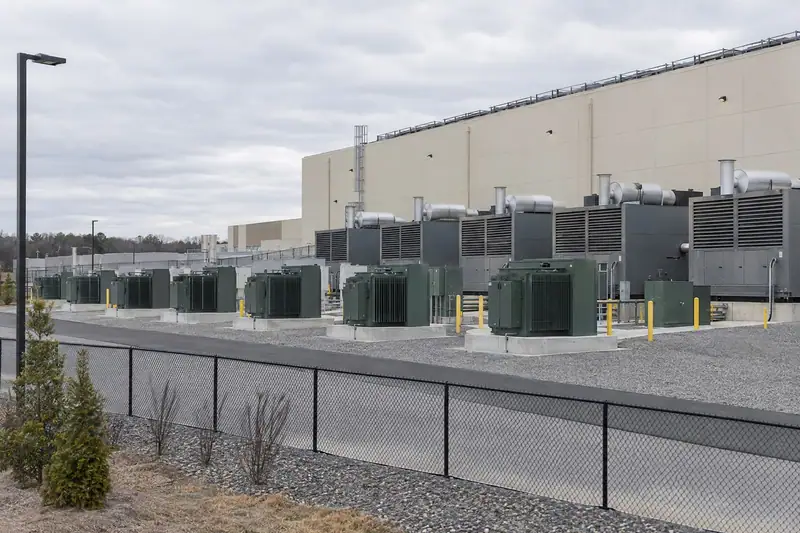
A 2,500 kVA transformer sits at a useful scale for substantial facility loads and renewable generation connections. We buy new-surplus, used and decommissioned units in this size, including oil-filled, dry-type and cast resin equipment. Three-phase pad-mount, unit substation and substation configurations are common, but their connection arrangements and handling requirements differ.
If you want to sell 2,500 kVA transformer equipment, start with the complete nameplate rather than an estimated building load or breaker rating. We pay attention to both electrical fit and the equipment’s physical configuration. For enclosed outdoor units, our pad-mount transformer buying page explains the details specific to that construction.
01What a 2,500 kVA rating actually means
A 2,500 kVA rating is 2.5 MVA of apparent power for the complete three-phase transformer, not 2,500 kVA per phase. It describes rated capacity under the nameplate’s stated operating and cooling conditions. It does not mean the transformer always supplies 2,500 kW; real power depends on load power factor.
Cooling ratings matter when identifying the size. An oil-filled substation transformer may list an ONAN rating for natural oil and air cooling and a higher ONAF rating with fans operating. If the plate shows multiple capacities, send all of them. A fan-assisted 2,500 kVA rating is not the same configuration as a 2,500 kVA base rating.
Read the amp table on this page using the voltage of the winding you are checking. For one example, three-phase full-load current at 480 volts is I = kVA × 1,000 ÷ (√3 × line-to-line volts), so 2,500 × 1,000 ÷ (1.732 × 480) is approximately 3,007 amps. Our kVA and full-load amps guide provides additional context.
02Voltage combinations that shape the next application
Voltage is a major part of matching a 2,500 kVA transformer to another installation. Facility distribution equipment may have a 12,470-volt or 13,800-volt primary and a 480Y/277-volt secondary. A grounded-wye primary marking such as 12470GrdY/7200 identifies the line-to-line and line-to-neutral voltages; photograph the exact notation rather than shortening it.
Renewable step-up equipment may connect an inverter-side voltage to a medium-voltage collection system. A 34,500-volt winding is one possible collection-side rating, but the low-voltage rating, winding connections and application details vary. Do not assume a transformer is interchangeable simply because both units are 2.5 MVA.
We also pay attention to tap positions, impedance, frequency, basic impulse insulation level and winding connection diagrams. These details affect electrical compatibility alongside capacity. If your inventory contains adjacent ratings, identify each separately using our transformer size guide; an enclosure’s appearance is not a reliable capacity label.
Full-load amps for a 2,500 kVA three-phase transformer
The amp table on this page uses the standard formula Amps = kVA × 1,000 ÷ (1.732 × line-to-line volts). Match the voltage on your nameplate to read the rated full-load current of each winding.
| Winding voltage | Full-load amps |
|---|---|
| 208 V | 6,939 |
| 240 V | 6,014 |
| 480 V | 3,007 |
| 600 V | 2,406 |
| 2,400 V | 601 |
| 4,160 V | 347 |
| 12,470 V | 116 |
| 13,200 V | 109 |
| 13,800 V | 105 |
| 23,000 V | 62.8 |
| 34,500 V | 41.8 |
03Pad-mount, unit substation and substation configurations
At 2,500 kVA, a pad-mount transformer can have substantial primary and secondary termination compartments. Dead-front versus live-front construction, loop-feed versus radial-feed arrangements, and secondary spade layouts are useful identification details. Send clear compartment photos only when they can be obtained safely by qualified personnel.
A 2,500 kVA unit substation may have close-coupled primary switching, a transformer section and secondary switchgear or bus connections. Tell us whether the sale includes the complete assembly or only the transformer. Throat connections, flanges and transition sections can be important to the next installation.
For substation transformer equipment, show the bushings, radiators, conservator if present, fan assemblies and control cabinets. Dry-type and cast resin units need photos of their enclosure and visible winding condition where safely accessible. We buy all brands; the nameplate and configuration tell us more than the manufacturer’s name alone.
04How to confirm the size and document condition
Look for a nameplate entry marked kVA or MVA. The plate may say 2500 kVA, 2.5 MVA or show several ratings associated with cooling stages. Photograph the entire plate straight on, with enough resolution to read the serial number, voltage diagram and rating notes.
Condition information should distinguish stored surplus from equipment removed after service. Describe known leaks, damaged bushings, missing fans, corrosion, water exposure and any reported electrical fault. Existing test reports can help explain condition, but a photograph alone cannot establish that a transformer is ready to energize.
For liquid-filled equipment, identify the fluid from available records or labels, including mineral oil or FR3 natural ester where documented. PCB status must be disclosed and documented; age alone is not proof of status. We do not ask sellers to drain fluid.
- Capture kVA/MVA, cooling class, primary and secondary voltages, frequency and impedance.
- Include manufacturer, serial number, manufacture date if shown, and winding connection diagram.
- Send available weight, fluid quantity and dimensional information.
- List included accessories and any missing or damaged components.
05Physical size, weight and loading access
There is no single shipping weight or footprint for a 2,500 kVA transformer. Oil-filled, dry-type and cast resin designs differ, and attached radiators, termination compartments or switchgear can change the transport envelope substantially. Use the nameplate, manufacturer’s drawing or documented weight rather than a generic estimate.
Overall photographs should show the equipment and its surroundings. Useful details include doorway clearance, overhead restrictions, nearby structures, pavement condition and whether lifting or loading access is available. Identify whether listed dimensions include projecting bushings, radiators and attached compartments.
Tell us whether the transformer remains installed or is already disconnected and accessible. Sellers must use their own qualified electricians to de-energize and disconnect equipment; we do not perform electrical disconnect work. Do not remove bushings, radiators or other parts just to simplify a sales photo or transport estimate.
06Demand for 2.5 MVA equipment and offer details
The 2,500 kVA size serves substantial building distribution, data center power systems, heavy industrial loads and renewable step-up applications. Those uses create potential destinations for surplus equipment, but capacity alone does not determine a match. Voltage, impedance, connection style, condition and available documentation all matter.
A project specified around a 2,000 kVA transformer or a 3,000 kVA transformer cannot automatically substitute a 2,500 kVA unit. Protection, conductors, available fault current and physical connections need project-specific review by the seller’s or purchaser’s qualified professionals. We buy equipment; we do not provide engineering advice.
Send nameplate and overall photos, location, quantity and condition notes. We review the information and may ask about PCB documentation, tests or access; if the equipment fits, our written offer states price, freight, loading and payment terms. Pickup is scheduled with you, and payment follows those terms. See how the buying process works for details.
Use the 2,500 kVA offer form to submit the equipment details, including any cooling-stage ratings and attached gear. We serve sellers in every region of Virginia and review equipment in neighboring states and nationwide on request.
Frequently asked questions
Is a 2.5 MVA transformer the same size as 2,500 kVA?
Yes, 2.5 MVA equals 2,500 kVA. Confirm whether that number is the base rating or a higher rating associated with forced-air cooling. Virginia Transformer Buyers needs the complete rating plate because two units advertised as 2.5 MVA can have different cooling requirements, voltages and connection arrangements.
Will you buy a 2,500 kVA transformer with a 480Y/277 secondary?
Yes, we buy 2,500 kVA transformers with a 480Y/277-volt secondary. Include the primary voltage, winding connection diagram, impedance and termination photos. The 480Y/277 marking describes a wye secondary with 480 volts line to line and 277 volts line to neutral; it does not identify the primary connection.
Can I sell just the transformer from a 2,500 kVA unit substation?
Yes, we buy the transformer section separately as well as unit substation equipment. Clearly identify what is included and show both connection ends. Photos of primary throats, secondary flanges, bus transitions and attached accessories help distinguish the transformer being sold from switching or distribution equipment that will remain onsite.
Do missing cooling fans affect a 2,500 kVA transformer offer?
Yes, missing cooling fans affect the equipment’s completeness and may affect its usable rating. Send the full cooling-rating information and identify missing fans, controls or wiring. If 2,500 kVA is the forced-air rating rather than the natural-cooling rating, that distinction is especially important when describing the unit.
Do you buy failed 2,500 kVA transformers?
We review failed 2,500 kVA transformers case by case. Describe the failure, known damage, fluid leaks and any available test findings. Include photos of affected components without opening or approaching energized equipment. PCB status must be disclosed and documented, and we do not ask sellers to drain the transformer.
Can a renewable step-up transformer be sold as a standard facility transformer?
Not automatically; a renewable step-up transformer may have voltage and winding arrangements that differ from facility distribution equipment. Send the actual nameplate instead of describing it only as a 2,500 kVA unit. We buy solar and wind transformers, and accurate winding ratings help identify a suitable equipment match.