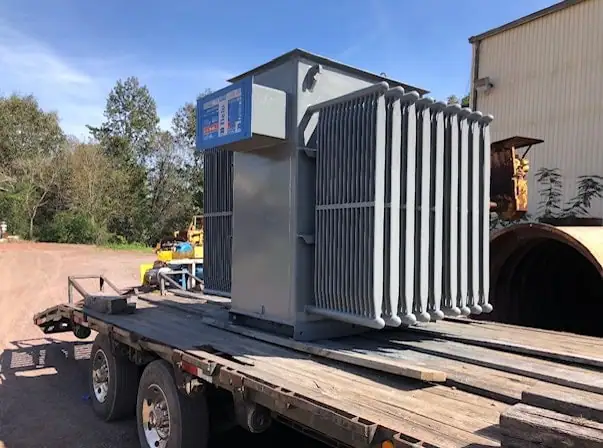
Electrical service upgrades can leave useful transformers behind at manufacturing plants, rail facilities, universities and hospitals in the Roanoke Valley and New River Valley. A retired unit may still have resale value even when its voltage, capacity or physical arrangement no longer fits the site. We buy equipment removed from service as well as unused spares and canceled-project inventory.
Sellers searching for transformer buyers Roanoke can contact us about equipment in Salem, Vinton, Daleville, Botetourt County, Blacksburg, Christiansburg, Radford, Bedford and Rocky Mount. Our Virginia transformer buying coverage extends statewide. We coordinate pickup with sellers rather than representing that we have a local office, yard or crew.
01Where Roanoke-area surplus transformers come from
Manufacturing and rail facilities can release transformers when production equipment changes, buildings close or electrical distribution is consolidated. A unit removed during an upgrade is not automatically failed equipment. Tell us whether it was operating before removal, held as a spare or taken out because of an electrical problem.
University and hospital campuses may replace individual transformers or complete substations as buildings and electrical loads change. The surplus can include indoor dry-type units, outdoor liquid-filled transformers and assemblies with associated switchgear. Keep labels and equipment records together so the transformer can be matched to its original service.
Unused project inventory is another source. We buy new-surplus units that were ordered but never installed, including solar and wind equipment. Storage history matters: explain whether the unit stayed indoors, remained sealed outdoors or was moved after delivery.
02Transformers we buy in the Roanoke and New River valleys
We buy all brands and sizes, including single-phase transformers from 10 kVA and three-phase units from 15 kVA through MVA-class power transformers. Equipment types include pad-mount, pole-mount, substation, power, dry-type, cast resin and oil-filled transformers. Capacity alone does not tell us how a unit can be used; voltage, connection and condition matter too.
For campus and industrial equipment, unit substation assemblies need a clear description of what is included. Identify the transformer, primary switch and secondary equipment separately. Photos should show whether these sections remain connected and whether enclosure panels, bushings and connection hardware are present.
For pole-mount transformers, include the number of units and a nameplate photo for each distinct rating. If several units formed a bank, tell us that rather than describing the group as one three-phase transformer. We review failed or damaged units case by case, with the failure history disclosed.
03Nameplate details that make an equipment list useful
We pay attention to kVA or MVA, phase, frequency, primary voltage, secondary voltage and winding connection. Record voltages exactly as shown: 12470GrdY/7200 and 480Y/277 convey more than a description such as “high voltage to 480.” Include the manufacturer, serial number, impedance and available tap information.
On larger liquid-filled units, photograph the cooling designation and every listed capacity. An ONAN/ONAF nameplate can show different ratings for natural and forced-air cooling; identify whether fans and their controls remain with the transformer. For dry-type equipment, show the enclosure, ventilation openings and visible coil condition without removing protective barriers.
Fluid type and PCB status also belong in the equipment record. If the unit contains FR3 natural ester or another identified fluid, send the label or documentation. PCB status must be disclosed and documented; do not assume that a brand, appearance or estimated age establishes it. Existing test reports are useful when available, but do not invent missing results.
04Utility service and ownership are separate questions
Appalachian Power, an AEP company, serves much of the Roanoke Valley and western Virginia. Salem and Radford operate municipal electric utilities, and sellers may also reference Craig-Botetourt Electric Cooperative when describing equipment in the area. A utility name helps explain the service context, but it does not establish who owns a transformer.
Before offering equipment for sale, confirm that your organization owns it and can authorize its release. A transformer on a manufacturing, university or hospital property may be utility-owned rather than customer-owned. Distinguish customer distribution equipment from equipment that must remain with the serving utility.
We buy surplus from utilities and electric cooperatives as well as other sellers. For a mixed lot, identify ownership, location and condition by unit. That keeps a saleable spare from being confused with energized service equipment or a transformer awaiting a separate disposition decision.
05Pickup planning: roads, access and rigging
A Roanoke or New River Valley pickup needs more than a street address. Describe the route from the site entrance to the equipment, including narrow gates, sharp turns, slopes, overhead obstructions and any delivery-hour restrictions. Identify whether the transformer is beside an accessible roadway, inside a fenced substation or behind a building.
Weight and dimensions guide freight and loading arrangements. Send the nameplate weight when listed, approximate overall dimensions and photos showing the base and lifting provisions. A forklift rating alone does not establish that a particular lift is suitable; the seller's qualified loading or rigging provider should determine the appropriate method.
Tell us whether loading equipment is available or separate rigging must be arranged. Price, freight, loading and payment responsibilities belong in the written offer, not in assumptions about pickup. We do not perform electrical disconnect work: sellers use their own qualified electricians to de-energize and disconnect equipment, and we do not ask sellers to drain fluid.
06How local sellers start with transformer buyers Roanoke
Send a clear nameplate photo, overall photos, location, quantity and condition notes through the equipment offer form. We review the information and may ask about PCB documentation, test data or site access. If the equipment fits, we send a written offer covering price, freight, loading and payment; pickup is scheduled with you, and payment follows those terms. See how the selling process works for details.
For multiple locations, separate the inventory by site rather than combining everything into one total. A transformer in Bedford may have different loading requirements from one still installed in Blacksburg or stored in Rocky Mount. Clear site-specific notes help keep each unit's condition and pickup requirements attached to the right equipment.
Frequently asked questions
Are you affiliated with Virginia Transformer Corp in Roanoke?
No. Virginia Transformer Buyers is an independent buyer and is not affiliated with Virginia Transformer Corp, the transformer manufacturer based in Roanoke, or any other manufacturer. We buy all brands. A manufacturer's name on our site describes equipment, not a business relationship, factory connection or authorization to act for that manufacturer.
Do you buy transformers in Blacksburg, Christiansburg and Radford?
Yes. We buy transformers from sellers in Blacksburg, Christiansburg and Radford, along with Roanoke and the surrounding communities. We coordinate pickup across Virginia. For equipment on a university or other campus, identify the precise storage or installation location and any gate, scheduling or loading restrictions that affect access.
Can I sell a transformer on my property that serves Appalachian Power customers?
You can offer it only if you own the equipment and have authority to sell it. Serving utility and equipment ownership are separate matters. Confirm ownership with your records and the relevant utility before listing a service transformer. Do not assume that equipment belongs to you simply because it sits on your property.
Do you buy failed transformers removed from Roanoke industrial sites?
We review failed transformers from Roanoke industrial sites case by case. Explain the known failure, whether fluid leaked and whether bushings, coils or other components were damaged or removed. Include any existing test or incident records and documented PCB status. Our failed and damaged transformer information explains the equipment details relevant to that review.
Can you buy an entire retired campus unit substation?
Yes, we buy unit substations, including equipment retired from campus service. Describe which sections are included and photograph the transformer nameplate separately from switchgear labels. State whether the assembly is still installed or already separated. Electrical disconnection remains the seller's responsibility through qualified electricians; loading and freight responsibilities are specified in the written offer.