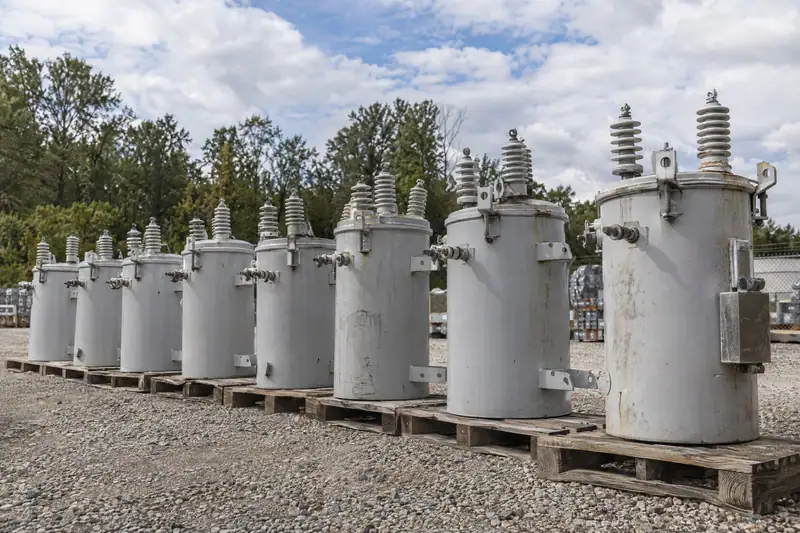
Utility surplus rarely consists of one matching group of transformers. A disposal list may combine unused emergency reserves, serviceable returns, older voltage classes, and a substation unit retired during an upgrade. We buy all brands and sizes, from 10 kVA single-phase and 15 kVA three-phase distribution units through MVA-class power transformers.
When utilities and electric cooperatives sell surplus transformers, accurate inventory records help distinguish equipment with different specifications and histories. We serve every Virginia region, including Northern Virginia utility sellers, and review neighboring-state or nationwide equipment on request. Keep each unit or clearly identified group tied to its nameplate, condition, and storage location.
01Surplus Storm Stock and Distribution Inventory
We buy surplus pole-mount and pad-mount transformers held for storm restoration, service expansion, or replacement programs. Excess inventory can include unused units and previously installed equipment. Identify those categories separately rather than describing the whole lot as either new or used.
For distribution inventory, we pay attention to phase, kVA, primary voltage, secondary voltage, and connection. A 12470GrdY/7200 primary with a 480Y/277 secondary describes a different application from a unit with a 120/240 secondary. Record the actual nameplate ratings rather than substituting a warehouse shorthand.
For new-surplus transformer inventory, note whether units were ever energized and whether accessories remain with them. Storage history, damaged cabinets, missing bushings, and visible leaks belong in the condition notes. Unused equipment should not automatically be described as ready for service.
02Retired Substations and Obsolete Voltage Classes
We buy retired power transformers, substation transformers, and unit substations. System standardization can leave serviceable equipment outside a utility's current specifications. Send the original ratings even when a voltage class or connection is no longer used on your system.
For retired substation transformers, include rated MVA, primary and secondary voltages, impedance, tap information, and cooling classes such as ONAN/ONAF. Where multiple ratings appear, photograph the complete rating table. Identify whether fans, radiators, controls, and other associated components remain with the unit.
Retirement history matters: capacity replacement, voltage conversion, and an in-service fault are not the same condition. Tell us why the equipment came out of service and whether it was operating at removal. Failed or damaged units are reviewed case by case, with the known failure and any missing components disclosed.
03Bid Lots, Pallet Counts, and Mixed Equipment Lists
A useful bid lot identifies what is being offered and how the equipment is grouped. Give each transformer an asset number, serial number, or other unique identifier that matches the photos. If your organization requires the lot to remain intact, state that requirement with the inventory.
Pallet counts alone do not establish transformer quantities or specifications. A pallet may carry multiple small units, while a larger transformer may occupy its own skid. List the number of transformers alongside pallet or skid counts, and distinguish loose accessories from complete units.
For repeated ratings, a grouped inventory can keep the submission manageable, but note exceptions within each group. Different secondary connections, PCB records, condition, or missing parts should not disappear under one line item. We pay attention to these differences when reviewing utility lots.
- Lot number and unit-level asset or serial identifiers
- Quantity by phase, kVA, primary voltage, and secondary voltage
- Condition categories: unused, used, failed, or damaged
- Storage location and pallet or skid count
- Available dimensions, weights, and loading restrictions
04PCB Documentation, Fluid Identification, and Test Records
PCB status must be disclosed and documented for oil-filled equipment. Supply the available supporting records and connect them to the correct serial or asset number. Do not treat an undocumented unit as non-PCB solely because it resembles other transformers in the lot.
Identify the insulating fluid when known, including mineral oil or FR3 natural ester. Keep fluid identification separate from documented PCB status. Photograph fluid labels and provide relevant records; we do not ask sellers to drain transformers.
Available test data helps describe condition, but it should include dates and unit identification. Useful records may include turns-ratio, winding-resistance, insulation, or oil-test results. If a report references IEEE C57 standards, retain that reference and the actual results rather than supplying only a pass/fail summary.
05Written Offers for Utility Procurement and Disposal Rules
Municipal systems, investor-owned utilities, and electric cooperatives can have different surplus-disposal requirements. Tell us whether the equipment is offered through a bid lot, surplus-sale procedure, or another authorized process. Include submission instructions, deadlines, and any requirement to quote the whole lot.
We can provide a written offer for your organization's review process. If the equipment fits, the offer spells out price, freight, loading, and payment terms. Your organization determines the approvals and disposal rules that apply; we do not provide legal advice or promise that an offer satisfies every procurement requirement.
When utilities and electric cooperatives sell surplus transformers, clear commercial terms matter alongside the equipment list. Send nameplate and overall photos, location, quantities, and condition notes through the offer request form. We review, may ask questions, and schedule pickup with the seller if the transaction proceeds; payment follows the written terms. See the complete selling process for details.
06Site Access and Seller-Controlled Disconnection
Distinguish yard inventory from equipment still installed in a substation or on a distribution system. We do not perform electrical disconnect work. Sellers use their own qualified electricians to de-energize and disconnect equipment before pickup.
For yard lots, describe access gates, surface conditions, loading availability, and any appointment or escort requirements. For larger units, send available shipping weights and dimensions, noting whether radiators or other components have been removed. Freight and loading responsibilities belong in the written offer, not in an assumption about who supplies equipment.
For utility staff responsible for surplus disposition, our seller information outlines who we buy from. We are an independent buyer, not affiliated with any manufacturer, including Virginia Transformer Corp of Roanoke. Brand names identify equipment only.
Frequently asked questions
Can our electric cooperative sell unused storm-reserve transformers?
Yes, Virginia Transformer Buyers buys unused surplus storm-reserve transformers. Identify which units were never energized and separate them from used returns or damaged stock. Include phase, kVA, voltage ratings, quantity, and storage condition. Note missing accessories, cabinet damage, or leaks rather than relying on an unused designation to describe the entire lot.
Will you review a utility bid lot containing different transformer ratings?
Yes, we review mixed utility transformer lots. Provide a unit list or clearly defined groups with quantities, ratings, condition, and identifiers that match the photos. State whether your disposal rules require a whole-lot offer. Keep failed units and equipment with different PCB documentation identifiable within the lot.
Can we sell transformers with voltages our utility no longer uses?
Yes, we buy surplus transformers with voltage ratings that are obsolete within the seller's system. A utility's current standard does not describe every possible application for that equipment. Send the actual primary and secondary ratings, phase, connection, taps, and condition so we can review the units accurately.
What PCB records should accompany an oil-filled utility transformer lot?
PCB status must be disclosed and documented, with supporting records tied to the equipment being offered. Send available test reports or other documentation identifying the relevant units, and clearly flag unknown status or gaps in the records. We do not provide environmental advice or ask sellers to drain fluid.
Can you submit a written offer for a municipal utility's approval process?
Yes, we can provide a written offer when the equipment fits, specifying price, freight, loading, and payment terms. Supply your submission requirements and any whole-lot restrictions with the inventory. Your municipality remains responsible for its approvals and applicable disposal rules; an offer does not replace that process.
Do you buy utility transformers retired after an in-service failure?
Failed utility transformers are reviewed case by case. Disclose the known failure, visible damage, leaks, missing components, and available diagnostic records. Keep failed equipment separate from serviceable returns in the inventory. Nameplate photos remain useful even when the transformer is no longer operational, because they establish its original ratings.