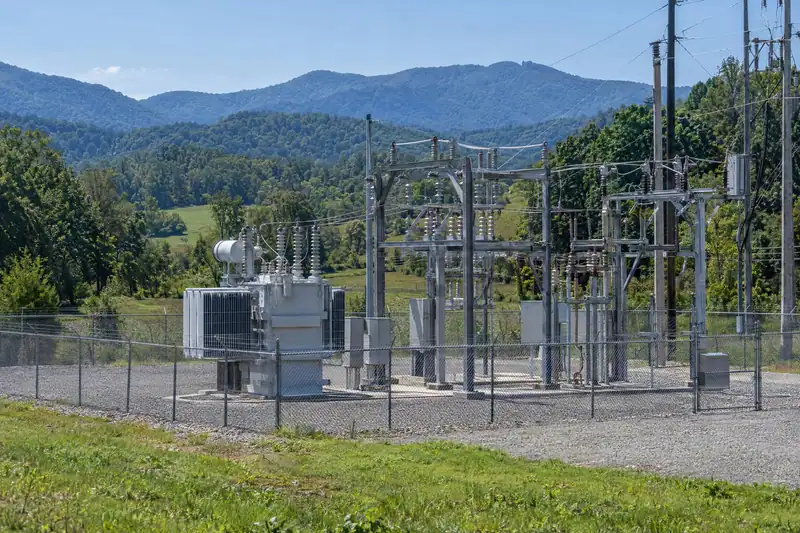
An older transformer can have a readable nameplate and still leave an important question unanswered: what is in its insulating fluid? Polychlorinated biphenyls, or PCBs, were used in some electrical equipment because of their insulating properties and resistance to fire. US manufacture of PCBs was banned in 1979 under the Toxic Substances Control Act, or TSCA. That date alone does not establish a particular transformer's PCB status.
This guide to PCB transformers: what sellers should know focuses on labels, concentration records, fluid history and the information needed before a sale. We buy oil-filled transformers, but PCB status must be disclosed and documented. Do not treat a missing warning label, a mineral-oil nameplate or a recent fluid change as proof that equipment is non-PCB.
01Understand the three PCB concentration categories
EPA rules at 40 CFR Part 761 use PCB concentration to distinguish important equipment categories. For transformer insulating fluid, concentrations are commonly reported in parts per million, or ppm. The categories below are a useful starting point for reading records, not a substitute for determining the requirements that apply to a particular unit.
When status is unknown, regulatory assumptions can apply, depending on equipment type and other facts. An untested transformer is not automatically non-PCB. Also, a result below 50 ppm does not mean zero PCBs or unrestricted handling in every circumstance. Sellers should verify applicable EPA and Virginia Department of Environmental Quality requirements before arranging storage, transfer or disposal.
| PCB concentration | Classification | What the seller should document |
|---|---|---|
| Less than 50 ppm | Non-PCB | Evidence supporting the classification and identifying the equipment |
| 50–499 ppm | PCB-contaminated | Concentration, sampling date, unit identity and relevant history |
| 500 ppm or more | PCB Transformer | Concentration and records needed to determine applicable requirements |
02Read the labels, but do not stop at the labels
Photograph the main nameplate, any PCB marking and any fluid replacement or retrofill label. The main nameplate usually identifies manufacturer, serial number, year, kVA, voltage and fluid information. An older plate may identify askarel, a class of fire-resistant insulating fluids historically associated with PCB formulations. Treat that wording as a reason to investigate and disclose, not something to omit from the equipment description.
A PCB warning mark is important evidence, but its absence does not prove the fluid is non-PCB. A separate non-PCB label should be checked against supporting records. Labels can become unreadable, tanks can be repainted, and service records can become separated from equipment. Keep photos of conflicting markings rather than choosing the one that makes the transformer easier to sell.
For substation transformers, record the main tank and any separate fluid-filled compartments identified in the service records. Do not assume a report for one compartment establishes the condition of every compartment. Nameplate details help connect those records to the exact equipment offered.
- Main nameplate and serial number
- PCB warning marks or non-PCB labels
- Fluid type and retrofill labels
- Separate compartment identification
- Readable dates and references on service labels
03Use test records that identify the actual transformer
A useful PCB laboratory report connects the result to an identifiable transformer and sample. We pay attention to the serial number or equipment ID, sample source, sampling date, reported concentration, units and laboratory method. A report that says only “transformer oil” without an equipment identifier may not establish which unit was sampled.
Read the reporting limit as well as the result. “Not detected” means the laboratory did not detect PCBs above its stated detection or reporting limit; it does not mean an absolute concentration of zero. A dielectric strength test, moisture result or dissolved gas analysis does not establish PCB concentration unless a separate PCB analysis is included.
If documentation is missing or cannot be matched to the unit, discuss appropriate sampling with a qualified environmental professional and laboratory. We do not provide sampling instructions or environmental advice. Do not open energized equipment, improvise a sample or drain fluid to make the transformer easier to offer.
04Account for fluid changes and cross-contamination
Mineral-oil transformers can contain PCBs through historical contamination, including contaminated servicing equipment or replacement fluid. That is why “mineral oil” on a nameplate is not equivalent to a documented PCB concentration. Age can help explain which records to look for, but it cannot replace evidence of fluid status.
A fluid change also does not automatically resolve the classification of previously contaminated equipment. Residual PCBs can remain in internal materials and enter replacement fluid. Reclassification after servicing or retrofilling is subject to applicable regulatory conditions, so a receipt for new oil is not enough by itself.
Send any available before-and-after test reports, retrofill dates and service records. The same documentation principle applies when a label identifies FR3 natural ester or another replacement fluid: the product name describes the fluid, not necessarily the complete contamination history. Our seller guides cover other equipment questions, but PCB history deserves its own record review.
05Why a buyer needs PCB documentation before an offer
PCB transformers: what sellers should know includes why documentation affects a transaction. Concentration and equipment history can affect permitted handling, transportation, storage, reuse and disposal options. A transformer's useful electrical ratings do not settle those questions. We need disclosed, documented PCB status before treating older fluid-filled equipment as a normal surplus purchase.
We buy new-surplus, used and decommissioned transformers; failed or damaged units are reviewed case by case. That does not mean every PCB category is acceptable for purchase. Do not assume acceptance of PCB-containing equipment, and do not describe unknown status as non-PCB. Missing records can leave important questions unresolved even when the nameplate is complete.
Send a clear nameplate photo, overall photos, location, quantity, condition notes and PCB documentation. We review the information and may ask questions; if the equipment fits, our written offer spells out price, freight, loading and payment terms. Pickup is scheduled with the seller, and payment follows those terms. See how the buying process works for details.
06Keep regulatory review separate from sale preparation
Sellers should follow applicable EPA PCB rules and Virginia DEQ requirements. Depending on the equipment and circumstances, issues can include marking, storage, records, transfer restrictions, spill response and disposal. A sale agreement does not replace those obligations. Obtain qualified legal or environmental advice when the equipment's status or permitted disposition is unclear.
We do not provide legal, engineering or environmental advice, perform electrical disconnect work, or ask sellers to drain fluid. Use your own qualified electricians to de-energize and disconnect equipment. Leaks, damaged tanks and uncertain fluid status should be disclosed before pickup planning; do not treat them as ordinary loading details.
Keep the unit's records together and review preparing a transformer for pickup without assuming that general pickup guidance authorizes movement of PCB-containing equipment. When your documentation is ready, request an equipment offer and include the PCB information with the nameplate photos.
Frequently asked questions
Does a transformer made before 1979 automatically contain PCBs?
No, a pre-1979 manufacturing date does not automatically establish that a transformer contains PCBs. Some older transformers used mineral oil, while others used PCB-containing insulating fluids. Historical contamination is also possible. Use equipment-specific labels, records and appropriate testing to establish status, and check applicable regulatory assumptions when documentation is missing.
Can I sell a transformer if I do not know its PCB status?
Unknown PCB status must be disclosed, and Virginia Transformer Buyers requires documented status rather than an unsupported non-PCB claim. Send whatever labels, reports and service records you have so the missing information is clear. Do not assume the equipment will qualify for purchase. Our transformer selling page describes the equipment information to gather alongside those records.
Does a non-PCB sticker replace an oil test report?
A non-PCB sticker alone may not provide enough evidence to support the equipment's classification. Check whether it is backed by manufacturer documentation, an identifiable laboratory report or other appropriate records. Match those records to the serial number and review later fluid servicing. A sticker that conflicts with older PCB markings or reports needs clarification, not selective disclosure.
Is a transformer with 50 ppm PCBs classified as non-PCB?
No, 50 ppm falls within the PCB-contaminated category, not the non-PCB category. The general thresholds are below 50 ppm for non-PCB, 50–499 ppm for PCB-contaminated, and 500 ppm or more for a PCB Transformer. Read the complete laboratory report, including units and reporting limits, and obtain qualified guidance about the requirements that apply.
Will replacing the oil make a PCB transformer non-PCB?
Replacing the oil does not automatically make a PCB transformer non-PCB. PCBs can remain in internal materials and migrate into replacement fluid, and regulatory reclassification has specific conditions. Keep the original results, fluid-change records and subsequent reports. Do not drain or replace fluid solely to prepare equipment for a sale without qualified environmental guidance.
Does PCB documentation affect what my transformer is worth?
Yes, PCB documentation can affect whether a transformer fits a purchase and which handling or disposition options are available. Electrical capacity, voltage and condition still matter, but they do not override fluid-related restrictions. Read what affects transformer value alongside the unit's PCB records. We do not quote a value based on an assumed non-PCB classification.