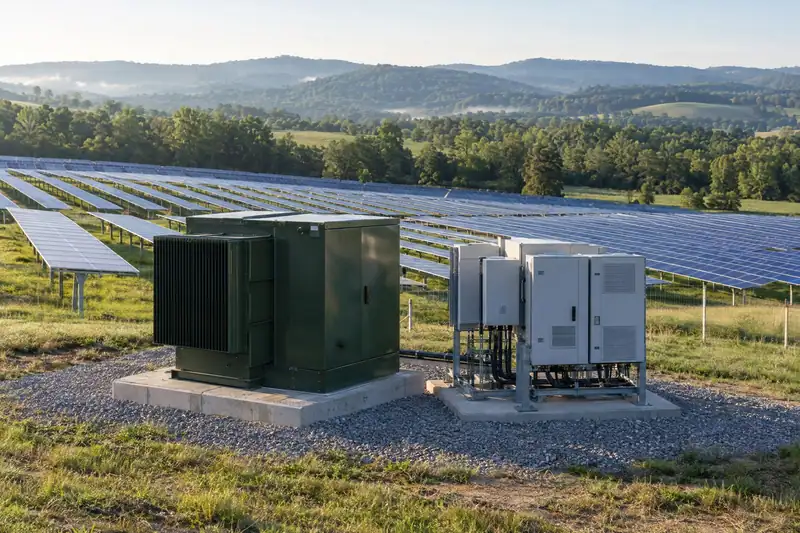
We buy transformers left over from utility-scale solar and wind projects, including unused procurement lots, replacement spares and equipment released during repowering. Solar inverter blocks, battery storage installations and wind collection systems use configurations that deserve more than a generic equipment description. We pay attention to each winding rating, the connection diagram and the original application.
For owners, contractors and equipment holders in Southside Virginia, a cancelled or downsized project can leave several matching units without their intended installation. We serve every Virginia region and review neighboring-state and nationwide equipment on request. These renewable-project units belong within the broader range of transformers we buy, but their electrical configurations and project records are especially important.
01Solar Inverter Step-Up and Battery Storage Transformers
We buy solar inverter step-up transformers that connect low-voltage inverter output to a medium-voltage collection system. A 34.5 kV high-voltage rating is common on utility-scale projects, but we want the actual nameplate rather than an assumed project standard. The low-voltage rating, winding connections and kVA capacity help distinguish otherwise similar-looking units.
Some inverter-duty designs have two low-voltage windings serving separate inverter outputs. Send the rating for each winding and the connection diagram; a total MVA figure alone does not explain how capacity is divided. Include impedance values and any manufacturer documentation identifying inverter-duty service, harmonic requirements or electrostatic shielding where specified.
We also buy transformers associated with battery storage projects. Identify whether the equipment served a power conversion system, an auxiliary load or a shared collection arrangement. If a solar-plus-storage project changed design before installation, tell us whether the transformer was ever energized and whether its accessories and original documentation remain with it.
- High- and low-voltage ratings for every winding
- Total kVA or MVA and individual winding ratings
- Connection diagram, impedance and tap settings
- Inverter-duty specifications or project equipment schedule
02Wind Turbine Pad-Mount and Collection-System Units
We buy wind turbine pad-mount transformers and other transformer configurations used to connect turbines to the collection network. Turbine-side voltage varies with the generating equipment, so identify the actual low-voltage rating. For a 34.5 kV collection unit, include the full high-voltage designation and winding connection shown on the plate.
Cable compartments matter on turbine pad-mount units. Overall photos should show the high- and low-voltage compartments, bushings, cable termination arrangement and switching equipment, where present. Note missing elbows, damaged bushings, corrosion or signs of leakage rather than describing the unit only as removed from service.
Repowering can release transformers that no longer match the replacement turbine or collection design. Tell us whether removal followed a turbine upgrade, a collection-system change or a transformer fault. We buy serviceable used units and review failed or damaged equipment case by case; our failed transformer page explains that category separately.
03Substation GSUs and MVA-Class Project Transformers
We buy MVA-class power transformers used at renewable-project substations, including generator step-up units and transformers that raise collection voltage to the grid interconnection voltage. These are different from individual inverter or turbine transformers. Send all voltage ratings, the winding diagram and any tertiary-winding information rather than labeling the equipment simply as a solar transformer.
Cooling ratings deserve careful attention. A plate showing ONAN/ONAF may list different capacities for natural and forced-air cooling. Photograph the complete rating plate and show radiators, fans, conservator equipment where fitted, and the tap changer. Tell us which detached components are included with the transformer.
We pay attention to installed condition and transport readiness as separate issues. A decommissioned GSU may still be connected, while an unused unit may be stored with radiators or bushings removed. We buy these oil-filled transformer configurations, but sellers should clearly identify fluid type, current assembly condition and available installation or maintenance records.
04New-in-Crate Spares and Unused Procurement Lots
We buy new-in-crate spares and unused transformers purchased for renewable-project spare programs. A spare may match a fleet of inverter blocks or turbines yet become unnecessary after a design change. Include the manufacturer, serial number, manufacturing date and intended project application, even if the shipping enclosure has never been opened.
New-surplus does not automatically mean complete or ready for service. Tell us how the equipment has been stored, whether packaging is intact and whether separately shipped accessories are present. Packing lists, factory test reports and photographs of accessible identification labels help connect each crate to the correct transformer without relying on warehouse inventory names.
For multiple matching units, provide a serial-number list and note any differences in voltage, impedance or accessories. Transformers ordered for the same project can carry different revisions. Our new-surplus transformer buying page covers unused equipment more broadly; renewable spares also need their inverter, turbine or collection-system configuration identified.
05Repowering and Cancelled Projects in Southside Virginia
We buy surplus renewable-project transformers throughout Southside Virginia and across the rest of the state. Cancelled developments, reduced project capacity and revised inverter layouts can leave equipment outside the final construction plan. As a solar & wind transformers buyer, we want to know which units are genuinely available and which remain reserved for project use.
Separate installed equipment from warehouse stock when presenting a project lot. For installed units, give the removal reason and known service history. For unused units, identify whether they reached the site, stayed in storage or remain packaged. That distinction is more useful than describing every transformer as project surplus.
A spare-transformer program may also release only part of its inventory. List the quantity available now, the matching serial numbers and any accessories shared between units. Keep disconnect work separate from the sale: sellers must use their own qualified electricians to de-energize and disconnect equipment. We do not perform electrical disconnect work.
06Documentation That Makes Renewable Equipment Clear
Fluid and test records help explain an oil-filled transformer's condition. Identify mineral oil or FR3 natural ester where documented, and disclose and document PCB status. Available dissolved gas analysis, moisture results and dielectric test records can add useful context; our transformer oil testing guide explains what common reports describe. We do not ask sellers to drain fluid.
Send clear nameplate and overall photos, location, quantity and condition notes through the offer request form. We review the equipment and may ask about PCB documentation, test data or site access. If it fits, we send a written offer covering price, freight, loading and payment terms, then schedule pickup with you; payment follows those terms. See how the buying process works for details.
Frequently asked questions
Do you buy solar transformers with two low-voltage windings?
Yes, we buy solar inverter step-up transformers with dual low-voltage windings. Send the complete nameplate and winding diagram so we can identify each voltage, connection and capacity. Include separate winding ratings and impedance data where available, plus any documentation explaining which inverter outputs the transformer was designed to serve.
Can I sell a 34.5 kV wind transformer after turbine repowering?
Yes, we buy wind-project transformers released by turbine repowering, including 34.5 kV collection units. Identify the turbine-side voltage, nameplate capacity and reason for removal. Note whether the transformer was operating when disconnected and disclose known defects. Failed or damaged units receive case-by-case review rather than being treated as serviceable equipment.
Do you buy unused transformers from cancelled solar projects?
Yes, we buy unused transformers from cancelled or downsized solar projects. Provide the available quantity, serial numbers, ratings and storage condition, including whether units remain in crates. Factory reports and packing lists are helpful when several transformers look identical but have different winding configurations or project-specific accessories.
Can I sell only part of a renewable-project spare inventory?
Yes, you can submit only the transformers being released from a renewable-project spare inventory. Identify the available serial numbers rather than sending an undifferentiated fleet list. Note which bushings, fans, radiators or other separately stored components belong to each unit, and flag anything that will remain with the retained equipment.
What information matters for a battery storage transformer?
The nameplate ratings, winding connections and original application matter for a battery storage transformer. Tell us whether it connected a power conversion system to medium voltage or supplied auxiliary equipment. Include every winding voltage, kVA or MVA rating, impedance and available manufacturer specifications, along with its installation and service history.
Do you buy renewable-project transformers filled with FR3?
Yes, we buy oil-filled renewable-project transformers using FR3 natural ester as well as mineral oil. Identify the fluid from the nameplate or supporting records rather than guessing from appearance. PCB status must still be disclosed and documented. Include available fluid test reports and note leaks, repairs or any known fluid replacement.