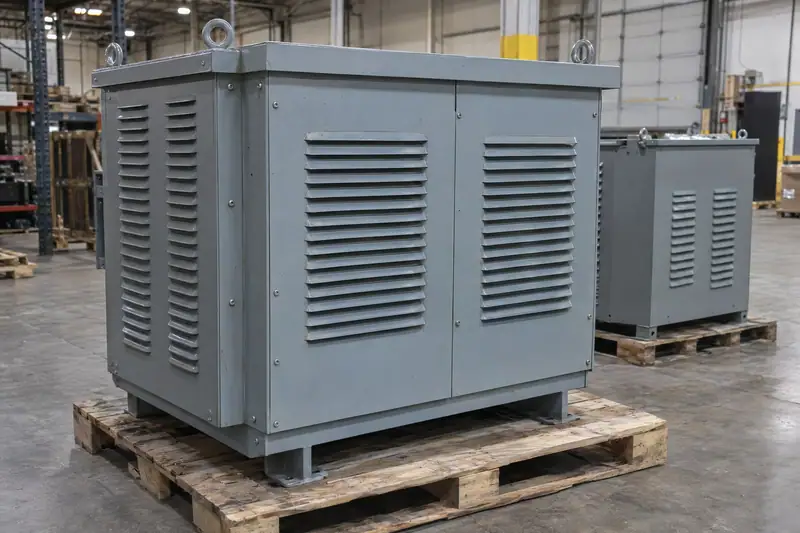
We buy dry-type transformers coming out of commercial buildings, schools, hospitals and industrial plants, as well as unused equipment left over from construction projects. A 480-to-208Y/120 lighting transformer, a drive isolation unit and a medium-voltage ventilated transformer serve different purposes. We pay attention to those differences rather than treating every enclosure as the same equipment.
If you need a dry-type transformers buyer for an indoor replacement or surplus inventory, start with the electrical ratings and the actual condition. We buy all brands, including Square D and Schneider Electric transformers. For equipment outside this category, see the broader list of transformers we buy.
01General-purpose dry-type transformers: ratings come first
General-purpose dry-type units commonly supply building lighting, receptacles and other utilization loads. A familiar three-phase arrangement is a 480 V primary with a 208Y/120 V secondary. Other combinations include 480Y/277 V secondaries or different primary voltages, so send the actual nameplate rather than describing the unit only as a “480 transformer.”
We buy single-phase dry-type transformers from 10 kVA and three-phase units from 15 kVA upward. Building distribution sizes such as 45, 75, 112.5, 150 and 300 kVA are useful identifiers, but kVA alone does not describe the equipment. Our 112.5 kVA transformer page covers that rating across equipment types; here, winding configuration, enclosure and indoor condition matter just as much.
- Rated kVA, phase and frequency
- Primary and secondary voltages, connection diagram and taps
- Manufacturer, model or catalog number, and serial number
- Temperature rise, insulation system and winding material
- Enclosure type, dimensions and listed weight, when available
02K-factor, drive isolation and buck-boost units
We buy specialty dry-type transformers as well as standard building distribution units. Keep their original nameplates with the equipment: a K-factor designation or drive isolation rating can distinguish a specialty transformer from a general-purpose unit with similar kVA and voltage. Include any separate labels attached inside the enclosure or on the coil assembly.
For buck-boost equipment, give us the transformer’s own nameplate kVA and voltages, not just the load capacity claimed for an autotransformer connection. Those are different quantities. Our minimum size is 10 kVA for single-phase and 15 kVA for three-phase equipment; small individual buck-boost units below those ratings do not fit those size limits.
- K-factor: ratings such as K-4, K-13 or K-20 identify capability for specified harmonic loading; they do not mean the transformer removes harmonics.
- Drive isolation: send input and output voltages, kVA, impedance and any drive-duty information shown on the plate.
- Buck-boost: photograph the connection diagram and winding voltage ratings so the underlying transformer is identifiable.
03Temperature rise, winding material and visible condition
Common dry-type temperature-rise ratings include 80°C, 115°C and 150°C. Temperature rise describes the winding temperature increase above the specified ambient under rated conditions; it is not the same as the insulation system’s temperature class. Preserve both ratings in your equipment description, and include fan information if the unit has a forced-air rating.
We buy copper-wound and aluminum-wound transformers. Neither material alone tells us whether a unit fits: rated output, design, condition and application still matter. Photograph labels identifying the conductor material, and do not assume that visible copper terminal connections prove the entire winding is copper.
Show the coil assembly, terminal area and enclosure where they can be photographed safely. Dust buildup, water staining, corrosion, missing panels, heat discoloration and damaged insulation are relevant condition details. Failed or damaged units are reviewed case by case. Do not energize an idle transformer or open energized equipment just to obtain photos.
04Medium-voltage ventilated equipment and cast resin
We buy medium-voltage dry-type equipment used in indoor substations and plant distribution systems. For these units, include primary and secondary ratings, basic impulse insulation level if listed, impedance, taps and cooling designation. A primary connection marked 12470GrdY/7200 needs to be recorded exactly; shortening it to “12 kV” loses useful connection information.
Ventilated dry-type and cast resin transformers are not interchangeable descriptions. Cast resin units have windings encapsulated in resin, while ventilated designs generally expose the insulated coil assemblies to cooling air within an enclosure. We also buy cast resin transformers, but clear coil and nameplate photos help identify which category you have.
If the transformer is part of a unit substation, describe the attached primary switchgear and secondary equipment separately. Include the transformer section’s dimensions and weight where available. Existing test reports can provide useful context, but state their dates and whether the equipment has operated or been moved since testing.
05Contractor overstock, crated units and mixed inventories
We buy new-surplus dry-type transformers left from canceled projects, specification changes and contractor overstock. Original cartons, crates and catalog labels help identify unused equipment, but packaging alone does not establish its condition. Tell us whether each unit was installed, energized, stored outdoors or exposed to moisture.
For multiple units, separate the inventory by model, kVA and voltage combination. Six matching transformers are different from six units with similar-looking cabinets and different secondaries. Photograph accessible crate labels and nameplates without dismantling protective packaging unnecessarily, and identify loose panels or accessories. For smaller three-phase inventory, our 15 kVA transformer page provides size-specific context.
- Quantity for each model and electrical rating
- Unused, previously installed or operating history
- Crated, palletized or unprotected storage condition
- Missing covers, shipping damage or incomplete assemblies
06Indoor removal: describe the route out of the building
Indoor location can be as important as transformer size. Tell us whether the unit is on a housekeeping pad, wall brackets or an upper floor, and describe door widths, stairs, elevator limits and the route to a loading area. Enclosure dimensions and nameplate weight are more useful than an estimate based on cabinet appearance.
Your qualified electrician must de-energize and disconnect the transformer; we do not perform electrical disconnect work. Do not remove covers from energized equipment for photos. If fluid is present in associated equipment, disclose and document its PCB status, and do not drain it for us.
Send clear nameplate and overall photos, location, quantity and condition notes through the offer form. We review the equipment and may ask about test data or access; if it fits, our written offer states price, freight, loading and payment terms. Pickup is scheduled with you, and payment follows those terms. See how the purchase process works for details.
Frequently asked questions
Can I sell a used 480-to-208Y/120 dry-type transformer?
Yes, we buy used 480-to-208Y/120 dry-type transformers within our size range. For three-phase equipment, that starts at 15 kVA. Include the complete nameplate because tap settings, winding connections, temperature rise and model number distinguish units that otherwise look alike. Disclose water exposure, overheating or known operating problems.
Do you buy aluminum-wound dry-type transformers?
Yes, we buy aluminum-wound dry-type transformers as well as copper-wound units. Winding material is one part of the equipment description, not an automatic acceptance or rejection criterion. Send a photo of the material designation if available. Copper terminal pads or leads alone are not reliable evidence of copper windings.
Can I sell a K-13 transformer removed from a school or hospital?
Yes, we buy K-13 dry-type transformers removed from schools, hospitals and other buildings. Include the K-factor marking along with kVA, voltage, phase and temperature-rise ratings. A K-13 designation relates to harmonic-loading capability; it does not establish present condition or mean the transformer acts as a harmonic filter.
Do you buy dry-type transformers that are still in crates?
Yes, we buy crated new-surplus dry-type transformers, including contractor overstock. Identify each unit by its crate label and accessible nameplate, and disclose storage conditions or shipping damage. Keep packaging intact where practical. State whether the transformer is genuinely unused or was installed and later repackaged.
Can a transformer in a basement electrical room be sold?
Yes, an indoor transformer in a basement can be offered for purchase, but the removal route needs to be described. Provide dimensions, weight and details about stairs, elevators, door openings and loading access. Your qualified electrician handles de-energizing and disconnection. Freight and loading responsibilities must follow the written offer.
Do you buy dry-type transformers with burned windings?
Failed dry-type transformers with burned windings are reviewed case by case. Disclose the failure and provide safe, clear photos of the nameplate and visible damage. Explain whether the problem involved overheating, a fault or water exposure if known. Do not energize the unit to demonstrate its condition.