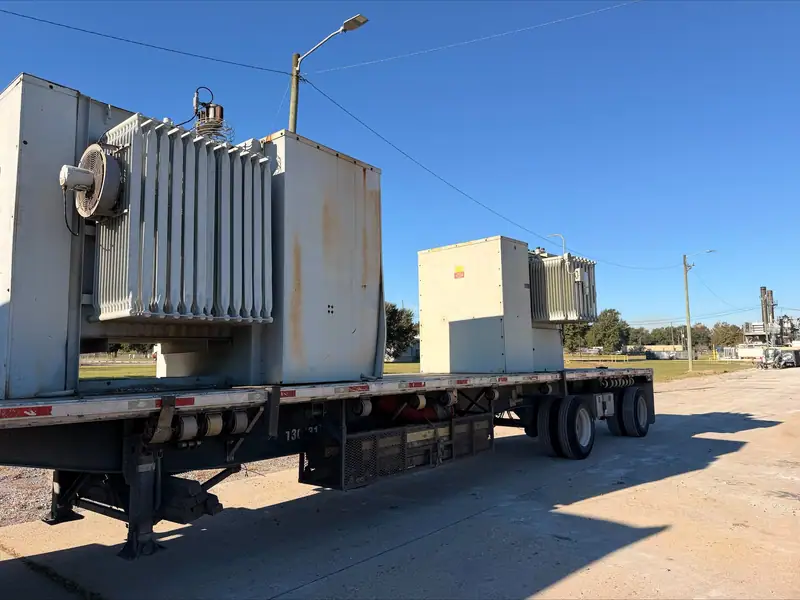
Substation transformers often arrive with more than a tank and a nameplate. Radiators, cooling fans, bushings, tap-changer controls and protection devices all help describe the equipment being sold. We buy all brands and sizes, including MVA-class units, whether the transformer is still installed, disconnected on site or already in storage.
As a substation transformers buyer, we want to understand the complete package, not just its highest kVA rating. A standalone liquid-filled transformer differs from a complete unit substation supplied with primary switching and secondary distribution equipment. Tell us which components belong to the sale and which will remain at the site.
01Substation Transformers We Buy Across Virginia
We buy substation transformers used to supply industrial processes, campus distribution systems, utility substations and generation facilities. These units commonly have external radiators, porcelain or composite bushings, and separate control cabinets. Some connect through exposed terminals; others use enclosed throat connections or cable termination compartments.
Capacity alone does not define the package. A 3,000 kVA transformer may have a different connection arrangement, impedance and shipping configuration from another unit with the same base rating. For larger equipment, our power transformer page covers related units. We serve every Virginia region and review equipment in neighboring states and nationwide on request.
02Nameplate Details and ONAN/ONAF Cooling Ratings
A clear nameplate photo should show manufacturer, serial number, year, frequency, phase, rated voltages, kVA or MVA, impedance and winding connections. Copy voltage markings exactly, including designations such as 12470GrdY/7200 or 480Y/277. Multiple plates may identify the main transformer, tap changer and accessories separately.
ONAN means oil-natural, air-natural cooling; ONAF means oil-natural, air-forced cooling. A transformer marked 5/6.25 MVA ONAN/ONAF has separate ratings for natural-air and fan-assisted operation under its specified conditions. We pay attention to whether the fans, radiators and controls supporting those ratings are included. Do not describe the highest fan-cooled rating as the only capacity.
- Photograph every cooling-stage rating and any temperature-rise information.
- Show radiator banks, fan groups and the cooling control cabinet.
- Include listed total weight, oil quantity and shipping weight when available.
- Identify missing bushings, radiators, fans or connection compartments.
03LTC and DETC Tap Changers Are Different
A load tap changer, or LTC, changes taps while the transformer is energized and carrying load within its design limits. Its mechanism, drive motor, controller and maintenance history matter to the equipment description. Depending on the design, the LTC may have a separate oil compartment with its own service records.
A de-energized tap changer, or DETC, must only be operated with the transformer de-energized under the manufacturer's instructions. It is not an interchangeable substitute for an LTC. Send the tap range, number of positions and photos of the operating mechanism. State whether the controller and drive components are present, and disclose known sticking, motor failures or contact problems.
04Accessories, Oil Records and Known Condition
Liquid-level gauges, top-oil temperature indicators, winding temperature indicators, pressure-vacuum gauges, pressure relief devices and sudden pressure relays help us understand the installed configuration. A pressure relief device and a sudden pressure relay serve different purposes; one relieves excessive pressure, while the other detects a rapid pressure rise. Photograph these devices and disclose missing or damaged parts.
Existing oil tests and dissolved gas analysis, or DGA, provide useful condition history, especially when reports show trends over time. Include sample dates, laboratory reports and any records of overheating, faults, leaks or oil processing. Identify the insulating fluid, including mineral oil or FR3 natural ester when documented. PCB status must be disclosed and documented; our PCB disclosure guide explains what sellers should gather.
- Include existing moisture, dielectric breakdown and DGA reports.
- Keep main-tank and separate LTC-compartment reports clearly identified.
- Describe known leaks, bushing damage, relay operations and repairs.
- Provide manufacturer drawings and maintenance records when available.
05Rigging, Site Access and Heavy Transport
Substation transformer transport depends on dimensions, weight and the route out of the installation. A unit on rails inside a fenced yard presents different loading needs from one beside an open plant road. Send photos showing the base, surrounding structures, gates and overhead obstructions, along with available outline drawings and lifting instructions.
We pay attention to whether the stated weight includes oil, radiators, bushings and other removable assemblies. Lifting lugs and jacking pads must be used according to the equipment's instructions, not assumed suitable from appearance alone. Freight and loading responsibilities belong in the written offer. We do not perform electrical disconnect work; sellers use their own qualified electricians to de-energize and disconnect equipment.
06Partial Shipments, Drained Tanks and Separate Components
Some large transformers are already configured for shipment with radiators, bushings or conservators removed. Others have been drained and nitrogen-blanketed under an established shipping or storage procedure. Tell us the current configuration and provide the applicable manufacturer instructions and storage records. We do not ask sellers to drain fluid or provide engineering or environmental advice.
For a partial shipment, make an inventory that connects every loose component to the transformer serial number. Document blanked openings, retained oil, nitrogen records where applicable, and the location of removed parts. A substation transformers buyer needs to know whether the package is complete before freight and loading terms can be defined.
Send a clear nameplate photo, overall photos, location, quantity and condition notes through Get an Offer. We review the details and may ask about PCB documentation, test data or access. If the equipment fits, we send a written offer covering price, freight, loading and payment; pickup is scheduled with you, and payment follows those terms. See how the sale works for details.
Frequently asked questions
Can I sell a substation transformer with missing cooling fans?
Yes, you can submit a substation transformer with missing cooling fans, but disclose exactly what is missing. Include the ONAN and ONAF nameplate ratings, photos of the fan mounts and controls, and any known cooling-system faults. We need to distinguish the complete original configuration from the equipment currently available. Failed or damaged units are reviewed case by case.
Should I list the ONAN rating or the highest ONAF rating?
List every nameplate cooling rating and label each one as ONAN or ONAF. The natural-air rating and fan-assisted rating describe different operating conditions, so a single maximum number can leave out important information. Include a nameplate photo rather than relying on a typed summary, and state whether all radiator banks, fans and cooling controls are included.
Can I sell a transformer with an LTC that no longer operates?
A transformer with a nonoperating LTC can be submitted for case-by-case review as failed or damaged equipment. Describe the known fault, last operating tap position and any available maintenance findings. Include photos of the drive mechanism and controller. Do not operate the tap changer just to demonstrate it for a sale, and disclose whether any components have been removed.
Do I need a new DGA report before offering my transformer?
A new DGA report is not part of the initial information request; send any existing reports with their sample dates. Historical results, service notes and known fault events help describe condition. If additional information is needed, we may ask questions during review. DGA describes dissolved gases in insulating oil; it does not replace documented PCB status.
Can I sell a transformer already drained and stored under nitrogen?
Yes, you can submit a transformer already drained and nitrogen-blanketed, with its configuration and storage history disclosed. Provide manufacturer shipping instructions if available, records of the nitrogen blanket, and an inventory of removed components. State where the oil and accessories are located. We do not ask sellers to drain fluid or alter the storage arrangement.
Do you buy older GE or Westinghouse substation transformers?
Yes, we buy all brands, including older GE and Westinghouse substation transformers. Send readable nameplates, condition notes and documentation of PCB status, along with photos of the complete package. Our GE equipment page covers that brand. Virginia Transformer Buyers is an independent buyer, not affiliated with any manufacturer, including Virginia Transformer Corp of Roanoke; brand names describe the equipment.