A Westinghouse transformer may still be installed beside an industrial building, stored after a utility replacement, or sitting in a warehouse with its original shipping hardware. We buy surplus and used units across Virginia, including vintage equipment whose identity depends on an older nameplate rather than a current catalog listing.
Westinghouse was one of the original American transformer builders. ABB acquired Westinghouse's transmission and distribution business in 1989, so legacy paperwork may use different names. Virginia Transformer Buyers is an independent buyer, not affiliated with Westinghouse, ABB, or Virginia Transformer Corp of Roanoke. Names on our transformer brand pages describe equipment only.
01Westinghouse Equipment We Buy
We buy Westinghouse transformers in all sizes within our buying range: single-phase units from 10 kVA and three-phase units from 15 kVA through MVA-class power transformers. For this brand, the equipment lines we commonly see include vintage substation transformers, pad-mount and pole-mount distribution units, and dry-type transformers.
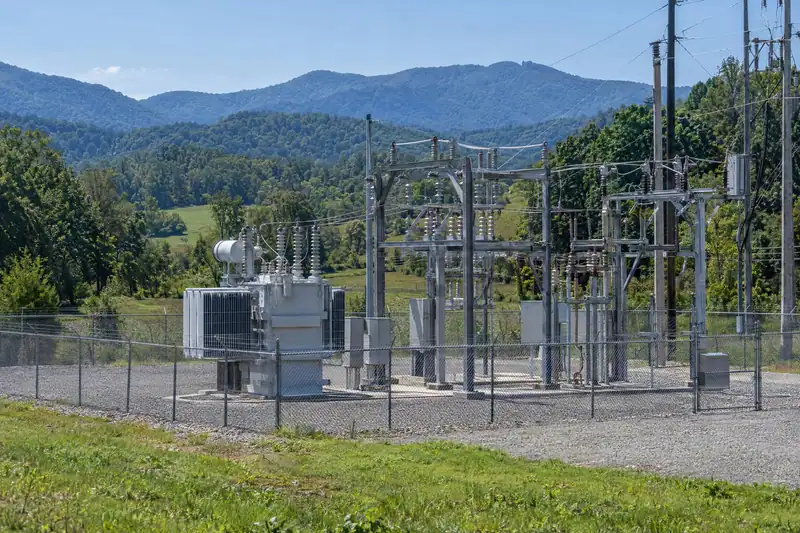
The physical arrangement matters as much as the name on the tank. A substation transformer with bus connections and attached switchgear needs different identification photos than a pole-mounted can or an indoor ventilated dry-type unit. Photograph the whole assembly, then show the transformer separately wherever access safely allows.
- Vintage substation and unit substation transformers, including liquid-filled power units.
- Westinghouse pad-mount transformers with enclosed cable compartments.
- Pole-mount distribution transformers, including single-phase units and banks.
- Dry-type transformers with accessible nameplates and identifiable ratings.
- New-surplus, used, and decommissioned equipment; failed or damaged units reviewed case by case.
02Identify the Unit From Its Original Nameplate
Start with a straight-on photograph of the Westinghouse nameplate, sharp enough to read small stamped characters. Capture the serial number, style or catalog number if present, kVA rating, phase, frequency, primary and secondary voltages, impedance, and connection diagram. Include the manufacture year when listed; do not substitute a building date or handwritten inventory date.
Older plates may list several ratings or cooling stages. Record each rating with its cooling designation, whether the plate uses older terminology or ONAN/ONAF. Photograph tap information and fluid or total weight where shown. Our transformer nameplate guide explains the fields that distinguish otherwise similar-looking units.
Keep records tied to the correct serial number. A maintenance report for another transformer in the same room does not establish this unit's condition or PCB status. If the plate is damaged, send close-ups of surviving markings and any matching drawings, purchase records, or test reports rather than guessing the missing values.
03PCB Documentation Matters on Older Westinghouse Units
Older Westinghouse units often predate 1979, making PCB documentation important before any sale of liquid-filled equipment. Disclose and document PCB status. A manufacture year, an oil appearance, or a general statement that the transformer was maintained is not a substitute for documentation identifying the unit and its fluid.
Send available fluid analysis, PCB labels, and records of fluid replacement or retrofill. If a report exists, include the sampling date, result, and information linking it to the transformer. A later fluid change does not by itself establish the current PCB status, particularly when the equipment has a long or incomplete maintenance history.
Do not drain fluid for our review. We do not provide environmental or legal advice, and unresolved PCB questions need appropriate qualified support. For dry-type equipment, show construction and nameplate details rather than assuming that every old Westinghouse transformer contains liquid.
04Ratings, Condition, and Completeness Matter More Than Age
We pay attention to usable ratings and the condition of the complete transformer, not just its age. A voltage marking such as 12470GrdY/7200 or 480Y/277 carries specific connection information; copy it exactly as printed. Include impedance, tap positions, and available test data instead of describing the unit only as a high-voltage transformer.
For vintage pad-mount equipment, photograph cabinet condition, doors, hinges, and cable compartments only when safe access is authorized. For pole-mount transformers, show bushings, mounting brackets, tank condition, and any readable voltage markings. Missing covers, broken bushings, leaks, or corrosion should be stated plainly.
For dry-type units, show the enclosure, winding area where safely visible, and signs of moisture, overheating, or physical damage. On substation equipment, note whether fans, radiators, gauges, and terminal enclosures remain attached. Failed units need the known failure history; do not energize an out-of-service transformer simply to demonstrate that it works.
05Where Virginia Sellers Find Legacy Westinghouse Equipment
Typical sources include manufacturing plants, institutional campuses, commercial facilities, utility storage, and contractor surplus inventories. A service upgrade may leave an otherwise complete Westinghouse transformer without a current use. Building demolition or production-line retirement can also expose equipment that has been installed for decades.
We serve sellers in every region of Virginia. Whether a unit is in a Tidewater industrial facility, a Northern Virginia commercial property, or a western Virginia plant, distinguish equipment still connected to a system from equipment already disconnected and stored. For multi-unit inventories, list each serial number, rating, and condition separately.
Storage details help explain condition. Tell us whether the unit has been indoors or outdoors, whether openings are protected, and whether parts were removed after retirement. Original manuals, drawings, and maintenance records can help identify legacy equipment, but photographs should show its present condition rather than only its former installation.
06Prepare Your Westinghouse Transformer for an Offer
If you want to sell Westinghouse transformer equipment, send clear nameplate and overall photos, location, quantity, and condition notes through Get an Offer. We review the information and may ask about PCB status, test data, or site access. If the equipment fits, our written offer spells out price, freight, loading, and payment terms; pickup is scheduled with you, and payment follows those terms. See how the buying process works for details.
For an installed vintage unit, keep electrical work separate from the sale. We do not perform disconnect work or provide engineering advice. Use your own qualified electricians to de-energize and disconnect the transformer, and identify access constraints such as basement locations, narrow doors, overhead obstructions, or attached buswork before pickup is arranged.
Frequently asked questions
Can I sell a Westinghouse transformer made before 1979?
Yes, age alone does not exclude a Westinghouse transformer from our buying range. For older liquid-filled equipment, PCB status must be disclosed and documented before a sale. Send the nameplate, condition photos, and available fluid records. We review the unit's ratings and condition; failed or damaged equipment is reviewed case by case.
Does an ABB maintenance record identify my Westinghouse transformer?
An ABB maintenance record may help identify a Westinghouse transformer if it clearly matches the unit's serial number or other identifying information. ABB acquired Westinghouse's transmission and distribution business in 1989. Send the original nameplate alongside the record, and distinguish the manufacture date from later service, repair, or fluid-change dates.
What if my Westinghouse nameplate has no readable year?
Send the readable nameplate information without guessing the manufacture year. The serial number, style number, ratings, and matching records can still help identify the equipment. Include detailed photographs of damaged markings. Do not use an estimated age to establish PCB status; liquid-filled equipment needs disclosed and documented PCB information.
Do you buy old Westinghouse dry-type transformers?
We buy used and surplus Westinghouse dry-type transformers, including three-phase units from 15 kVA. Send the kVA, voltages, phase, enclosure photos, and condition notes. Identify missing panels, moisture exposure, overheating, or winding damage. The dry-type construction should be confirmed from the equipment and nameplate, not inferred from its age or location.
Can I sell a bank of Westinghouse pole-mount transformers together?
Yes, you can submit a bank of Westinghouse pole-mount transformers together, with a separate nameplate photo for each unit. List each transformer's kVA, primary and secondary voltage, serial number, and condition. Do not report only the combined bank rating. Disclose and document PCB status for the liquid-filled units.
Will you review a Westinghouse substation transformer with a failed bushing?
We review Westinghouse transformers with failed or damaged bushings case by case. Photograph the damage from a safe location and describe any known fault, fluid loss, or subsequent testing. Include the nameplate and overall equipment photos. Do not attempt repairs, energization, or fluid draining solely for our review.