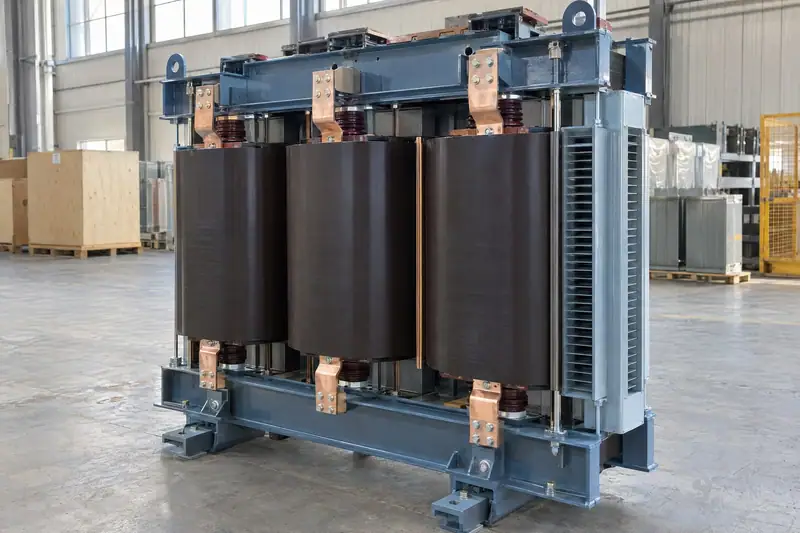
We buy cast coil and cast resin transformers removed from hospitals, data centers, high-rise buildings, industrial facilities and offshore installations. These medium-voltage dry-type units often have epoxy-encapsulated windings, temperature sensors and optional forced-air cooling. A complete assembly with readable identification and documented condition gives us more to work with than an unidentified coil set.
Cast resin equipment belongs to the broader family of dry-type transformers, but its construction deserves a closer look. Resin surfaces, coil supports, cooling passages and accessory completeness all matter. As a cast resin transformers buyer, we want to know what you have before treating a reusable transformer as scrap.
01Cast Coil Equipment We Buy
We buy all brands and sizes of cast resin transformers within our buying range: single-phase units from 10 kVA and three-phase units from 15 kVA through MVA-class equipment. That includes new surplus, used and decommissioned units, plus failed equipment reviewed case by case. Both standalone transformers and transformers supplied within unit substations can be submitted.
The terms cast coil and cast resin are often used together, but construction varies by manufacturer and design. Some units have resin-encapsulated high-voltage coils paired with a different low-voltage winding construction. Photograph both sides of the assembly rather than assuming every winding is encapsulated the same way.
Brand names help identify the design and supporting documents. We buy equipment from manufacturers such as Siemens and ABB, along with other brands. Virginia Transformer Buyers is an independent buyer, not affiliated with these manufacturers or Virginia Transformer Corp of Roanoke.
02Nameplate Ratings That Define the Application
Send a readable photograph of the main nameplate, not just the enclosure label. We pay attention to kVA, primary and secondary voltages, phase, frequency, impedance, tap positions and temperature rise. A 12,470-volt primary feeding 480Y/277 volts serves a different application from equipment with another voltage combination, even when the kVA ratings match.
Winding connection, insulation level and rated cooling are also useful. Include the connection diagram and any separate rating plate showing natural-air and fan-assisted capacities. Do not substitute an oil-filled cooling designation such as ONAN/ONAF for the actual air-cooling designation shown on a cast resin transformer.
Tell us whether the unit was operated at its base rating or with fans, if known. For a 750 kVA transformer, for example, the base nameplate rating and any additional fan-cooled rating should be recorded separately. Installation drawings can clarify dimensions, terminal orientation and the space needed for reuse.
03Enclosed Units Versus Open Core-and-Coil Assemblies
We buy both enclosed cast resin transformers and open core-and-coil assemblies. An enclosure can preserve application-specific features such as ventilation openings, cable entry arrangements, barriers and terminal access. Photograph the enclosure identification, doors, panels and any damage, along with the transformer inside when safely accessible.
An open assembly is not automatically incomplete. Some cast resin transformers were designed for installation inside a switchgear lineup or a dedicated electrical room. Tell us whether the enclosure was part of the original supply, remains on site or was discarded during removal.
Shipping dimensions and weight should describe what is actually being sold. Note whether the base, lifting provisions, vibration pads, grounding connections and terminal hardware remain with the unit. Cast resin coils are substantial components, but exposed resin, insulators and terminals still need protection from impact during handling and storage.
04Fan Packages and Temperature Monitoring Matter
Fan assemblies and temperature monitors are part of the equipment description, not incidental extras. Forced-air cooling can support an additional rating when specified by the manufacturer. Missing fans or controls should be disclosed rather than describing the transformer by its higher fan-cooled capacity alone.
Photograph the fan arrangement, control panel and temperature relay model. Tell us whether embedded winding sensors remain connected and whether the monitor was working when the transformer left service. Common sensor arrangements include thermistors and resistance temperature detectors, but the installed system must be identified from its documentation.
We also want to know whether alarm, trip and fan-control wiring was preserved or cut during removal. A box of labeled accessories is more useful than loose, unidentified parts. Keep manuals, wiring diagrams and spare components with the transformer when available; do not energize equipment just to demonstrate accessory operation.
05Resin Condition and Partial Discharge Test Records
Clear close-up photos help distinguish surface dirt from visible physical damage. Show cracks, chips, tracking marks, discoloration, corrosion and evidence of water exposure. A photograph cannot establish internal insulation condition, so describe any known overheating, electrical fault or abnormal operating history separately.
Partial discharge testing is particularly relevant to cast resin insulation. Available factory or field reports can provide useful evidence about insulation performance under the stated test conditions. Include the test date, applied voltage, measured results and acceptance criteria, along with the transformer serial number so the report can be matched to the equipment.
Other useful records include turns-ratio, winding-resistance and insulation-resistance results. Identify any applicable IEEE C57 test references from the report rather than assuming all tests used the same procedure. We do not require sellers to commission new testing simply to send an inquiry, and failed or damaged units are reviewed case by case.
06Why Cast Resin Transformers Can Retain Reuse Value
Cast resin transformers do not use a liquid insulating and cooling medium. That can make them useful where an application seeks to avoid oil containment and liquid-leak concerns. Fire behavior still depends on the design, materials and installation; dry-type construction does not mean a transformer is fireproof.
Hospitals, data centers and high-rise buildings may specify cast resin equipment for indoor distribution, while offshore installations may have additional enclosure and environmental requirements. Reuse depends on matching the voltage, capacity, insulation and installation needs, not merely finding another building with similar uses. Our sell-versus-scrap guide explains why identifying serviceable equipment matters before dismantling it.
Send a clear nameplate photo, overall photos, location, quantity and condition notes through Get an Offer. We review the equipment and may ask about test data, site access or documented PCB status where relevant; if it fits, we send a written offer specifying price, freight, loading and payment, then schedule pickup with you. See how the buying process works for details; payment follows the written terms.
Frequently asked questions
Can I sell a cast resin transformer without its enclosure?
Yes, Virginia Transformer Buyers buys open core-and-coil cast resin transformers as well as enclosed units. Tell us whether the equipment was originally supplied open or whether its enclosure was removed. Include photos of the base, terminals, coil supports and remaining barriers, plus dimensions and any available installation drawings.
Do I need partial discharge test results to sell a cast coil transformer?
No, you can submit a cast coil transformer without partial discharge test results. Existing reports are useful because they document insulation performance under specific test conditions, but their absence should simply be disclosed. Include any factory records or maintenance tests you already have, and identify known faults or insulation concerns separately.
Will you buy a cast resin transformer with cracked epoxy?
Cast resin transformers with cracked epoxy are reviewed case by case as damaged equipment. Send close-up photos showing the crack location and extent, plus overall winding photos and any fault history. Do not attempt a cosmetic repair to hide the damage; visible cracks and available test records both matter to the review.
Should I include the fans and temperature controller with the transformer?
Yes, include the original fans, temperature controller, sensors and associated wiring when they are available. These components help identify the complete cooling and protection arrangement, especially when the nameplate lists a fan-assisted rating. Disclose missing or nonworking parts, and keep disconnected accessories labeled so they can be matched to the transformer.
Can you disconnect a cast resin transformer from my building?
No, Virginia Transformer Buyers does not perform electrical disconnect work. Sellers must use their own qualified electricians to de-energize and disconnect the transformer. Tell us about its room location, access route and removal constraints, including narrow doors or upper-floor placement, so loading and freight responsibilities can be addressed in the written offer.