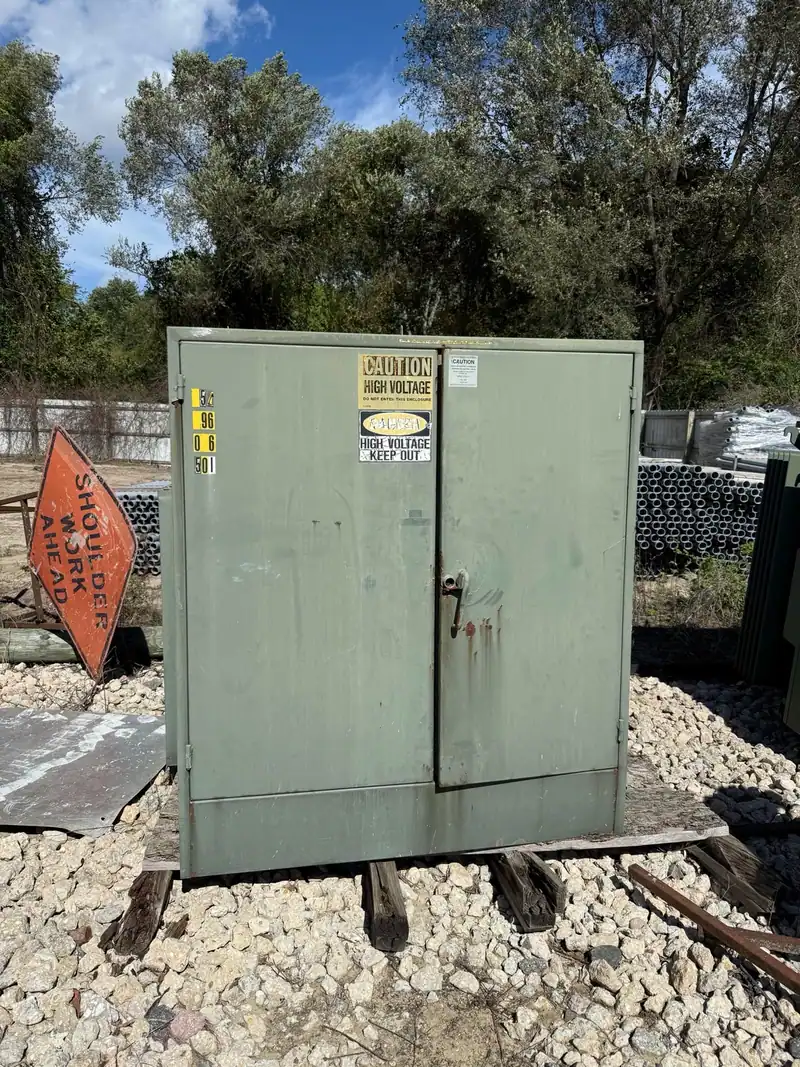
Two transformers with the same kVA rating can have very different values. One may have useful voltages, documented condition and straightforward loading access. The other may require repairs, have an uncommon secondary voltage or sit in a location where removal costs eat into its equipment value.
We buy all brands and sizes, from single-phase units starting at 10 kVA and three-phase units starting at 15 kVA through MVA-class power transformers. This guide explains what affects an offer, without pretending there is a reliable price-per-kVA formula. Our seller guides cover related questions about identification, documentation and pickup preparation.
01Resale value and scrap value measure different things
Resale value comes from a transformer’s usefulness as electrical equipment. A buyer needs compatible capacity, voltages, phase, frequency and construction, along with enough confidence in its condition. A working transformer with an unusual configuration may have a narrower market than a similar unit with ratings that fit more installations.
Scrap value comes from recoverable materials, less the costs of handling, transportation, processing and any required fluid management. Gross equipment weight is not copper weight: it includes steel, core material, insulation, fluid and other components. When sellers ask, “What is my used transformer worth?” the first distinction is whether it has a practical equipment market or primarily material recovery value.
| Value basis | What matters most | Common limitation |
|---|---|---|
| Resale as equipment | Usable ratings, configuration, condition and documentation | Finding a suitable installation |
| Material recovery | Recoverable metals and processing costs | Total weight does not reveal recoverable copper or aluminum |
02kVA, voltages and physical form define the market
Capacity matters, but kVA alone does not establish value. We pay attention to primary and secondary voltages, phase, frequency, impedance and tap arrangements. A nameplate showing 12470GrdY/7200 primary and 480Y/277 secondary describes a specific electrical application. Those ratings must fit the next installation; a larger unit is not automatically more valuable than a smaller, more useful one.
Physical form also narrows the market. Pad-mount equipment has enclosure and connection requirements that differ from substation or indoor dry-type equipment. On liquid-filled power transformers, cooling classes such as ONAN/ONAF help explain the listed capacity ratings. For single-phase pad-mount transformers, primary connections and secondary voltage are especially important. Use our transformer nameplate guide to identify the fields that distinguish your unit.
03Age, condition and new-surplus status affect confidence
Age is useful context, not a complete verdict. Service history, storage conditions, leaks, corrosion, damaged bushings and missing accessories can matter more than the manufacturing year alone. A recently manufactured transformer stored outdoors with open connections presents different concerns from an older unit removed from service with clear maintenance records.
New surplus and used equipment should be described separately. An unused transformer may still have storage damage, incomplete accessories or limited documentation, so “never energized” does not settle every condition question. For used units, tell us why they were removed and whether they were operating at that time. We review failed or damaged transformers case by case; describe known faults rather than labeling them simply “used.”
- Report oil leaks, cracked bushings, enclosure damage and corrosion.
- Identify missing radiators, fans, gauges, cable compartments or other accessories.
- State whether the transformer was operating before disconnection.
- Include storage duration and whether connections remained sealed or protected.
04Winding material, fluid and PCB records change the picture
Copper versus aluminum affects material recovery value, but it does not determine equipment value by itself. Both winding materials are used in transformer designs. A reusable aluminum-wound transformer can have equipment value that a failed copper-wound unit lacks. Do not infer winding material from weight, brand or exterior appearance; use manufacturer documentation or a nameplate designation when available.
For liquid-filled units, identify the fluid as accurately as the records allow, such as mineral oil or FR3 natural ester. Fluid type does not establish PCB status. PCB status must be disclosed and documented, and missing records can leave an important valuation question unresolved. Our guide to transformer PCB documentation explains what sellers should gather. Do not drain fluid to prepare a transformer for an offer.
05Test reports and brand help identify what is being sold
Useful test reports reduce uncertainty when they clearly identify the transformer, test date, methods and results. Depending on the equipment, records may include turns-ratio, winding-resistance, insulation-resistance or oil-test results. These tests answer different questions; no single result proves every aspect of condition. Reports tied to the serial number are more useful than an unexplained statement that a unit “tested good.”
Brand, model and serial number help establish design details and connect the equipment to its records. They do not replace ratings or condition information, and a reference to IEEE C57 standards is not a current condition report. We buy all brands and remain an independent buyer, not affiliated with any manufacturer, including Virginia Transformer Corp of Roanoke. Brand names describe the equipment being offered.
06Quantity, location and access affect the net offer
An equipment value estimate is incomplete without its location and handling requirements. Weight, dimensions, loading arrangements and transportation distance affect the economics of a purchase. An accessible transformer ready for loading presents a different situation from one inside a building, behind restricted access or still connected to electrical service.
Quantity can affect transportation planning, but multiple units do not automatically mean a higher value per transformer. Matching units with clear records are easier to describe than a mixed lot with missing nameplates. Tell us about access restrictions and available loading arrangements, and review preparing a transformer for pickup. We do not perform electrical disconnect work; sellers use their own qualified electricians to de-energize and disconnect.
07Market demand matters more than a fixed pricing formula
Availability and replacement lead times can affect demand for usable equipment. When a needed configuration is difficult to source, a compatible surplus transformer may attract more interest. That does not mean every old transformer rises in value: unusual voltages, missing components or uncertain condition can still limit its market.
For a specific answer to “What is my used transformer worth?” send Virginia Transformer Buyers a clear nameplate photo, overall photos, location, quantity and condition notes through the offer request form. We review the information and may ask about PCB status, tests or access. If the equipment fits, we send a written offer specifying price, freight, loading and payment terms; pickup is scheduled with you, and payment follows those terms. See how the buying process works for details.
Frequently asked questions
Can I estimate my transformer’s value from its kVA rating alone?
No, kVA alone cannot establish a reliable transformer value. Voltage combination, phase, construction, condition and location also matter. Two units with identical capacity may serve different applications and have different transportation requirements. The nameplate provides the starting point, but photos and condition records explain whether the equipment has practical resale potential.
Is a copper-wound transformer always worth more than an aluminum-wound one?
No, copper windings do not automatically make a transformer more valuable as usable equipment. Winding material affects material recovery economics, while resale depends heavily on ratings, configuration and condition. Confirm copper or aluminum through reliable equipment records rather than assumptions based on weight. A suitable, functional aluminum-wound unit may have stronger resale potential than a failed copper-wound unit.
Does an old transformer have only scrap value?
No, age alone does not restrict a transformer to scrap value. Useful ratings, documented service history and satisfactory condition can support resale potential in older equipment. Conversely, a newer transformer with serious damage or incompatible specifications may have limited equipment demand. Provide the manufacturing year alongside condition details rather than treating age as the deciding factor.
Will recent transformer test reports increase my offer?
Recent, relevant test reports can support valuation by reducing uncertainty, but they do not guarantee a higher offer. Their usefulness depends on what was tested, when testing occurred and whether the report identifies the actual transformer. Include complete reports and disclose changes since testing, such as transportation damage, leaks, prolonged storage or a subsequent failure.
Can you value an oil-filled transformer without PCB paperwork?
Missing PCB paperwork leaves a material question unresolved; PCB status must be disclosed and documented. Share any existing fluid analysis, manufacturer records or other relevant documentation and identify which transformer each record covers. Do not assume that age, appearance or a stated fluid type proves PCB status, and do not drain the transformer to obtain an offer.
Why might a transformer offer differ from its original purchase price?
An offer reflects the transformer’s present equipment market and transaction costs, not reimbursement of its original purchase price. Current demand, condition, missing accessories, documentation, freight and loading all affect that calculation. A seller’s installed project cost may also include engineering, electrical work and other expenses that are not recoverable through the sale of the transformer itself.