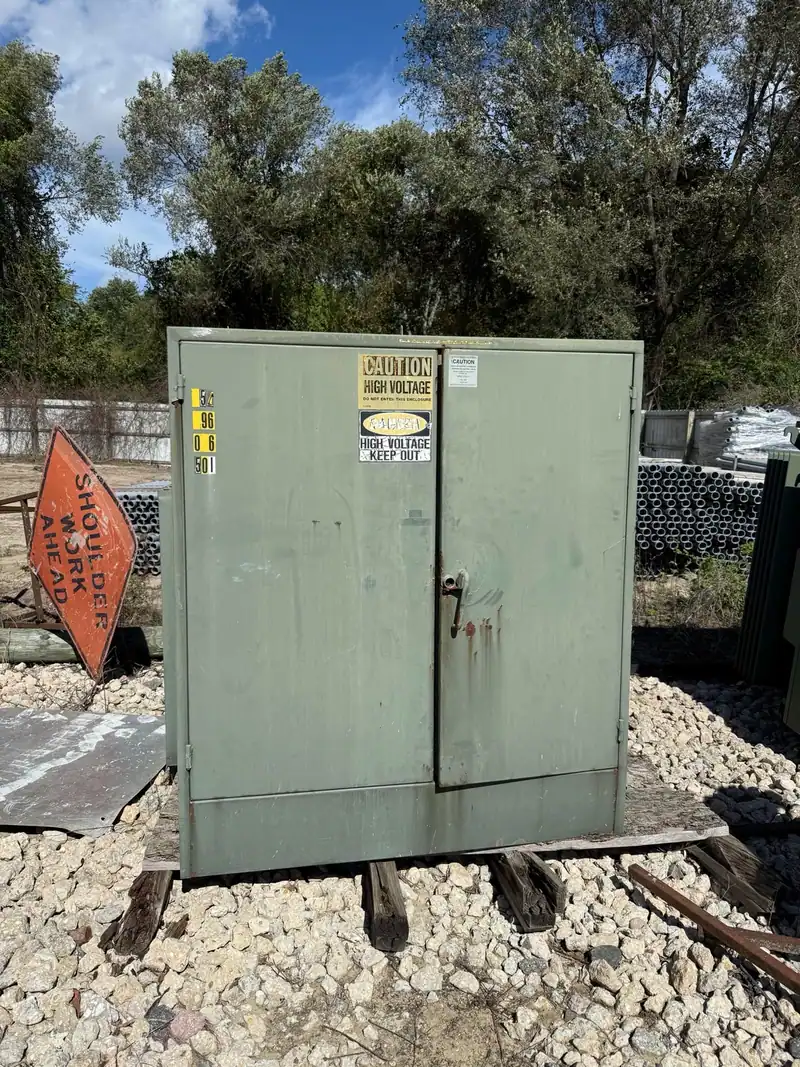
Selling a transformer raises questions that do not come up with ordinary surplus equipment. A readable nameplate can establish the rating, but it does not establish operating condition, fluid status or whether a carrier can reach the unit. This selling transformers FAQ separates those issues so you can identify what information you have and what still needs clarification.
We buy equipment that is still installed, already disconnected, stored as a spare or retired from service. Our transformer equipment overview covers the types we buy. The answers below focus on practical seller questions, including missing records, mixed quantities, loading responsibilities and the difference between a quoted price and the complete written terms.
01Selling basics
We buy all brands of electrical transformers, including pad-mount, pole-mount, substation, unit substation, power, dry-type and cast resin equipment. Oil-filled units and transformers used in solar and wind installations are also within our buying scope. Single-phase ratings start at 10 kVA; three-phase ratings start at 15 kVA and extend through MVA-class power transformers.
Identify equipment by its actual configuration rather than by a general label such as “industrial transformer.” A 480 V dry-type distribution transformer and a liquid-filled substation transformer have different handling and documentation needs. Our transformer size information helps distinguish kVA ratings from voltages, which describe different characteristics of the equipment.
02Condition & documentation
Describe what you know about the transformer without turning assumptions into facts. “Removed from service while operating” is different from “tested after removal,” and neither means the same thing as unused surplus. Include known leaks, damaged bushings, missing accessories, repairs, storage exposure and the reason the equipment was retired.
We pay attention to records that can be tied to the specific unit. A report identified by serial number is more useful than an unlabeled test sheet from the same facility. Our transformer nameplate guide explains the fields to photograph, including manufacturer, serial number, kVA, primary and secondary voltage, impedance and cooling designation.
03Pickup & payment
Freight, loading and payment are terms of the individual written offer, not assumptions that apply to every transformer sale. A unit sitting on an accessible loading dock presents a different situation from a large transformer behind a fence or inside an electrical room. Describe those differences before agreeing to arrangements.
Pickup is scheduled with the seller, and payment follows the written terms. We do not perform electrical disconnect work. Sellers use their own qualified electricians to de-energize and disconnect equipment; loading arrangements do not replace that responsibility or authorize handling equipment that remains electrically connected.
04Reading specifications without guessing
Copy voltage markings exactly when possible. A primary marked 12470GrdY/7200 and a secondary marked 480Y/277 convey connection and voltage information that is lost when shortened to “12 kV to 480.” Include tap information and frequency if readable, and photograph connection diagrams rather than attempting to recreate them from memory.
Cooling classes also help identify the equipment. ONAN and ONAF describe oil-filled transformer cooling arrangements, and a nameplate may show multiple ratings associated with different cooling stages. For substation transformer equipment, photograph the radiator assemblies, fans, bushings and accessory cabinets along with the main tank.
05Keeping sale questions separate from technical advice
We are an independent buyer, not a manufacturer representative or an engineering adviser. References to manufacturers identify the equipment only. Virginia Transformer Buyers is not affiliated with Virginia Transformer Corp of Roanoke or any other manufacturer, and a purchase discussion is not approval to reinstall or energize a transformer.
Questions about electrical safety, fluid handling and environmental obligations belong with the seller’s qualified professionals. We do not provide engineering, legal or environmental advice, and we do not ask sellers to drain fluid. Our seller guides can help organize sale information, but they do not replace site-specific professional guidance.
Frequently asked questions
What types of transformers do you buy?
We buy pad-mount, pole-mount, substation, unit substation, power, dry-type, cast resin and oil-filled transformers, including solar and wind units. Used, new-surplus and decommissioned equipment are within our buying scope; failed units are reviewed case by case. Describe the construction and application, not just the facility it came from. Overall photographs help distinguish an individual transformer from an assembly that includes switchgear or other equipment.
Do you buy every transformer brand?
We buy all transformer brands, rather than limiting purchases to one manufacturer. Send the manufacturer’s name exactly as it appears on the nameplate, along with the model or catalog designation if available. Our transformer brand information describes brands as equipment identifiers only. We are independent and are not affiliated with any manufacturer, including Virginia Transformer Corp of Roanoke. A brand name alone does not establish condition, specifications or suitability for an offer.
What is the smallest or largest transformer you buy?
We buy single-phase transformers from 10 kVA and three-phase transformers from 15 kVA through MVA-class power transformers. Tell us the phase count and nameplate capacity together, because kVA alone does not identify the configuration. Large power units may have more than one capacity rating associated with cooling stages. Include each listed rating, the cooling classes and available weight information rather than choosing only the largest number on the plate.
Can I sell a used transformer or an unused spare?
Yes, we buy both used transformers and new-surplus equipment, including unused spares. Describe whether the unit was ever energized, when it was removed from service if known, and how it has been stored. An unused transformer can still have weather exposure, missing parts or damaged packaging. For used equipment, distinguish operating history from test results; a statement that it worked before removal is not the same as a current test report.
Will you buy a failed or damaged transformer?
We review failed and damaged transformers case by case. Explain the known failure or damage, including leaks, cracked bushings, fire exposure, flooding or missing components, and provide photographs that show the affected areas. If the cause is unknown, say so rather than assigning a diagnosis. Include any existing reports tied to the unit. Review does not guarantee an offer, and a failed transformer should not be described as merely used.
Can I sell a transformer if its PCB status is unknown?
PCB status must be disclosed and documented; unknown status should be identified as unknown, not assumed to be non-PCB. Send available labels, fluid records and relevant laboratory reports for the specific transformer. Age, appearance and manufacturer alone do not establish PCB status. Do not describe equipment as PCB-free without supporting documentation. Questions about applicable handling or environmental requirements should go to your qualified environmental or legal adviser, not be settled by a sale description.
Do I need an oil test before requesting an offer?
You can begin an inquiry with the records you already have, and we may ask for additional test information during review. Existing fluid reports should identify the unit, sample date and results so they can be matched to the equipment. Disclose whether the fluid is mineral oil, FR3 natural ester or another fluid if documented. A dielectric breakdown result does not establish PCB status. We do not ask sellers to drain fluid or provide sampling advice.
What if the transformer nameplate is missing or unreadable?
Tell us the nameplate is missing or unreadable and send any other records that identify the transformer. Useful material can include asset records, purchase documents, drawings and older photographs with a readable serial number or rating. Photograph the full unit and any remaining identification labels. Do not infer voltage, kVA or fluid type from appearance alone. Missing identification can leave important specifications unresolved, so distinguish documented information from a best guess.
Can I sell just one transformer or a mixed lot?
You can send us information about one transformer or a group of units. For a mixed lot, list each transformer separately by manufacturer, serial number, kVA, voltages and condition where those details are available. Match photographs to that list so similar-looking units do not get confused. Identify missing accessories and failed equipment individually rather than applying one condition statement to the entire lot. State whether the units are together or at separate locations.
Do you buy transformers outside Virginia?
We serve sellers throughout Virginia and also review equipment in neighboring states and nationwide on request. Give the equipment’s actual location, not only your company’s headquarters or billing address. Our Virginia service information covers statewide sellers. For equipment elsewhere, location and access still matter to freight and loading terms. If a group is spread across several sites, identify each location and the quantity stored there.
How do you determine an offer for my transformer?
We review the transformer’s specifications, quantity, condition, location and available documentation before making an offer. Nameplate details establish what the unit is; condition notes and records help clarify what is being sold. Freight and loading requirements also need to be understood. There is no automatic price based only on kVA or brand. If the equipment fits, the written offer states the price and transaction terms rather than leaving those details to assumptions.
Who pays freight when I sell a transformer?
The written offer specifies freight terms, including the agreed responsibility for freight. Do not assume freight is included, deducted or paid separately without reading those terms. Location, equipment dimensions and weight, and access conditions are relevant details to disclose. If your understanding of freight differs from the offer, clarify it before accepting. The equipment price should be read together with the freight and loading provisions to understand the complete arrangement.
Who is responsible for loading the transformer?
Loading responsibilities are spelled out in the written offer. Describe whether the transformer is on a pallet, attached to a base, inside a building or positioned where lifting equipment cannot easily reach it. Share documented weight and dimensions when available, along with known access restrictions. Do not assume a carrier will provide lifting equipment or disconnect services. Sellers arrange de-energizing and electrical disconnection through their own qualified electricians.
When will I receive payment for my transformer?
Payment follows the written terms agreed for the sale. Review those terms before accepting the offer so the timing and any conditions are understood. If the wording does not answer your question, ask for clarification before scheduling pickup. Do not treat a proposed pickup date as a separate payment promise. The written agreement establishes the payment arrangement for the equipment, including when payment is due.
How soon can the transformer be picked up?
Pickup is scheduled with you, rather than promised on a fixed timetable for every sale. State any site deadlines, appointment requirements, restricted hours or access limitations early. Equipment that remains installed also needs seller-arranged de-energizing and disconnection before pickup. A requested date is not a confirmed appointment. If access or equipment readiness changes, communicate that change so the agreed arrangements can be clarified before a pickup is attempted.
What paperwork should I gather before selling?
Gather available identification, condition and ownership-related records, along with documented PCB status for fluid-filled equipment. Useful records include nameplate photographs, an equipment inventory, existing test reports and maintenance information tied to serial numbers. State who is authorized to approve the sale if the transformer belongs to a company or another owner. Transaction-specific paperwork should be clarified in the written terms; we do not provide legal advice about title or your authority to sell.
Should I send confidential facility documents with my inquiry?
Send equipment-relevant information, and ask about privacy or document-handling concerns before sharing sensitive facility records. A transformer inquiry generally needs equipment identification, location, quantity and condition notes, not unrelated business records. Check photographs for passwords, access codes or confidential material in the background. Keep relevant technical details readable if you redact a document. Do not assume a confidentiality agreement or particular retention policy applies unless that has been expressly established.
Do you buy dry-type transformers without oil records?
We buy dry-type and cast resin transformers, and oil records are not applicable to a unit that contains no insulating liquid. Send the nameplate and photographs showing the enclosure, windings where safely visible, terminals and any damage. Note missing panels, corrosion, moisture exposure or known overheating. Our dry-type transformer information covers this equipment category. Do not open energized equipment or disturb electrical connections to obtain sale photographs.
Does a recent test report guarantee you will buy the transformer?
No, a recent test report does not guarantee an offer. Reports provide information about the tests performed at a particular time, not every aspect of condition or the transaction. Include the complete available report, its date and the equipment identification. A reference to IEEE C57 standards should retain the specific standard and test context shown in the document. Avoid turning a limited result into a blanket statement that the transformer is suitable for every application.
How do I start selling my transformer?
Send Virginia Transformer Buyers a clear nameplate photo, overall photos, location, quantity and condition notes through the offer request form, by email at Industrial832@gmail.com, or by calling or texting (951) 403-5738. We review the information and may ask about PCB status, tests or access. If the equipment fits, we send written price, freight, loading and payment terms. Pickup is scheduled with you; payment follows those terms. See how the sale works for details.