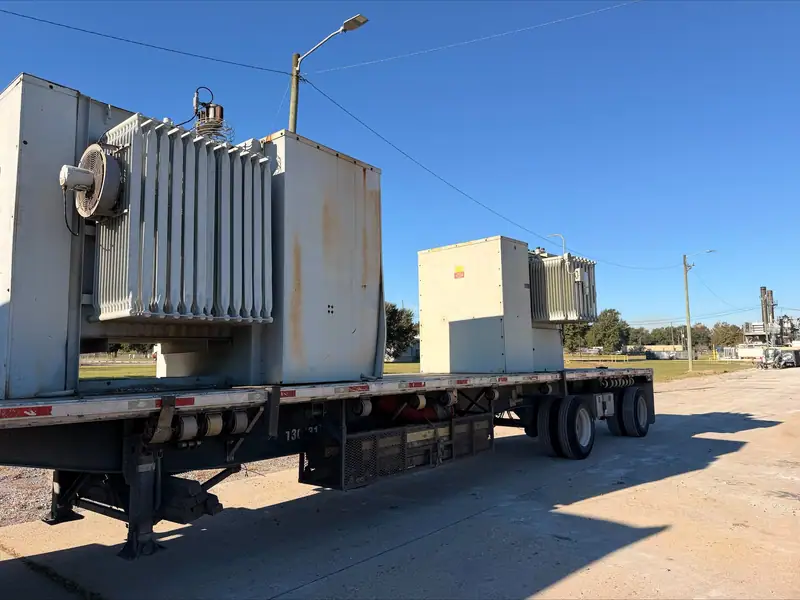
ABB-branded transformers remain very common on Virginia industrial, utility and commercial sites. We buy equipment released by plant changes, service upgrades, project cancellations and replacement programs, including new-surplus units that never entered service. An ABB nameplate identifies the manufacturer, but the ratings and condition tell us what equipment you actually have.
If you need to sell ABB transformer equipment, start with identification rather than an estimated weight or a description such as “large industrial transformer.” A readable plate helps distinguish a distribution unit from a substation transformer and establishes its electrical configuration. Our transformer nameplate guide explains where to find the details that matter.
01ABB Transformer Types We Buy
We buy ABB transformers across the distribution and power range: single-phase units from 10 kVA and three-phase units from 15 kVA through MVA-class equipment. The ABB lines we commonly see include pad-mount distribution transformers, ventilated dry-type units, cast resin transformers, substation and power transformers, and complete unit substations.
For ABB pad-mount transformers, show both the tank and terminal-compartment arrangement without opening energized equipment. For dry-type transformers, identify whether the enclosure and all accessible external components remain intact. Larger substation units need photos that show radiators, bushings, conservators where fitted, and any detached accessories.
- Pad-mount distribution units: kVA, primary and secondary voltages, and loop-feed or radial-feed configuration.
- Dry-type and cast resin units: ratings, enclosure condition, winding information and visible damage.
- Substation and power transformers: MVA ratings, cooling classes, impedance and accessory completeness.
- Unit substations: transformer details plus the identity and condition of attached switchgear.
02Read the ABB Nameplate Before Describing the Unit
Photograph the entire nameplate straight on, then take a closer image if small lettering is difficult to read. Include the manufacturer, serial number, manufacturing year when shown, kVA or MVA, phase, frequency, primary voltage, secondary voltage, impedance and tap information. Keep serial numbers tied to individual units when several similar ABB transformers are available.
Record voltage markings exactly. A primary marked 12470GrdY/7200 and a secondary marked 480Y/277 convey more information than “12 kV to 480 volts.” On larger liquid-filled units, show cooling ratings such as ONAN/ONAF and any separate ratings associated with fan operation. Photograph plates carrying fluid type, fluid volume, weights or applicable IEEE C57 standards as well.
03What Matters Beyond the ABB Brand Name
We pay attention to usable ratings, voltage configuration, condition and completeness. An ABB transformer removed during a capacity upgrade is different from one taken out after an internal fault. Tell us why it left service, whether it was operating at removal, how it has been stored and whether any parts were removed.
For liquid-filled equipment, identify the fluid from the documentation rather than guessing from appearance. Mineral oil and FR3 natural ester are distinct insulating liquids; neither description substitutes for documented PCB status. For cast resin transformers, useful photos show accessible winding surfaces, terminals and supports without dismantling the equipment.
- Disclose leaks, cracked bushings, damaged terminals, corrosion and missing radiators or fans.
- Provide existing test reports with dates and the matching serial number, if available.
- Identify detached accessories and show whether they are included with the transformer.
- Disclose and document PCB status for liquid-filled equipment.
- Describe fire exposure, flooding, winding failure or other damage; failed units receive case-by-case review.
04ABB, Hitachi Energy and Older Westinghouse Equipment
ABB's power grids business, including transformers, became Hitachi ABB Power Grids in 2020 and was renamed Hitachi Energy in 2021. Those changes can create uncertainty when a seller compares an older ABB plate with newer project documents. Use the manufacturer name printed on the equipment and send any supporting records; our Hitachi Energy equipment page covers units carrying that name.
ABB acquired Westinghouse's transmission and distribution business in 1989, so many older ABB units sit beside Westinghouse equipment in the field. Do not assume adjacent transformers share a manufacturer, age or rating. We are an independent buyer, not affiliated with ABB, Hitachi Energy, Westinghouse or Virginia Transformer Corp of Roanoke. Brand names only describe equipment.
05Virginia Sites Where Surplus ABB Units Become Available
Typical sources include industrial plants replacing process equipment, commercial properties changing electrical services, utility sites retiring distribution equipment and contractors holding unused project inventory. ABB unit substations may become surplus when a production area closes, while pad-mount units may remain after a facility changes its service requirements.
We buy from sellers in every region of Virginia. Describe the equipment's actual location and storage setting, including whether it remains inside an electrical room, sits outdoors on a pad or has moved to warehouse storage. For unit substations, explain whether the transformer is separate or still connected mechanically to primary or secondary equipment; photos should show the boundaries of what is being sold.
06Prepare an ABB Transformer for a Buyer Review
Keep the transformer intact and preserve identification plates and available records. We do not ask sellers to drain fluid, and we do not perform electrical disconnect work. Use your own qualified electricians to de-energize and disconnect equipment. Take photos only from safely accessible positions; do not open energized compartments to obtain additional details.
Send clear nameplate and overall photos, location, quantity and condition notes through Get an Offer. We review the information and may ask about PCB status, test data or site access. If the equipment fits, we send a written offer covering price, freight, loading and payment terms, then schedule pickup with you; payment follows those terms. See how the selling process works for details.
Frequently asked questions
Can I sell an ABB transformer after the Hitachi Energy name change?
Yes, we buy ABB-branded transformers even though ABB's power grids business became Hitachi ABB Power Grids in 2020 and Hitachi Energy in 2021. Identify your equipment by its own nameplate rather than relabeling it with the current business name. Include the serial number and manufacturing year when shown.
Do you buy ABB unit substations with attached switchgear?
We buy ABB unit substations, and you should identify which attached components are included in the sale. Send the transformer nameplate plus overall photos showing primary equipment, secondary equipment and their connections. Separate plates help distinguish the transformer ratings from switchgear ratings and prevent confusion about the equipment package.
What if the year on my ABB transformer nameplate is unreadable?
Send the readable nameplate information even if the manufacturing year is missing or unreadable. The serial number, ratings and overall photos still provide useful identification. Include existing purchase records or test reports if they match the unit, but do not estimate a year from paint color or nearby equipment.
Can I sell a failed ABB oil-filled transformer?
Failed ABB oil-filled transformers are reviewed case by case. Describe the failure, known damage, leaks and missing components, and provide existing reports if available. PCB status must be disclosed and documented. Leave the fluid in place; we do not ask sellers to drain transformers before submitting them for review.
Do you buy unused ABB transformers from canceled projects?
Yes, we buy new-surplus ABB transformers from canceled projects and unused inventory. Send the nameplate and photos showing packaging, storage conditions and included accessories. Explain whether the unit was ever energized, installed or exposed to damage; “unused” alone does not describe its present condition or completeness.
Can I sell several ABB transformers with different voltage ratings?
Yes, you can submit several ABB transformers with different voltage ratings. Photograph each nameplate and label the corresponding overall photos so ratings do not get mixed between units. List quantity by matching configuration, not just total count. Our transformer selling page covers submitting equipment for buyer review.