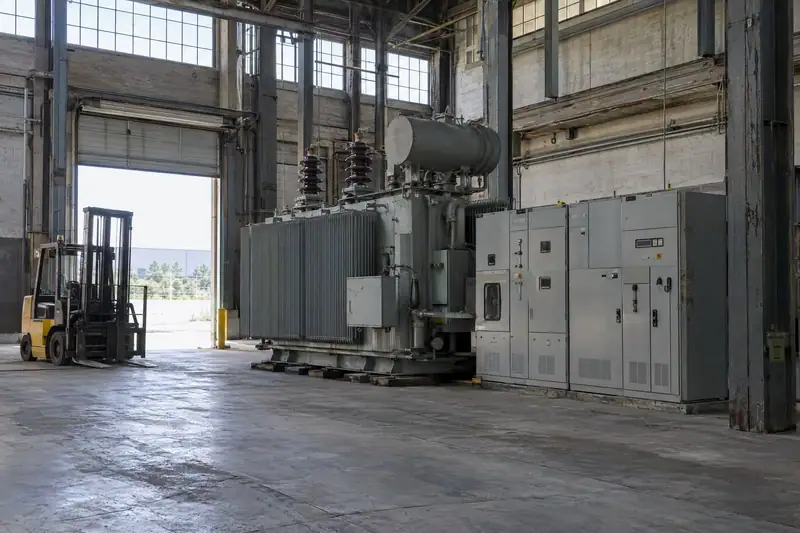
A transformer taken out of service after a fault is not the same as a working spare. The event, protection response and resulting damage matter as much as the nameplate. We buy failed and damaged units case by case, including oil-filled, dry-type, cast resin, pad-mount and MVA-class equipment. Our broader transformer buying categories cover equipment that has not suffered a failure.
If you need a failed & damaged transformers buyer, start with an honest description rather than trying to make the unit look serviceable. A tripped breaker, damaged bushing or burned winding tells a different story. We serve every region of Virginia and also review equipment in neighboring states and nationwide on request.
01Tell Us What Failed, Not Just That It Is Out of Service
We pay attention to the difference between a confirmed internal failure and a transformer removed after a protective trip. A trip alone does not establish that the windings failed. Tell us whether the event involved an external cable fault, a bushing flashover, differential protection, sudden pressure protection or an unknown cause.
Give us the sequence you know: what happened before the outage, what protection operated and what technicians found afterward. Disclose previous repairs, repeated trips, leaks, overheating and any unsuccessful attempt to return the unit to service. If the cause is unknown, say that plainly.
We do not need a polished failure report to start a review. Existing maintenance notes, incident photographs and inspection findings can help distinguish localized damage from a broader failure. For pad-mounted transformers, include cabinet and termination-compartment damage along with the tank condition.
02Nameplate Details and Existing Test Records That Help
Send a readable nameplate showing manufacturer, serial number, kVA or MVA, phase, primary and secondary voltages, impedance and cooling class where listed. Ratings such as 12470GrdY/7200 and 480Y/277 identify different sides of the transformer; ONAN/ONAF ratings may show different capacities. Our transformer voltage ratings guide explains common nameplate notation.
Existing relay targets and event records help describe the protection response. Dissolved gas analysis, or DGA, can provide evidence of thermal or electrical activity in oil-filled equipment, but one result does not establish the entire failure history. Include sampling dates and earlier results if available.
Existing megger, or insulation-resistance, results are useful with the test date, test voltage, winding connections and temperature. They do not prove that a transformer is safe to energize. Send records you already have; do not energize damaged equipment or perform new testing just to support a sale.
- Overall photographs and close-ups of the damaged areas
- Existing relay targets, trip reports or event logs
- DGA reports and available oil-condition records
- Insulation-resistance, winding-resistance or turns-ratio reports
- Fluid type, including mineral oil or FR3 natural ester
- Location, quantity, missing parts and known handling restrictions
03Flood, Fire and Impact Damage Need Specific Disclosure
Flood exposure needs more detail than “got wet.” Tell us the approximate water level, exposure duration and whether water entered the enclosure or tank, if known. Disclose contaminated water exposure and visible corrosion. A dry-type unit with wet insulation presents a different condition from an oil-filled unit with exterior water exposure.
For fire-exposed equipment, describe where the fire occurred and what is visibly affected. External soot does not establish internal condition, and an intact tank does not rule out heat damage. Photograph damaged bushings, distorted metal, burned cable compartments and missing accessories without opening unsafe equipment.
For dropped or struck transformers, disclose tank dents, displaced radiators, broken bushings, damaged lifting points and any fluid loss. Identify parts removed after the incident. Flood, fire and impact damage all receive case-by-case review; complete disclosure helps us avoid treating a severely damaged unit as a routine used transformer.
04Repair Potential, Core-and-Coil Salvage or Scrap Value
A failed transformer may retain value without being ready for service. Localized accessory or bushing damage can differ substantially from winding deformation, burned insulation or extensive core damage. We look at the reported failure, available records, rating and physical condition when reviewing the equipment case by case.
Core-and-coil salvage means evaluating the internal assembly for possible recovery, not assuming it is reusable. The windings and core may be affected by electrical forces, heat or contamination even when exterior damage looks limited. Missing components and prior dismantling also change what remains available.
Some units only have scrap value, and we will say so. Others may not fit our buying requirements. A failed & damaged transformers buyer should not describe every damaged unit as repairable, and we do not promise a resale or repair outcome. Equipment never placed in service belongs in a different category unless damaged; see new-surplus transformers.
05Keep Failed Equipment De-Energized and Disclose Fluid Status
Never re-energize a failed or damaged transformer to demonstrate whether it works for a buyer. Sellers use their own qualified electricians to de-energize and disconnect equipment. We do not perform electrical disconnect work or provide engineering, legal or environmental advice.
PCB status must be disclosed and documented. Share available laboratory reports, labels and fluid records, and state clearly when PCB status is unknown. Identify known leaks, breached tanks, missing drain valves or fluid already removed by others. Do not assume a fluid designation alone resolves every documentation question.
We do not ask sellers to drain fluid. Describe the transformer as it stands, including any containment, restricted access or unstable physical condition. Photos should come from a safe location; a sale inquiry is not a reason to enter a damaged enclosure or disturb compromised equipment.
06Submit the Damaged Unit With Its History Intact
Send a clear nameplate photo, overall photos, location, quantity and condition notes through our equipment offer form. We review the information and may ask about PCB status, existing test data or site access. If the equipment fits, we send a written offer spelling out price, freight, loading and payment terms; pickup is scheduled with you and payment follows those terms. See how the buying process works for details.
Identify whether the transformer is still installed, staged outside or stored indoors. Include any known weight, loading restrictions and damaged lifting provisions. Keep the nameplate and existing records associated with the correct unit, especially when several similar transformers were removed during the same outage.
Frequently asked questions
Can I sell a transformer that tripped but has no confirmed internal fault?
Yes, we review transformers removed after a trip even when the cause has not been confirmed. Describe the unit as unverified rather than declaring it failed or serviceable. Share existing relay targets, incident notes and test reports, and disclose whether anyone attempted to re-energize it after the event.
Do you buy transformers with burned windings?
We review transformers with burned windings case by case. Tell us how the damage was identified and whether the tank, core, bushings or other components were also affected. Burned windings do not establish repair potential or a purchase value by themselves. Some units may retain salvage value, while others only have scrap value.
Can I sell a flooded dry-type transformer?
We review flooded dry-type transformers case by case, including units with known water intrusion. Disclose the water source, approximate depth and duration, visible contamination and any drying or cleaning already performed. Do not re-energize the unit to check its condition. Existing inspection and test records can help describe what happened.
Do I need a DGA report before selling a failed oil-filled transformer?
You do not need to obtain a new DGA report just to submit a failed transformer for review. Send existing reports if available, with dates and the related failure history. We may ask questions about the records. DGA is useful evidence, but it does not replace an accurate description of physical damage and known operating events.
Will a cracked bushing make my transformer worth only scrap?
A cracked bushing does not automatically mean the entire transformer has only scrap value. The important questions include whether the damage caused fluid loss, moisture entry, flashover or internal damage. Send photographs and existing findings, and disclose how long the unit remained in that condition. We review damaged units case by case.
Can I sell a damaged transformer if its PCB status is unknown?
You can submit a damaged transformer with unknown PCB status for an initial review, but you must disclose that uncertainty. PCB status must be documented; do not describe an unverified unit as non-PCB. Share any existing fluid reports or labels and identify known leaks or contamination without draining the transformer for the sale.