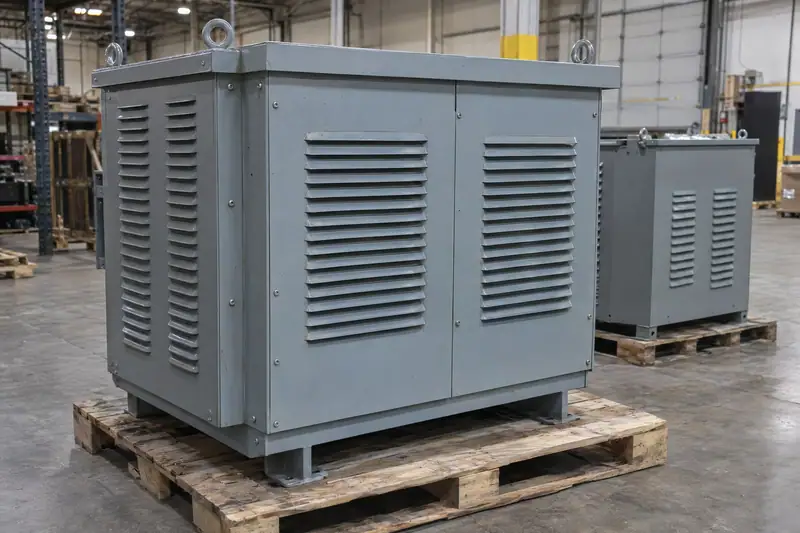
A Federal Pacific transformer left after a building renovation, production-line change, or substation replacement may still be useful equipment rather than scrap. We buy new-surplus, used, and decommissioned units across Virginia, including single-phase transformers from 10 kVA and three-phase transformers from 15 kVA through MVA-class equipment. Failed units receive case-by-case review.
Federal Pacific transformers are built by Electro-Mechanical, headquartered in Bristol, Virginia, and founded in 1958. Electro-Mechanical purchased Federal Pacific Transformer Company in 1986 and moved it from Chicago to Bristol, later unifying its brands under the Federal Pacific name. Those details identify the manufacturer, not our business. See our transformer brands page for other equipment we buy.
01Federal Pacific Equipment We Buy
We buy Federal Pacific low-voltage dry-type transformers, medium-voltage dry-type transformers, and unit substation transformers. A floor-mounted dry-type unit serving building loads needs different documentation from a transformer connected to medium-voltage switchgear. Start with the actual ratings, not just the Federal Pacific logo or the cabinet's apparent size.
For dry-type transformer equipment, we pay attention to kVA, primary and secondary voltages, phase, frequency, winding material when documented, and enclosure condition. For a complete unit substation, identify whether the sale includes only the transformer or also the primary and secondary sections. Photos should make those boundaries clear.
- Low-voltage dry-type units removed from commercial buildings or industrial distribution systems.
- Medium-voltage dry-type units serving larger facility loads.
- Unit substation transformers, with connected equipment identified separately.
- Unused surplus units, including stored equipment with packaging or shipping records.
- Failed Federal Pacific units, reviewed case by case with the failure disclosed.
02Read the Nameplate Before Describing the Transformer
The nameplate tells us which Federal Pacific transformer you have. Photograph it straight on, close enough to read the model or catalog number, serial number, kVA, voltage ratings, phase, and frequency. Include the manufacturing year or date code if shown. Do not substitute the date a facility installed the transformer for its manufacturing date.
Connection details matter as much as voltage numbers. A secondary marked 480Y/277 identifies a wye system with 480 volts line to line and 277 volts line to neutral; a 480-volt delta secondary is not the same configuration. Capture the winding diagram, taps, impedance, temperature-rise rating, and cooling designation if present. Our transformer nameplate guide explains the fields without requiring you to interpret everything yourself.
- Take separate close-ups if one photo cannot capture the whole plate legibly.
- Photograph any additional rating plates, connection diagrams, or replacement labels.
- Keep serial numbers tied to individual units when selling several similar transformers.
- List any discrepancy between the nameplate and your inventory records.
03What Matters on Federal Pacific Dry-Type Units
On a low-voltage dry-type transformer, we look for a usable enclosure, identifiable ratings, and a clear account of its service history. Surface wear on a cabinet is different from heat damage at a terminal or contamination around the windings. Send exterior photos and existing interior photos if available; do not open energized equipment to obtain them.
Medium-voltage dry-type transformers need more detail about insulation condition, terminations, and storage. Report visible cracks, tracking, moisture exposure, missing barriers, or damaged supports. Available maintenance and test records help explain condition, but a photograph cannot establish electrical fitness. Sellers must use their own qualified electricians to de-energize and disconnect equipment.
- Describe whether the unit was operating when removed, stored unused, or taken out after a fault.
- Identify missing covers, lugs, terminal hardware, fans, or temperature-monitoring components.
- Disclose outdoor storage, roof leaks, flooding, or other moisture exposure.
- Provide winding material from records or the plate rather than guessing from appearance.
04Document Unit Substations as Connected Assemblies
A Federal Pacific unit substation transformer may have connections and enclosure features specific to its installation. Photograph all sides, the primary connection area, the secondary connection area, and the adjoining equipment. Bus connections, throat dimensions, and enclosure arrangements can affect how the transformer fits another installation; matching kVA alone does not establish compatibility.
For larger substation transformer equipment, include cooling ratings and any separate accessory plates. Where the plate lists ONAN and ONAF ratings, record both rather than reporting only the higher capacity. If the transformer is liquid-filled, identify the fluid from documentation, disclose and document PCB status, and report leaks. We do not ask sellers to drain fluid.
- State which switchgear, bus sections, cabinets, or loose accessories are included.
- Provide dimensions and documented weight when available.
- Identify removed connections or modifications made during decommissioning.
- Photograph access routes and note obstacles between the transformer and the loading area.
05Typical Federal Pacific Surplus Sources in Virginia
Building renovations can leave low-voltage dry-type transformers behind when distribution layouts change. Industrial shutdowns, production changes, and facility upgrades can release larger dry-type units or unit substation transformers. Electrical contractors may also have unused project surplus. In each situation, distinguish equipment removed because the project changed from equipment removed because it failed.
We serve sellers in every Virginia region, from Northern Virginia and Hampton Roads to the Richmond area, Shenandoah Valley, and Southwest Virginia. Location helps define freight and access requirements, but it does not replace equipment details. A stored unit in Bristol and an installed unit in Norfolk both need readable identification, honest condition notes, and a clear description of what is available.
06Prepare a Clear Federal Pacific Equipment Listing
If you want to sell Federal Pacific transformer equipment from a mixed inventory, give each unit its own identifier. Separate installed, disconnected, unused, and failed equipment instead of calling the entire lot “used transformers.” For stored surplus, include packaging condition and any evidence of moisture or handling damage; unused does not necessarily mean undamaged.
Send nameplate and overall photos, location, quantity, and condition notes through our offer form. We review the equipment and may ask about PCB documentation, test data, or access. If it fits, we send a written offer specifying price, freight, loading, and payment terms, then schedule pickup with you; payment follows those terms. See how the sale works for details.
Frequently asked questions
Do you buy older Federal Pacific transformers with Chicago identification?
Yes, we buy older Federal Pacific transformers with Chicago identification when the equipment fits our buying requirements. Federal Pacific Transformer Company was purchased in 1986 and moved from Chicago to Bristol, Virginia. An older location on the plate is useful identification, not enough to determine condition. Send the complete plate, serial number, ratings, and current photos.
Can I sell a Federal Pacific transformer without knowing its manufacturing year?
Yes, you can submit a Federal Pacific transformer even if its manufacturing year is unknown. Photograph the serial number, model or catalog number, and any date markings rather than estimating its age. Installation records may add context, but installation year and manufacturing year are different. Note clearly when a date is unavailable.
Do you buy Federal Pacific dry-type transformers with missing covers?
We review Federal Pacific dry-type transformers with missing covers case by case as damaged or incomplete equipment. Identify every missing part and provide photos showing the enclosure and exposed areas without approaching energized components. Missing covers, barriers, or hardware affect the equipment description and potential reuse; do not describe an incomplete unit as ready to install.
Can I sell only the Federal Pacific transformer from a unit substation?
Yes, we buy the Federal Pacific transformer separately from a unit substation when the equipment fits. Specify that adjoining switchgear and bus sections are excluded, and photograph the transformer connections and enclosure arrangement. Have your qualified electricians handle de-energizing and disconnect work. We do not perform electrical disconnection or provide engineering advice about separating the assembly.
What should I disclose about a failed Federal Pacific transformer?
Disclose the known failure, symptoms, and any available inspection or test findings before offering a failed Federal Pacific transformer. We review failed units case by case. Explain whether the problem involved overheating, insulation failure, physical damage, or another known event, and distinguish confirmed findings from guesses. For liquid-filled equipment, PCB status must be disclosed and documented.
Is Virginia Transformer Buyers affiliated with Federal Pacific in Bristol?
No, Virginia Transformer Buyers is an independent buyer and is not affiliated with Federal Pacific, Electro-Mechanical, or any manufacturer. Federal Pacific and other brand names describe the equipment we buy. We are also not affiliated with Virginia Transformer Corp of Roanoke. The seller's equipment identification does not imply a manufacturer relationship.