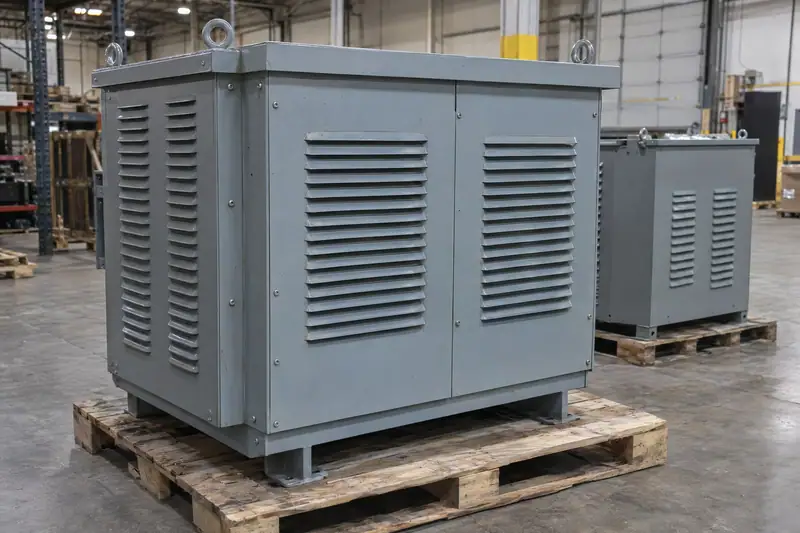
Jefferson Electric builds dry-type transformers and is based in Franklin, Wisconsin. Its units are common low-voltage distribution transformers in commercial and light industrial buildings. We buy surplus and used Jefferson Electric equipment from sellers throughout Virginia, including new-surplus units left over after a project changes.
When you want to sell Jefferson Electric transformer equipment, the nameplate tells us more than the cabinet's appearance. A general-purpose distribution unit, a buck-boost transformer, and an encapsulated unit can have very different ratings and installation arrangements. Our dry-type transformer buying page covers the broader category; this page explains the Jefferson-specific details to send.
01Jefferson Electric equipment we buy
We buy Jefferson Electric general-purpose dry-type transformers within our size range. These often serve building distribution loads, with ratings such as 480 V primary and 208Y/120 V secondary. Send the actual voltage markings rather than describing the unit simply as a step-down transformer, because primary and secondary configurations affect where it can be reused.
We also buy eligible buck-boost and encapsulated transformers. These descriptions are not interchangeable: buck-boost describes a voltage-adjustment application, while encapsulated describes a construction method. Small buck-boost units may fall below our minimum size, so include the individual nameplate kVA rather than only the load rating of the connected installation.
- General-purpose dry-type: include phase, frequency, kVA, primary voltage, secondary voltage, and tap information.
- Buck-boost: include winding voltages, individual unit kVA, quantity, and any available connection diagram.
- Encapsulated: include the enclosure marking, mounting arrangement, and clear photos of the terminals or leads.
- New surplus: show packaging, labels, and whether the unit has ever been installed or energized.
02Read the nameplate before describing the unit
Photograph the complete Jefferson Electric nameplate straight on, with enough light to read the smaller fields. We pay attention to the catalog or model number, serial number, kVA, phase, frequency, primary and secondary voltages, and connection diagram. For a unit marked 480 V to 208Y/120 V, preserve the full notation; 208 V alone omits the neutral-related information shown by the wye rating.
Include the manufacturing year or date code if it appears on the plate, packaging, or original paperwork. Do not estimate a year from cabinet color or the age of the building. If the serial number is readable but the date is not, send it as shown and identify the date as unknown. Our guide to transformer nameplate fields helps you locate the information without guessing.
Temperature rise, insulation class, impedance, and enclosure type can also help distinguish units with similar kVA ratings. Photograph any separate wiring label or tap diagram. If the transformer remains installed, use only labels accessible without exposing energized parts; ask your qualified electrician to obtain anything that requires safe access inside the enclosure.
03What matters on used Jefferson dry-type units
We pay attention to completeness and condition, not just whether a transformer was operating when removed. Tell us about overheating, unusual noise, trips, water exposure, damaged leads, missing terminal hardware, or repairs. Overall photos should show the cabinet, mounting points, ventilation openings, and any visible damage. Include existing test records if you have them; do not perform energized testing just to prepare a sale.
Storage conditions matter for dry-type equipment. Explain whether the unit stayed indoors, sat in an unconditioned warehouse, or was exposed to rain during removal. Dust on a cabinet is different from moisture exposure or visible heat damage. Failed or damaged units are reviewed case by case, with the failure history disclosed.
For multiple units, identify each transformer separately rather than sending one representative plate for the whole lot. Two similar cabinets may contain different voltage combinations or ratings. A 75 kVA transformer should be listed by its own nameplate, even when it came from the same project as larger or smaller Jefferson units.
04Buck-boost ratings need extra attention
A buck-boost transformer's individual nameplate kVA is not necessarily the same as the load kVA it can serve in an autotransformer connection. The usable load capacity depends on the supply voltage, required output voltage, and connection. Send the original plate and connection diagram instead of advertising the unit solely by the capacity of the equipment it previously supplied.
Tell us whether you have one transformer or a matched group from a three-phase installation. Identify each unit's winding voltages and rating, and photograph any connection labels retained with the equipment. Our minimums are 10 kVA for single-phase transformers and 15 kVA for three-phase transformers; do not add together unrelated small units or substitute connected-load capacity for nameplate size.
We do not provide engineering advice on reconnecting buck-boost equipment. A seller's qualified electrician should handle de-energizing and disconnecting the installation. Keep existing diagrams and notes with the units, because they help describe what is being sold without requiring anyone to reconstruct the previous circuit.
05Typical Virginia sources of Jefferson surplus
Commercial renovations can leave Jefferson Electric transformers available when tenant loads change or distribution equipment is replaced. Light industrial facilities may also have units removed during machinery changes, building consolidation, or electrical upgrades. We buy from sellers in every Virginia region; the equipment's location and actual condition matter more than the type of business that previously used it.
Contractor inventory and canceled projects can produce new-surplus units that have never been energized. Distinguish unopened stock from units that were unpacked, mounted, or briefly connected. For warehouse lots, group the inventory by model, kVA, and voltage, but retain a separate identification photo for each unit.
If the lot includes other manufacturers, label those units separately. Brand names describe the equipment only, and Virginia Transformer Buyers is an independent buyer, not affiliated with Jefferson Electric or any other manufacturer, including Virginia Transformer Corp of Roanoke. Our transformer brands page provides context for mixed-brand inventory.
06Prepare a clear Jefferson Electric equipment submission
To sell Jefferson Electric transformer inventory, send clear nameplate and overall photos, location, quantity, and condition notes through the equipment offer form. We review the details and may ask about test data, PCB status, or site access; PCB status must be disclosed and documented. If the equipment fits, we provide a written offer covering price, freight, loading, and payment terms, then schedule pickup with you. See how the buying process works for details.
Keep the equipment intact while it is being described. We do not perform electrical disconnect work or ask sellers to drain fluid. Use your own qualified electrician to de-energize and disconnect installed equipment, and describe stairs, doorways, loading access, or other restrictions that affect moving the unit.
Frequently asked questions
Can I sell a Jefferson Electric transformer with an unreadable model number?
You can submit a Jefferson Electric transformer with an unreadable model number, but send every legible nameplate field and clear overall photos. A serial number, kVA, voltage markings, phase, and separate connection label may help identify the equipment. State which information is missing rather than guessing. Missing identification can limit our ability to determine whether the unit fits.
Do you buy small Jefferson Electric buck-boost transformers?
We buy eligible Jefferson Electric buck-boost transformers within our size range, starting at 10 kVA single-phase and 15 kVA three-phase. Many small buck-boost units fall below those minimums. Send the individual transformer's nameplate rating, not just the load capacity quoted for an autotransformer connection, and identify how many separate units you have.
Does an encapsulated Jefferson transformer count as dry-type?
Yes, an encapsulated Jefferson transformer is dry-type equipment; encapsulation does not make it an oil-filled transformer. Send its nameplate rating, enclosure marking, and photos showing the mounting arrangement and lead or terminal condition. Do not assume that encapsulation alone establishes suitability for outdoor use; describe the enclosure rating actually marked on the equipment.
Can I sell Jefferson Electric units still installed in a building?
Yes, you can submit installed Jefferson Electric units for review using safely accessible photos and available records. Tell us they remain connected and describe the planned removal timing. We do not perform electrical disconnect work. Your own qualified electrician must de-energize and disconnect the equipment, and loading responsibilities are addressed in the written offer.
Will you review a Jefferson transformer that overheated or failed?
Yes, we review failed or damaged Jefferson Electric transformers case by case. Describe the overheating or failure event, whether the unit was re-energized afterward, and any known winding or insulation damage. Include existing test results and photos of affected areas if safely available. Whether we make an offer depends on the unit's details and condition.