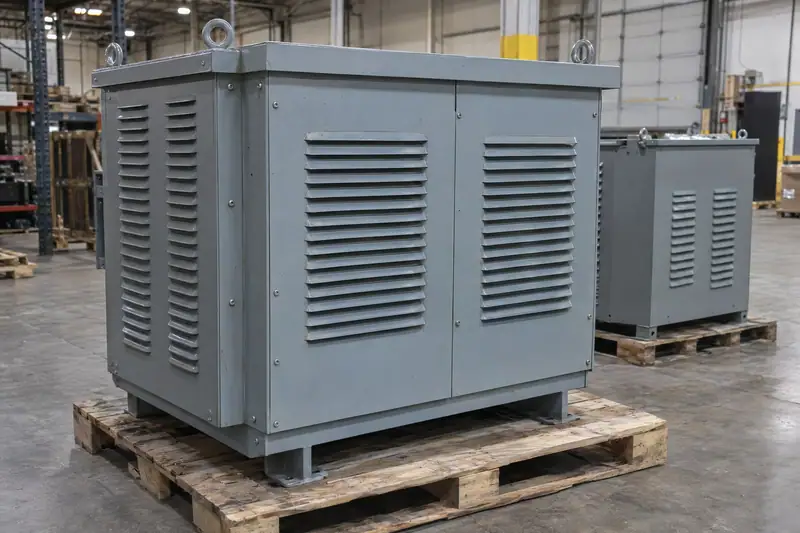
We buy Hammond Power Solutions transformers left over from projects, removed during upgrades or held as spare equipment. Hammond Power Solutions is headquartered in Guelph, Ontario, and is one of North America’s largest dry-type transformer makers. Hammond units are common in industrial plants, data centers and commercial buildings, where similar-looking enclosures can contain transformers built for very different electrical duties.
This page focuses on the details that distinguish an ordinary distribution transformer from an HPS unit intended for drives, nonlinear loads or medium-voltage service. Our dry-type transformer buying page covers the broader equipment category. Brand names describe the equipment only; Virginia Transformer Buyers is an independent buyer and is not affiliated with Hammond Power Solutions or any other manufacturer.
01HPS equipment lines we buy
We buy general purpose HPS dry-type transformers used to supply building and plant loads. Common nameplate combinations include a 480-volt primary and 208Y/120-volt secondary, but the actual voltages and winding connections matter more than the enclosure’s appearance. A three-phase distribution unit is not interchangeable with a single-phase transformer simply because both carry the same kVA rating.
We also buy medium-voltage dry-type, drive isolation and harmonic mitigating transformers. These units need closer identification because insulation ratings, impedance and winding arrangements can distinguish them from standard distribution equipment. We buy single-phase transformers from 10 kVA and three-phase units from 15 kVA through MVA-class equipment.
- General purpose dry-type: record primary voltage, secondary voltage, phase and kVA.
- Medium-voltage dry-type: include insulation level, taps, cooling designation and enclosure details.
- Drive isolation: identify the drive application and any secondary winding configuration shown.
- Harmonic mitigating: capture phase-shift information and the exact catalog or model number.
02Identify the transformer from its nameplate
The HPS nameplate is the starting point for identifying a unit accurately. Capture the full plate, including the catalog or model number, serial number, kVA, frequency, phase, primary and secondary voltages, and connection diagram. Include the manufacturing year or date code if shown. If no year appears, report it as unknown rather than estimating from the building’s age.
We pay attention to impedance, temperature rise, insulation class, tap positions and listed weight when those fields are available. Medium-voltage plates may also show basic impulse insulation level, or BIL. Our guide to reading transformer nameplates explains these fields. Keep enclosure labels separate from the main electrical nameplate; an enclosure marking alone may not identify the transformer inside.
03Why drive and harmonic ratings matter
A drive isolation transformer supplies equipment associated with motor drives, while a harmonic mitigating transformer uses specified winding arrangements and phase relationships to reduce certain harmonic effects in an electrical system. Those functions are not established by kVA alone. We need the actual model and connection information rather than a description such as “480-volt plant transformer.”
A K-factor rating indicates suitability for the heating effects of specified nonlinear loads; it does not, by itself, mean the transformer mitigates harmonics. Likewise, a drive isolation unit may have multiple secondary windings that deserve separate documentation. For a 300 kVA transformer, winding configuration and duty can be just as important to identification as the 300 kVA rating. Preserve any original diagrams or specification sheets that explain those features.
04Condition details that matter on HPS dry-type units
We buy used and new-surplus HPS equipment, but those descriptions should reflect its actual history. An unused transformer stored in a damp room is different from an unused unit kept protected in its original packaging. Report water exposure, visible corrosion, broken insulators, damaged terminals, missing panels and any evidence of overheating. Do not energize equipment merely to demonstrate that it works.
For ventilated dry-type units, winding surfaces, supports and ventilation openings help explain condition. Existing insulation-resistance measurements, winding-resistance results or maintenance records can add useful context, but they do not replace clear condition notes. Failed or damaged units are reviewed case by case. PCB status must be disclosed and documented; do not assume a dry-type description answers every material or accessory question.
- Distinguish cosmetic enclosure damage from damage to windings, leads or insulation.
- Identify missing lugs, terminal covers, doors, fans or temperature-monitoring components.
- Describe storage conditions and whether the unit was operating when removed.
- Keep available test records tied to the correct serial number.
05Typical Virginia sources of surplus HPS transformers
Typical sources include industrial production-line changes, commercial building renovations, data center electrical upgrades and unused project inventory. A motor-drive replacement may leave a specialized isolation transformer available, while a building renovation may release several general purpose units. We buy from sellers in every Virginia region, including equipment still installed and units already placed in storage.
Keep multiple transformers identified individually, even when their cabinets look alike. A project lot may mix different voltages, impedance values or winding arrangements. For example, a 45 kVA dry-type transformer serving lighting and receptacles should not be grouped as electrically identical to a specialized drive unit. Mixed-brand inventories are also welcome; our transformer brands page provides context for equipment from other manufacturers.
06Prepare an HPS transformer for a purchase review
Before asking to sell Hammond Power Solutions transformer equipment, establish whether it is still connected, disconnected indoors or stored outside. Note its approximate dimensions, listed weight, floor level and route to a loading area. Large dry-type units can require different handling arrangements from smaller enclosed distribution units. We do not perform electrical disconnect work; use your own qualified electricians to de-energize and disconnect equipment.
Send a clear nameplate photo, overall photos, location, quantity and condition notes through Get an Offer. We review the information and may ask about PCB documentation, test data or site access. If the equipment fits, we send a written offer spelling out price, freight, loading and payment terms; pickup is scheduled with you, and payment follows those terms. See how the purchase process works for details.
Frequently asked questions
Can I sell an HPS transformer without its original paperwork?
Yes, original paperwork is not required to identify every HPS transformer. A legible nameplate often provides the essential electrical ratings and model information. Original drawings are especially useful for drive isolation or harmonic mitigating units with specialized connections. If the plate is missing or unreadable, disclose that limitation; enclosure dimensions alone do not establish the electrical rating.
Do you buy HPS harmonic mitigating transformers from data centers?
Yes, we buy HPS harmonic mitigating transformers, including units removed from data centers. The exact model, phase-shift information, winding connections and condition matter because these transformers are designed for particular electrical arrangements. Identify any missing components and retain available connection diagrams so the unit is not mistaken for a standard general purpose transformer.
Is an HPS K-rated transformer the same as a harmonic mitigating transformer?
No, a K-rated transformer is not automatically a harmonic mitigating transformer. K-factor relates to the transformer’s ability to handle heating associated with nonlinear load currents. Harmonic mitigation depends on the equipment’s design and winding relationships. Use the HPS catalog number and nameplate designation to identify which type you have rather than treating the terms as interchangeable.
Do you buy medium-voltage Hammond dry-type transformers?
Yes, we buy medium-voltage Hammond Power Solutions dry-type transformers. Useful identifying details include primary and secondary voltages, kVA, BIL, taps, impedance and cooling designation. Condition notes should address winding insulation, supports, terminals and any installed monitoring equipment. Available test records should identify the unit by serial number.
Can I sell an HPS transformer with burned windings?
An HPS transformer with burned windings is reviewed case by case as failed equipment. Describe the known failure, visible damage and any available investigation or test results. Do not describe it as working surplus, and do not energize it for a demonstration. Damage to windings, insulation or terminals materially changes the equipment’s condition.
Are you an authorized Hammond Power Solutions dealer?
No, Virginia Transformer Buyers is an independent equipment buyer, not an authorized Hammond Power Solutions dealer or manufacturer affiliate. We use the Hammond Power Solutions and HPS names only to describe equipment sellers own. We buy surplus and used transformers; we do not represent the manufacturer or provide manufacturer warranty service.