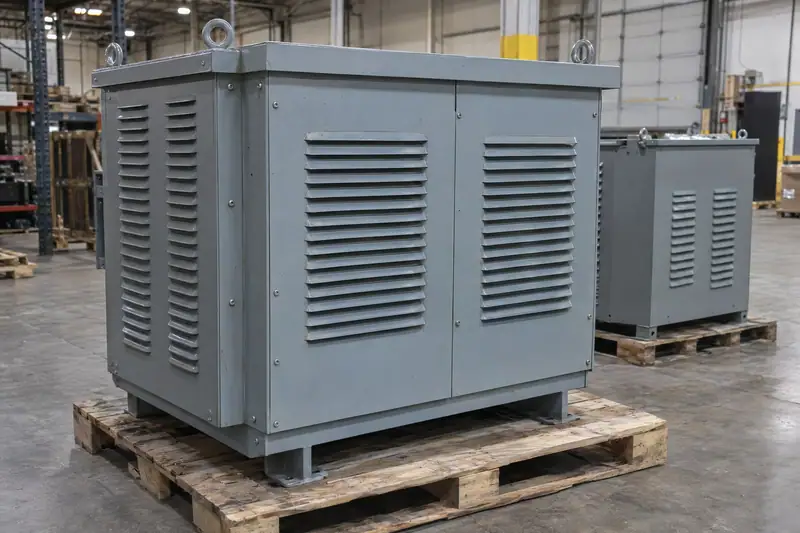
Acme Electric is a long-running maker of low-voltage dry-type, buck-boost, and drive isolation transformers. Its units are frequently found in electrical contractor overstock and distributor surplus. We buy unused inventory and used equipment throughout Virginia, with attention to the actual nameplate rating, winding configuration, and condition rather than the brand label alone.
An enclosed dry-type transformer left after a building upgrade is a different sale from a pallet of unused buck-boost units. Identify each model separately so the equipment description matches what is available. Our dry-type transformer buying page covers the broader category; this page focuses on details that matter when selling Acme equipment.
01Acme Transformer Types We Buy
We buy Acme general-purpose dry-type transformers within our size range, including units used to supply building loads at a different voltage. A three-phase nameplate might show a 480 V primary and a 208Y/120 V secondary. Those ratings describe a different application from a single-phase unit, even when the cabinets look similar.
We also buy qualifying buck-boost and drive isolation transformers. Buck-boost equipment requires particular attention to its connection diagram because the connected load capacity can differ from the transformer's winding kVA rating. For drive isolation units, send the rated kVA, input and output voltages, and any available application information. Do not identify the transformer only by the horsepower of the drive it served.
- General-purpose dry-type: document phase, kVA, primary voltage, secondary voltage, and taps.
- Buck-boost: include the nameplate and connection diagram, not just the load capacity stated in a listing.
- Drive isolation: include the transformer rating and any readable drive-duty markings.
- New surplus: photograph the unit label and packaging labels when available.
02Identify the Catalog Number, Serial Number, and Rating
A clear nameplate photo is the most useful starting point. Capture the Acme catalog or model number, serial number if present, kVA, phase, frequency, and primary and secondary voltages. Include any suffixes in the catalog number; an incomplete number can leave important configuration details unresolved.
Photograph the manufacture date or date code if one appears, but do not guess the year from cabinet appearance. If the date is not readable, say so. Our transformer nameplate guide explains the main fields. Additional photos should show the enclosure, terminal compartment, connection diagram, and labels without requiring anyone to approach energized parts.
- Keep voltage notation complete, including Y and neutral-related markings.
- Record tap positions or tap markings where visible.
- Include temperature rise, insulation class, and enclosure designation when listed.
- For multiple units, match each nameplate photo to its corresponding overall photo.
03What Matters for Used and New-Surplus Acme Units
We pay attention to whether an Acme transformer is unused, previously energized, removed from service, or failed. For new surplus, identify missing covers, loose components, damaged packaging, or storage exposure. Original packaging can help identify inventory, but the equipment nameplate remains the key reference for its electrical rating.
For used equipment, describe the reason for removal and any known problems. Water exposure, burned insulation, damaged terminals, and missing enclosure panels are important disclosures. Existing test records can add useful information, but photos alone do not establish operating condition. Failed or damaged units are reviewed case by case; tell us what happened rather than describing an untested unit as working.
04Check Buck-Boost Ratings Before Listing Inventory
Buck-boost transformers are often connected as autotransformers to make a relatively small voltage adjustment. In that arrangement, the connected load kVA can exceed the transformer's two-winding nameplate kVA because only part of the power is transformed. That does not mean the unit has the same rating as a general-purpose isolation transformer carrying the full load.
Our buying range starts at 10 kVA for single-phase transformers and 15 kVA for three-phase transformers. Send the actual transformer rating and connection information rather than treating an advertised connected-load capacity as the nameplate rating. For larger single-phase inventory, our 25 kVA single-phase transformer page provides another rating-specific reference. List each unit's rating separately when several are wired together.
05Virginia Contractor Overstock and Distributor Surplus
Acme units are frequently found in contractor overstock and distributor surplus, where one lot may contain several catalog numbers and voltage combinations. We buy qualifying inventory from sellers across every region of Virginia. Separate unused stock from previously installed equipment, and identify quantities by model rather than sending only a total pallet count.
Other potential sources include transformers left after commercial renovations, manufacturing equipment changes, and drive-system replacements. Note whether a unit is still installed, sitting on a warehouse floor, or already palletized. For mixed-brand inventory, our transformer brands page helps organize the equipment descriptions; brand names describe the units, not manufacturer relationships.
06Prepare Your Acme Equipment for a Buying Review
To sell Acme Electric transformer inventory, send clear nameplate and overall photos, location, quantity, and condition notes through our equipment offer form. We review the details and may ask about test data, PCB documentation where applicable, or site access. If the equipment fits, we send a written offer specifying price, freight, loading, and payment terms, then schedule pickup with you; payment follows those terms. See how the buying process works for details.
We do not perform electrical disconnect work. Use your own qualified electrician to de-energize and disconnect installed equipment. Virginia Transformer Buyers is an independent buyer, not affiliated with Acme Electric or any other manufacturer, including Virginia Transformer Corp of Roanoke.
Frequently asked questions
Do you buy used Acme transformers without the original box?
Yes, we buy qualifying used Acme transformers without original packaging. Send readable nameplate photos and show the enclosure, terminals, and any missing parts. Explain whether the unit was operating before removal and disclose known damage. Packaging is useful for identifying surplus stock, but it does not replace the equipment label or condition information.
Can I sell small Acme buck-boost transformers as a lot?
Lot quantity does not change our stated size range: single-phase transformers start at 10 kVA and three-phase transformers at 15 kVA. Provide each buck-boost unit's actual nameplate rating, not just its connected-load capacity. A group of smaller units should not be listed as one larger transformer simply by adding their ratings together.
What if my Acme transformer's serial number or year is unreadable?
Send the readable fields and explain that the serial number or year is unavailable. The catalog number, kVA, phase, voltage ratings, and connection diagram can still provide useful identification. Photograph the label from several angles if that improves legibility, but do not invent a manufacture date or substitute a packaging code without identifying it as such.
Do you buy Acme drive isolation transformers removed with a motor drive?
Yes, we buy qualifying Acme drive isolation transformers removed from drive installations. Identify the transformer separately from the drive, including its own kVA, phase, and voltage ratings. State whether it was removed during an upgrade or after a failure, and include existing test information when available. Failed units receive case-by-case review.
How should I list several different Acme catalog numbers?
List each catalog number separately with its quantity, rating, and condition. Match photos to the list so unused stock is not confused with used equipment or a different voltage configuration. Our seller information page covers the broader equipment details, while a simple model-by-model inventory helps keep an Acme surplus lot clear.
Do I need PCB information for an Acme dry-type transformer?
Dry-type transformers do not use insulating liquid, but disclose any known contamination or unusual service history. If your equipment has insulating fluid, identify that clearly rather than assuming it is dry-type because of the brand. PCB status must be disclosed and documented where applicable. We do not ask sellers to drain fluid.