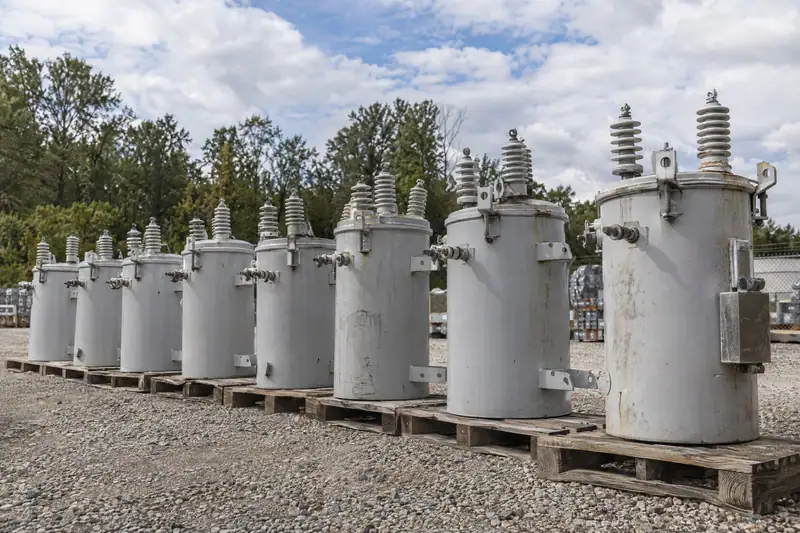
A 25 kVA single-phase transformer is a familiar size for individual residential services, small rural loads, lighting circuits and pumps. Equipment carrying that rating can look very different: an overhead oil-filled can, a ground-level cabinet or a ventilated dry-type enclosure. We buy all three forms, but we need to know exactly which unit you have.
If you want to sell 25 kVA single-phase transformer inventory, start with the electrical details rather than a description such as “small utility transformer.” A readable nameplate distinguishes a utility distribution unit from a building-service transformer. Our transformer size directory helps separate this rating from other equipment in a mixed surplus lot.
01What a 25 kVA Single-Phase Rating Means
The 25 kVA rating describes apparent power capacity, not physical size or a fixed amount of usable motor horsepower. Available real power depends on the load’s power factor. The rating also does not establish whether a particular pump can start successfully; motor starting current, voltage drop and other installation details matter.
For single-phase equipment, full-load current equals kVA × 1,000 ÷ winding voltage. At a 240-volt secondary, one worked example is 25 × 1,000 ÷ 240 = approximately 104.2 amps. Use the amp table on this page for other listed voltages, or see the kVA and full-load amps guide for the calculation method. That figure is not a recommendation for conductor or protective-device sizing.
02Pole-Mount, Pad-Mount and Dry-Type Units
We buy 25 kVA single-phase pole-mount transformers used for overhead distribution. These commonly have a cylindrical oil-filled tank, mounting brackets and external bushings. Clear photographs of the brackets, bushings, tank bottom and lid help show whether the unit has damage, corrosion or visible leakage.
We also buy single-phase pad-mount units and dry-type transformers at this rating. Pad-mount equipment has a ground-level enclosure with a connection compartment; dry-type equipment uses air rather than an insulating liquid around the windings. For cabinet units, photograph the exterior and any safely accessible identification labels. Do not open energized compartments to obtain photos.
- Pole-mount: show mounting hardware, bushings and any external tap-changer markings.
- Pad-mount: identify dead-front or live-front construction from available documentation.
- Dry-type: include enclosure condition, connection diagrams and manufacturer labels.
Full-load amps for a 25 kVA single-phase transformer
The amp table on this page uses the standard formula Amps = kVA × 1,000 ÷ volts. Match the voltage on your nameplate to read the rated full-load current of each winding.
| Winding voltage | Full-load amps |
|---|---|
| 120 V | 208 |
| 240 V | 104 |
| 480 V | 52.1 |
| 2,400 V | 10.4 |
| 7,200 V | 3.5 |
| 7,620 V | 3.3 |
| 7,970 V | 3.1 |
| 14,400 V | 1.7 |
| 19,920 V | 1.3 |
03Voltage Combinations Matter as Much as kVA
A utility-style 25 kVA unit may have a 7200-volt primary and a 120/240-volt secondary. A marking such as 12470GrdY/7200 describes a grounded-wye system designation and its phase-to-neutral voltage; it does not make a single-phase transformer three-phase. Other primary voltages occur, so send the complete marking instead of shortening it to “12 kV.”
A dry-type unit may be marked 480 volts primary and 120/240 volts secondary, while other winding combinations serve different applications. The connection diagram shows how terminals and any reconnectable windings are arranged. A center-tapped 120/240-volt secondary is not interchangeable with every transformer described simply as “240 volts,” and taps do not necessarily provide an entirely different nominal primary voltage.
04How to Confirm 25 kVA on the Nameplate
Look for a plate that explicitly states 25 kVA and single-phase, often abbreviated as “1 PH.” Read both winding voltages, frequency, manufacturer, serial number and any tap information. On oil-filled units, fluid identification and the listed fluid quantity can also help describe the equipment accurately.
A painted “25” on the tank is useful supporting information, but it is not a substitute for the nameplate. If the plate is faded, send a close photo taken straight on and another with light from an angle. Include separate labels for replacement fluid or service work. PCB status must be disclosed and documented; an unknown status should be reported as unknown, not assumed from the unit’s appearance.
- Capacity and phase: 25 kVA and single-phase designation.
- Electrical data: primary, secondary, frequency and tap positions.
- Identification: brand, model or catalog number, and serial number.
- Condition records: available test results, service notes and reason for retirement.
05Footprint, Weight and Access for a Smaller Unit
A 25 kVA transformer is smaller in electrical capacity than many commercial units, but that does not make it hand-portable. Tank construction, insulating fluid, enclosure style and accessories change its dimensions and weight. Use the nameplate weight or manufacturer documentation when available, and provide measured exterior dimensions if storage space or loading clearance is limited.
Tell us whether the transformer is on a pallet, mounted on a pole, bolted to a pad or inside a building. Mention stairs, narrow doorways, soft ground or restricted vehicle access. We do not perform electrical disconnect work; sellers use their own qualified electricians to de-energize and disconnect equipment. Do not drain fluid for a sale, and do not mistake mounting brackets for designated lifting points.
06What Makes a 25 kVA Unit Useful to Another Buyer
Demand for this size is tied to the application, not just the number on the tank. Common service voltages, intact bushings, readable identification and a clear operating history help identify potential reuse. A 25 kVA residential-service unit and a 25 kVA industrial dry-type unit serve different needs. A 50 kVA single-phase transformer has a different capacity and is not automatically a direct replacement.
To sell 25 kVA single-phase transformer equipment, send nameplate and overall photos, location, quantity and condition notes through our offer form. We review the information and may ask about PCB documentation, test data or access; if the equipment fits, we send a written offer covering price, freight, loading and payment terms. Pickup is scheduled with you, and payment follows those terms. See how the purchase works for details.
Frequently asked questions
Can I sell one used 25 kVA pole transformer?
Yes, Virginia Transformer Buyers buys individual used 25 kVA pole-mount transformers as well as quantities of units. Identify whether it is still mounted or already disconnected, and show the bushings, tank and nameplate. Its voltage configuration, condition and loading access are important even when only one transformer is available.
Does a 120/240-volt label mean my transformer is 25 kVA?
No, a 120/240-volt label identifies a voltage configuration, not the transformer’s capacity. Many different kVA ratings use that secondary voltage. Find the separate kVA field and phase designation on the nameplate. If the capacity field is unreadable, send the manufacturer, model number and photographs rather than estimating from the tank size.
Will you buy a 25 kVA transformer that failed in service?
Failed 25 kVA transformers are reviewed case by case. Describe what happened, including any known winding fault, overheating, cracked bushing or fluid leak, and provide available test or service records. Do not energize the unit to demonstrate its condition. PCB status must still be disclosed and documented for fluid-filled equipment.
Can I sell an unused 25 kVA transformer without its original crate?
Yes, we buy new-surplus 25 kVA transformers, and a missing original crate does not by itself rule out a purchase. Describe how the unit was stored and whether it was ever connected or energized. Photographs should show exposed terminals, bushings, enclosure damage and identification labels so its condition is clear.
Do you need the weight of my 25 kVA pad-mount transformer?
The listed weight is useful for planning freight and loading, but send the available information even if you cannot find it. Include exterior dimensions and photographs of the unit’s current location. Do not estimate lifting requirements solely from the 25 kVA rating, because fluid volume, enclosure construction and accessories affect total weight.
Can a 25 kVA dry-type transformer be sold with missing connection labels?
Missing connection labels do not automatically rule out a purchase, but they make accurate identification harder. Send the remaining nameplate, catalog number and available manufacturer documentation, and disclose the missing labels. Do not guess at winding connections or energize the transformer to identify them. We need a clear description of what is known.