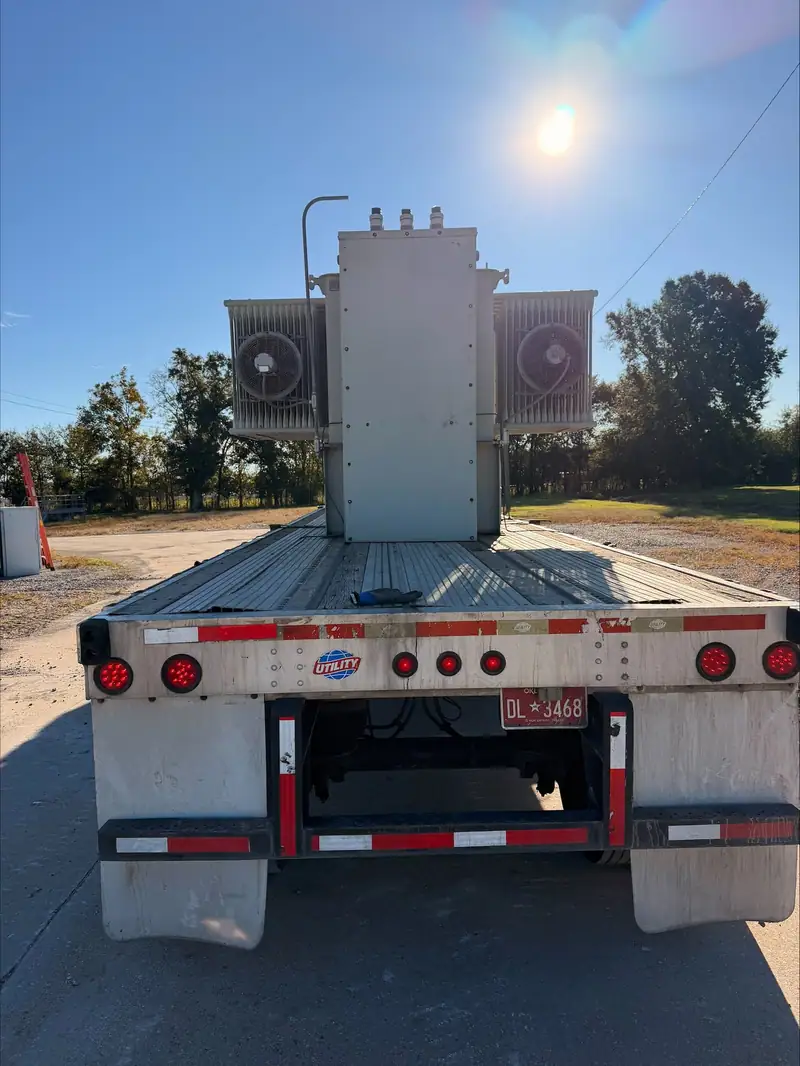
A 30 MVA or larger transformer is not simply a smaller substation unit scaled up. Its winding arrangement, insulation levels, cooling equipment and shipping configuration can determine where it fits next. We buy large three-phase transformers from sellers throughout Virginia, and review equipment in neighboring states and nationwide on request.
These units commonly serve transmission-connected substations, generator step-up installations and large campuses with substantial electrical loads. Our power transformer buying page covers the broader equipment category; this page focuses on the rating and practical details that matter at 30 MVA and above.
01What a 30 MVA or Larger Rating Means
MVA means megavolt-amperes, a measure of apparent power. A 30 MVA three-phase rating equals 30,000 kVA across all three phases, not 30 MVA per phase. It does not automatically mean 30 MW of usable real power: real power also depends on load power factor.
Large transformer nameplates often show multiple ratings tied to cooling stages. A plate marked 30/40/50 MVA with ONAN/ONAF/ONAF identifies separate capacities for natural cooling and successive forced-air stages. Include every listed rating rather than describing the unit only by its highest number. Whether its fans and controls remain available matters when describing its condition.
The transformer size directory helps distinguish rating categories. If a unit reaches 30 MVA only with forced cooling, say so clearly; the lower natural-cooling rating is still important to a buyer planning how the transformer will operate.
02Voltage Combinations and Applications at This Size
Transmission-connected transformers may have high-side ratings such as 69, 115, 138 or 230 kV, with lower-voltage windings serving subtransmission or distribution systems. Examples include 138 kV to 34.5 kV and 115 kV to 13.8 kV. These are examples, not a rule: the actual nameplate voltages and winding connections determine the unit's application.
Generator step-up transformers commonly connect a generator voltage, such as 13.8 or 18 kV, to a higher grid voltage. Large campuses and industrial sites may instead use a high-voltage supply stepped down to a medium-voltage distribution bus. A tertiary winding, grounded neutral or autotransformer construction adds details that should not be omitted from the description.
Use the amp table on this page to compare current at different voltages. For one worked example, three-phase full-load current is I = VA ÷ (√3 × line-to-line volts); a 30 MVA winding at 138 kV gives 30,000,000 ÷ (√3 × 138,000), approximately 125.5 amps. The kVA and full-load amps guide explains the relationship further.
Full-load amps for a 30 MVA and larger three-phase transformer
The amp table on this page uses the standard formula Amps = kVA × 1,000 ÷ (1.732 × line-to-line volts). Match the voltage on your nameplate to read the rated full-load current of each winding.
| Winding voltage | Full-load amps |
|---|---|
| 208 V | 83,272 |
| 240 V | 72,169 |
| 480 V | 36,084 |
| 600 V | 28,868 |
| 2,400 V | 7,217 |
| 4,160 V | 4,164 |
| 12,470 V | 1,389 |
| 13,200 V | 1,312 |
| 13,800 V | 1,255 |
| 23,000 V | 753 |
| 34,500 V | 502 |
03Confirm the Rating From the Complete Nameplate
Send a straight-on photo that makes the entire main nameplate readable. We pay attention to the manufacturer, serial number, manufacture date, three-phase MVA ratings, frequency, winding voltages and cooling classes. Photograph separate connection diagrams and tap-changer plates too, especially when the main plate refers to them.
Basic insulation level, impedance and winding connection are important alongside MVA. Two transformers with the same capacity and nominal voltage may have different system applications because of these characteristics. Include the listed tap range and identify whether the unit has a load tap changer or a de-energized tap changer.
Photograph the weight and fluid information wherever it appears. The plate may identify mineral oil or a natural ester such as FR3, but fluid identity does not establish PCB status. PCB status must be disclosed and documented. Available factory reports, maintenance records and recent test results help explain the equipment's actual condition.
04Dimensions, Weight and the Route Out of the Site
At this size, transport planning starts with the actual unit rather than a generic weight estimate. Tank design, voltage class, radiators, bushings and fluid volume can produce substantially different dimensions and weights at the same MVA rating. Nameplate total weight is useful, but it may differ from the documented shipping weight.
Send overall dimensions and any available outline or shipping drawings. Identify detached radiators, conservators, bushings, fans and control cabinets, and show where those components are stored. Missing accessories can affect whether a transformer can return to service and how a shipment must be organized.
Site photos should show the transformer foundation, nearby structures, gates and the route to the loading area. Note overhead obstructions and whether the equipment remains connected. We do not perform electrical disconnect work or ask sellers to drain fluid; sellers use their own qualified electricians to de-energize and disconnect.
05What Drives Buyer Fit for Large Power Transformers
Demand for large power transformers is application-specific. A buyer needs more than enough MVA: voltage ratio, frequency, impedance, insulation level, tap range and winding configuration must suit the intended installation. Generator step-up equipment can be particularly specific to the generating unit and grid connection.
We buy all brands, including used, new-surplus and decommissioned units. Age alone does not describe condition. Storage history, oil leaks, bushing condition, tap-changer maintenance and available test records provide more useful context than a statement that the transformer worked when removed.
If you want to sell 30 MVA and larger transformer equipment with a known fault, identify the fault directly. A protection trip, damaged bushing and internal winding failure are different situations. We review failed or damaged units case by case, using the disclosed condition and available supporting records.
06Information We Need for a Written Offer
Start with clear nameplate and overall photos, location, quantity and condition notes. For a large power transformer, also include available drawings, weight information, accessory inventory, documented PCB status and test data. Identify whether it is installed, disconnected, stored or already prepared for transport.
We review the information and may ask follow-up questions about equipment or site access. If the equipment fits, we send a written offer spelling out price, freight, loading and payment terms; pickup is scheduled with the seller, and payment follows those terms. See how the buying process works for details.
Send your equipment details through the transformer offer form. If you have several units, identify each by serial number and include separate photos so ratings, accessories and condition notes stay matched to the correct transformer.
Frequently asked questions
Does a 20/26.7/33.3 MVA transformer qualify as 30 MVA and larger?
Yes, its highest listed cooling-stage rating exceeds 30 MVA, but disclose all three ratings. Virginia Transformer Buyers needs to know which capacity applies under each cooling condition and whether the associated fans and controls are present. A unit in this range may also overlap the equipment discussed on our 20 MVA transformer page.
Can I sell a generator step-up transformer rated above 30 MVA?
Yes, we buy generator step-up transformers above 30 MVA. Send both winding voltages, MVA ratings, connection diagrams and condition records. Include neutral and tertiary details where applicable. The generator-side voltage and grid-side requirements make these units application-specific, so a complete nameplate is more useful than a capacity-only description.
Can I sell a large transformer without its radiators or bushings?
We review damaged or incomplete large transformers case by case. List every missing component and photograph any accessories stored separately. Include part identification or drawings if available. Missing radiators, bushings or controls can affect operating suitability and transport planning, so do not describe an incomplete transformer as a complete ready-to-install unit.
Should I drain the oil before selling a 30 MVA transformer?
No, we do not ask sellers to drain transformer fluid. Disclose the fluid type, available fluid records and documented PCB status, and explain any existing leaks. Transport configuration and handling requirements need to be addressed for the particular unit; do not drain or dismantle equipment simply to prepare an offer request.
Do you need recent test results for a large power transformer?
Send recent test results if you have them, but do not omit an equipment submission solely because records are unavailable. Identify what documentation exists and what is missing. Oil analysis, dissolved gas analysis, winding resistance and ratio test reports can provide useful condition information, particularly for a unit removed after a fault.
Is Virginia Transformer Buyers affiliated with Virginia Transformer Corp?
No, Virginia Transformer Buyers is an independent buyer and is not affiliated with Virginia Transformer Corp of Roanoke or any other manufacturer. We buy all brands of large power transformers. Manufacturer names identify the equipment being offered; they do not indicate a partnership, authorization or manufacturer affiliation.