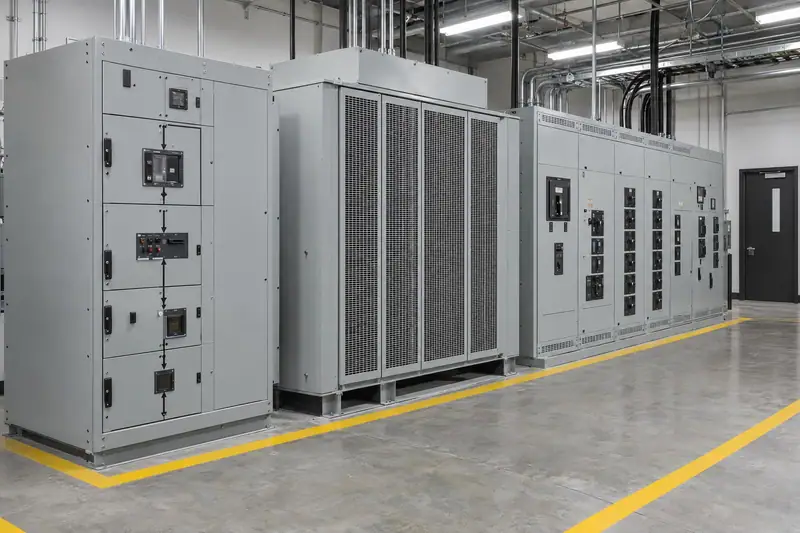
Niagara Transformer Corp. builds dry-type and liquid-filled transformers in the Buffalo, New York area. Niagara units are often custom-built for industrial and utility applications, so two transformers with the same kVA rating may have different voltages, connections, impedance, or physical arrangements. We pay attention to those differences when buying surplus equipment.
Virginia Transformer Buyers buys new-surplus, used, and decommissioned Niagara transformers from sellers throughout Virginia. We are an independent buyer, not affiliated with Niagara Transformer Corp. or any other manufacturer, including Virginia Transformer Corp. of Roanoke. Names on this page describe equipment only; our transformer brand directory covers other manufacturers.
01Niagara Equipment We Buy
We buy Niagara dry-type transformers, liquid-filled substation transformers, and custom power transformers. Our buying scope includes single-phase equipment from 10 kVA and three-phase equipment from 15 kVA through MVA-class power transformers. A unit does not need to be a standard catalog model, but its electrical and physical specifications need to be identifiable.
For dry-type transformer equipment, show the enclosure, coil assembly where safely visible, terminals, and nameplate. For liquid-filled equipment, show the tank, bushings, radiators, gauges, and external accessories. Include separate photos of loose components that belong to the transformer; an unattached radiator or control cabinet can be important to understanding completeness.
02Identify the Unit Beyond the Niagara Name
Start with a sharp photograph of the entire nameplate, not just the manufacturer logo. We need the serial number, kVA or MVA rating, phase, frequency, primary and secondary voltages, and manufacture year if listed. Record the exact voltage notation: 12470GrdY/7200 and 480Y/277 convey connection information that a shorthand description such as “12 kV to 480” leaves out.
On custom equipment, include the drawing number, connection diagram, impedance, tap range, and any additional rating plates. Cooling designations such as ONAN/ONAF may accompany different capacity ratings on a liquid-filled unit. Our transformer nameplate guide explains these fields. If a plate is unreadable, photograph the remaining markings and share available drawings rather than guessing.
- Photograph the serial number and year separately if glare obscures them.
- Include every listed capacity and its associated cooling designation.
- Show primary and secondary terminal labels and the connection diagram.
- Send overall dimensions and listed weight when available.
03Why Custom Electrical and Physical Details Matter
A Niagara transformer built for a particular industrial load or utility installation may not be interchangeable with another unit of equal capacity. We pay attention to voltage ratio, winding connections, impedance, tap provisions, and cooling arrangement. These details help explain the application the transformer was designed to serve without treating the brand name as a complete specification.
Physical configuration matters, too. Cable boxes, bus connections, throat dimensions, bushing locations, and accessory cabinets can affect how a unit fits another installation. For substation transformers, photograph each connection side and identify any attached switchgear separately. We buy transformers, but do not provide engineering advice about compatibility, protection settings, or suitability for a proposed replacement.
04Condition Details for Dry-Type and Liquid-Filled Units
For dry-type Niagara equipment, describe storage conditions, visible coil damage, contamination, and missing enclosure panels or terminal hardware. State whether the transformer was operating when removed and why it became surplus. Existing test reports can add useful context, but a visual description should not be presented as proof that insulation or windings are sound.
For oil-filled transformers, disclose leaks, damaged bushings, fluid type, and known fluid or insulation test results. Identify mineral oil or FR3 natural ester only when supported by labels or records. PCB status must be disclosed and documented. We do not ask sellers to drain fluid; missing radiators, damaged tanks, and known internal faults should be described before offer review.
05Virginia Sources of Surplus Niagara Transformers
Typical sources to look for include industrial plant upgrades, utility inventory changes, canceled projects, and facility decommissioning. A custom Niagara unit may become surplus when a production line changes, a dedicated load is retired, or a project specification is revised. Tell us whether the transformer is unused project stock, a stored spare, or equipment removed from service.
We serve sellers in every Virginia region, including Northern Virginia, Hampton Roads, Central Virginia, the Shenandoah Valley, and Southwest Virginia. Useful site details include whether the unit remains installed, sits outdoors on a pad, or is stored inside a building. Mention restricted access, doorway dimensions, and separate accessories. Ownership and removal authority should be clear before scheduling any pickup.
06Prepare Your Niagara Transformer for an Offer
To sell Niagara Transformer transformer equipment, send a clear nameplate photo, overall photos, location, quantity, and condition notes. We review the information and may ask about PCB documentation, test data, or site access. If the equipment fits, we send a written offer specifying price, freight, loading, and payment terms, then schedule pickup with you. Payment follows those terms; see how our buying process works.
Keep installed equipment safely out of reach while gathering information. Your qualified electricians must de-energize and disconnect the transformer; we do not perform electrical disconnect work or give engineering, legal, or environmental advice. Start with the records and photos you can safely obtain, then request an offer for your Niagara unit.
Frequently asked questions
Can I sell a custom Niagara transformer with unusual voltages?
Yes, we buy custom Niagara transformers with unusual voltage ratings. Send the complete primary and secondary ratings, connection diagram, impedance, tap information, and any original drawings. A custom voltage does not by itself rule out a purchase, but accurate specifications matter because an equal-kVA transformer may have very different electrical characteristics.
What if my Niagara transformer nameplate is missing?
Send the remaining markings and available records if the Niagara nameplate is missing. Serial-number references, purchase documents, drawings, and previous test reports may help identify the unit. Photograph all sides and any secondary plates. Do not estimate its kVA or voltage from cabinet size alone; missing identification can limit our ability to establish what equipment is being offered.
Do you buy Niagara transformers removed with their radiators?
Yes, we buy Niagara liquid-filled transformers with separately stored radiators. Tell us which components are detached and whether the original hardware, fans, and associated accessories remain available. Photograph the tank connections and loose components without opening the equipment. Disclose leaks, damage, and fluid status, and do not drain fluid for the sale.
Does an older Niagara transformer need PCB documentation?
PCB status must be disclosed and documented for the Niagara transformer you offer. Share available fluid records, applicable labels, and laboratory reports rather than assuming status from age or appearance. If documentation is missing, tell us that directly. We do not provide environmental advice; questions about required sampling or handling belong with qualified professionals.
Will you buy a Niagara transformer that failed in service?
Failed Niagara transformers receive case-by-case review. Describe the failure, known fault location, visible damage, fluid leaks, and any diagnostic findings already available. Include the nameplate and photos of the complete unit and affected areas. Do not energize it for a demonstration or attempt repairs just to obtain an offer.
Can I offer a Niagara transformer that is still connected?
Yes, you can submit information about a Niagara transformer that is still connected. Identify its current operating status and anticipated availability, and use existing records when a nameplate cannot be photographed safely. Your own qualified electricians must de-energize and disconnect the equipment. We do not perform that work, and site access and loading responsibilities belong in the written terms.