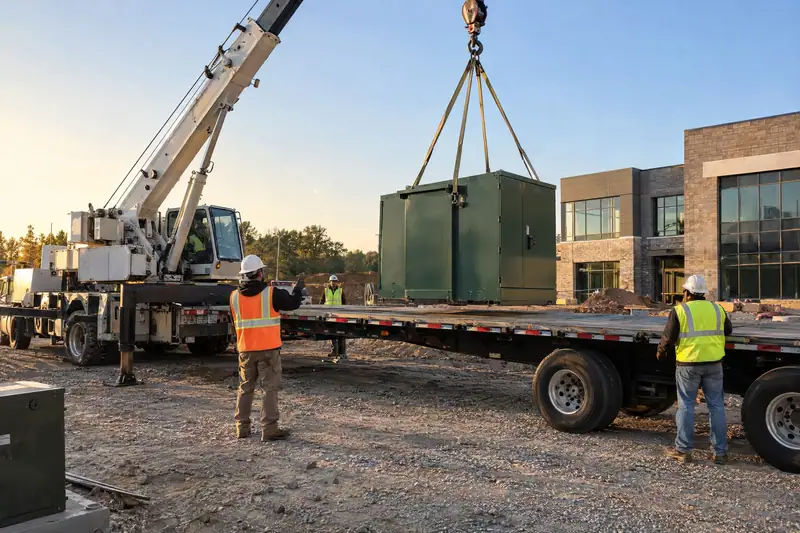
Knowing how to sell a transformer starts with identifying exactly what you have and explaining how it can leave the site. We buy surplus, used, new-surplus and decommissioned transformers across Virginia, with failed units reviewed case by case. Our transformer equipment overview covers the types we buy, from pole-mount units to MVA-class power transformers.
A useful submission does not require a polished equipment package. It needs readable identification, honest condition notes and a practical picture of site access. This page explains what to send, what our review covers and which details belong in writing before pickup. Timing depends on the information available, equipment condition and the arrangements needed at your site.
01The Six Steps From Identification to Payment
The sequence below shows how to sell a transformer without leaving important responsibilities unclear. Identification comes first; freight, loading and payment terms follow once we know what the equipment is and whether it fits. Do not arrange removal based only on an initial conversation.
Some submissions move forward with a few photos and straightforward access details. Others need additional records, clearer identification or coordination with the seller’s electrician. There is no guaranteed completion time. Missing information and unresolved loading arrangements can extend the process.
- 1. Gather a readable nameplate photo, overall unit photos and basic equipment details.
- 2. Send the package through our online form, by text or by email; call with questions.
- 3. Answer review questions about condition, PCB status, test records and site access.
- 4. Review the written offer, including price, freight, loading and payment terms.
- 5. Schedule pickup and confirm the equipment is ready for the agreed loading arrangement.
- 6. Complete the applicable paperwork and receive payment according to the written terms.
02Step 1: Photograph the Nameplate and the Whole Unit
Start with a straight-on nameplate photo that stays readable when enlarged. Capture the manufacturer, serial number, kVA or MVA rating, phase, frequency, primary and secondary voltages, and impedance if listed. Voltage markings such as 12470GrdY/7200 and 480Y/277 help identify the winding configuration. Use our transformer nameplate guide if a field is unfamiliar.
Take overall photos from several safe positions, plus close-ups of visible damage, bushings, cable compartments, gauges and fluid labels. For oil-filled equipment, include the cooling designation, such as ONAN/ONAF, where shown. For dry-type units, photograph the enclosure and accessible identification labels. Do not open energized compartments or approach exposed electrical parts to obtain photos.
- List the quantity and identify each unit separately if nameplates differ.
- Provide the city and state where the equipment is located.
- Describe whether each unit is connected, disconnected, stored or already removed.
- Include visible leaks, missing components, corrosion or known faults in the condition notes.
03Step 2: Send an Organized Equipment Submission
Send your photos and notes through the transformer offer form, text them to (951) 403-5738, or email Industrial832@gmail.com. You can also call that number to discuss the equipment. Keep the nameplate photo, location, quantity and condition notes together so we can connect the details to the correct unit.
For several transformers, label the photos by unit number or serial number rather than sending an unidentified group. Mention any removal deadline, but distinguish a preferred date from a firm site requirement. We serve sellers throughout Virginia and review equipment in neighboring states and nationwide on request. Include the actual equipment location, not just your mailing address.
04Step 3: Resolve Condition, PCB and Access Questions
We review the equipment details and may ask about operating history, known faults, available test data and missing accessories. Existing records can help explain condition, but do not describe a unit as tested unless you have supporting results. Failed or damaged transformers are reviewed case by case. Tell us what happened and whether any diagnosis or repair documentation exists.
PCB status must be disclosed and documented for fluid-filled equipment. Send available fluid test reports and identification records, and identify whether the unit contains mineral oil, FR3 natural ester or another documented fluid. Do not assume fluid type alone establishes PCB status. We also ask about stairs, gates, overhead restrictions, lifting access and whether the transformer remains connected.
- Match test reports and PCB documentation to the unit’s serial number when possible.
- Identify any uncertain condition or missing records rather than filling gaps with assumptions.
- Photograph the route from the equipment to the proposed loading area when it can be done safely.
05Step 4: Check Every Term in the Written Offer
If the equipment fits, we send a written offer spelling out price, freight, loading and payment terms. Read these together: an equipment price alone does not explain who arranges transportation or who supplies the loading resources. Confirm that the offer identifies the correct units and quantity, especially when a site has similar transformers with different ratings.
Ask questions before accepting if any responsibility or payment condition is unclear. Loading access, equipment condition and transportation requirements can affect the transaction, so the written terms should reflect the actual site. Our guide to what affects a used transformer’s value explains why nameplate details and condition matter; it is not a substitute for a written offer.
- Confirm which transformers and included components the offer covers.
- Check who is responsible for freight and loading.
- Read when payment is due and what conditions or documents apply.
- Resolve any difference between the written terms and your understanding before pickup.
06Step 5: Coordinate Pickup and Loading Readiness
Pickup is scheduled with the seller after the equipment and transaction details are agreed. Confirm the site contact, available access hours and the loading arrangement stated in the offer. Weight, dimensions and access matter: a transformer behind a narrow gate presents different loading requirements from a unit already staged in an accessible outdoor area.
We do not perform electrical disconnect work. Sellers use their own qualified electricians to de-energize and disconnect equipment before removal. Do not treat a pickup appointment as authorization to handle connected equipment. We do not ask sellers to drain fluid. Report changes in condition or access before the scheduled pickup so the arrangements can be revisited.
07Step 6: Complete Paperwork and Follow Payment Terms
Payment follows the written terms, not an assumed rule about payment at arrival or after loading. Keep the accepted offer available and confirm which documents are required for your transaction. Depending on the equipment and shipment, these may include a bill of lading, equipment identification records and PCB documentation. A bill of lading records shipment details; it does not replace the payment agreement.
Keep copies of the paperwork and make sure unit identifiers and quantities agree across the records. If something differs at pickup, raise it before treating the transaction as complete. For sellers learning how to sell a transformer, the practical safeguard is straightforward: document the equipment, disclose its condition and agree on responsibilities in writing. Review our seller guides for help preparing your equipment information.
Frequently asked questions
Can I submit a transformer if the nameplate is unreadable?
Yes, send the photos and information you have, and explain that the nameplate is unreadable. Include other identification labels, serial numbers and existing equipment records if available. Virginia Transformer Buyers may need additional information before making an offer. Do not guess at kVA, voltage or fluid type to complete the submission.
Does my transformer need to be disconnected before I request an offer?
No, you can request an offer while the transformer is still connected, provided you clearly disclose its status. Take photos only from safe, permitted positions. Before removal, your own qualified electrician must de-energize and disconnect the equipment. Virginia Transformer Buyers does not perform electrical disconnect work or direct electrical isolation procedures.
What if I do not have PCB documentation?
Tell us that PCB documentation is missing when you submit the equipment. PCB status must be disclosed and documented; do not label the transformer PCB-free based only on age, appearance or fluid type. We may ask for additional records during review. Virginia Transformer Buyers does not provide environmental advice or ask you to drain fluid.
Who provides the equipment needed to load the transformer?
Loading responsibility is established in the written offer. Do not assume that freight arrangements also include lifting equipment or site loading services. Send the transformer’s documented weight, dimensions and access details when available, then confirm who supplies the required loading resources before pickup is scheduled. Any unresolved responsibility should be settled in writing.
How long does it take to sell a transformer?
The time required depends on identification, condition review, documentation and pickup arrangements. Clear photos and complete records reduce avoidable follow-up, while missing PCB information or unresolved site access can extend the process. Virginia Transformer Buyers does not guarantee a completion date. Share your site deadline early so it can be discussed before agreeing to terms.
Will I be paid when the transformer is picked up?
Payment timing follows your written offer, so payment at pickup should not be assumed. Review the payment conditions before accepting and confirm any required shipment or equipment documentation. Keep the offer and applicable bill of lading together with your records. If the timing is unclear, ask for clarification before pickup is scheduled.