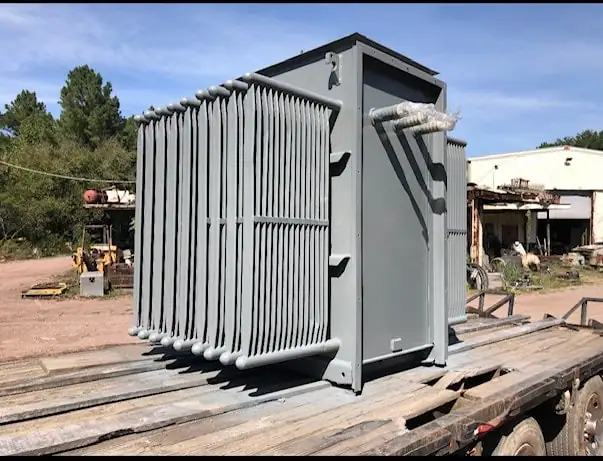
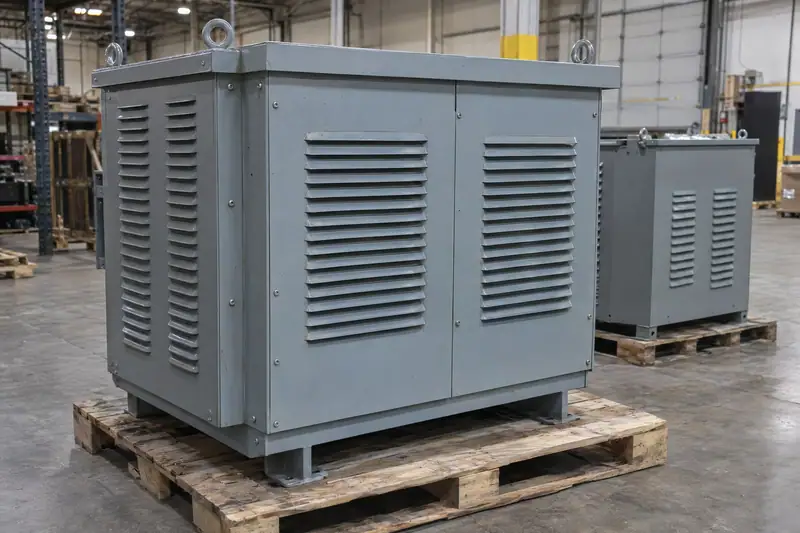
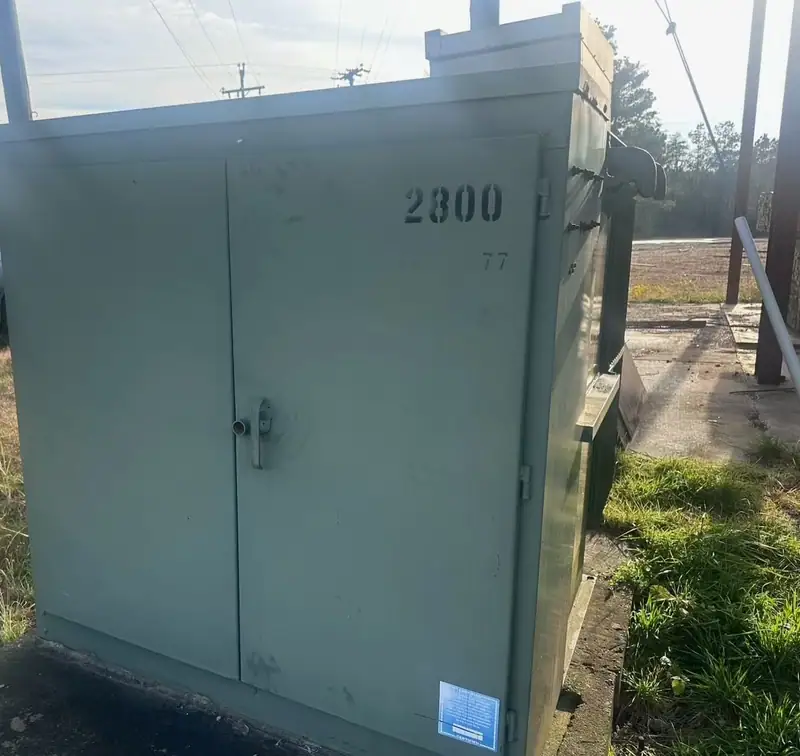
A transformer can have a readable nameplate and still leave important questions unanswered. Is the listed kVA the base cooling rating or a fan-assisted rating? Does the fluid label match the available records? Can the unit reach a loading area without crossing an occupied building? Our transformer selling guides help you separate equipment details from assumptions.
Use this hub as a reference rather than a checklist that must be completed perfectly. Start with the topic where your records are weakest, then gather what is available without opening or energizing equipment. If you need help identifying the construction type, review the transformer types we buy before choosing a guide.
01Choose a Guide Based on What You Already Know
For equipment still installed, begin with identification and site access. For a warehouse spare, focus first on storage history, completeness and nameplate information. For a failed transformer, the failure description and any existing test reports matter more than a general statement that the unit is no longer needed.
The goal is to build a useful equipment record, not collect every possible document. Organize photographs and files by unit so ratings, serial numbers and condition notes stay together. Owners handling multiple units can use the seller information overview to frame the sale around the equipment they actually control.
- Unknown ratings: start with nameplate photographs.
- Uncertain condition: gather service history and existing test results.
- Oil-filled equipment: locate fluid and PCB documentation.
- Difficult removal route: record access limits and loading constraints.
02Read the Nameplate Before Describing the Transformer
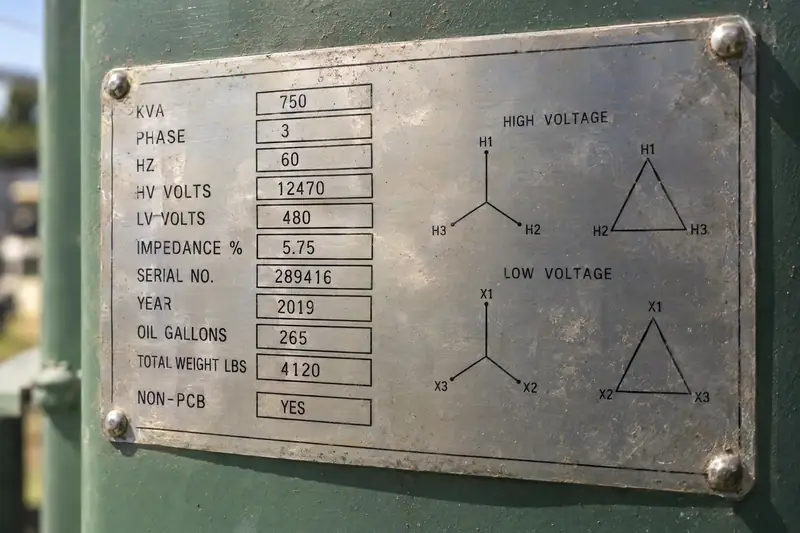
We pay attention to kVA, phase, frequency, primary and secondary voltage, serial number and impedance. A primary marked 12470GrdY/7200 and a secondary marked 480Y/277 provide more useful information than “medium-voltage transformer.” Photograph the full plate square-on, then take closer images if glare or small lettering hides individual fields.
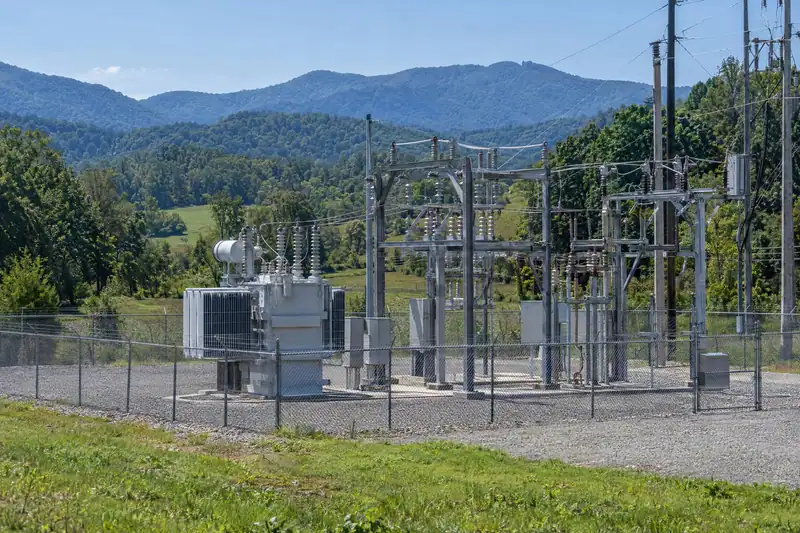
Cooling ratings also need context. ONAN identifies oil-natural, air-natural cooling; ONAF identifies oil-natural, air-forced cooling, and a plate may show different capacities for those operating arrangements. Record each rating rather than selecting the largest number. Our transformer size reference helps distinguish single-phase units from 10 kVA, three-phase units from 15 kVA and larger MVA-class equipment.
03Understand the Details That Drive Resale Value
Resale value depends on more than weight or original purchase cost. Voltage configuration, capacity, condition, completeness and the practicality of moving the unit all affect whether equipment fits a buyer’s needs. Missing bushings, damaged cabinets, removed accessories or uncertain storage history can change the review even when the nameplate ratings look suitable.
We buy all brands, including new-surplus, used and decommissioned equipment. Manufacturer names help identify equipment, but brand alone does not establish value; see our brand reference. Virginia Transformer Buyers is an independent buyer and is not affiliated with any manufacturer, including Virginia Transformer Corp of Roanoke. These transformer selling guides explain value drivers without promising a price.
04Keep Fluid Identity and PCB Documentation Separate
For oil-filled equipment, fluid identity and PCB status are related records, not interchangeable facts. A label identifying mineral oil or FR3 natural ester does not, by itself, document the present PCB status of the contents. Keep fluid labels, sampling reports and maintenance records associated with the correct serial number whenever possible.
PCB status must be disclosed and documented. If records are missing, say so rather than marking the unit “PCB-free” based on age, appearance or recollection. We do not give environmental or legal advice and do not ask sellers to drain fluid. Use your own qualified professionals for questions about sampling, handling or regulatory obligations.
05Use Existing Test Reports to Describe Condition
Existing test reports can clarify what visual inspection cannot. Depending on transformer construction, useful records may include turns-ratio measurements, winding resistance, insulation resistance, power-factor or dissipation-factor results, and oil analysis. Include the test date and equipment identifier; a report for a similar unit is not evidence for the transformer being sold.
A test result needs context, including the method, temperature where relevant and any stated acceptance criteria. IEEE C57 standards cover many transformer requirements and test practices, but mentioning a standard does not prove present condition. Do not energize equipment or commission tests solely on the assumption that a sale requires them. Failed or damaged units are reviewed case by case, using the available facts.
06Document Pickup Constraints Before Requesting an Offer
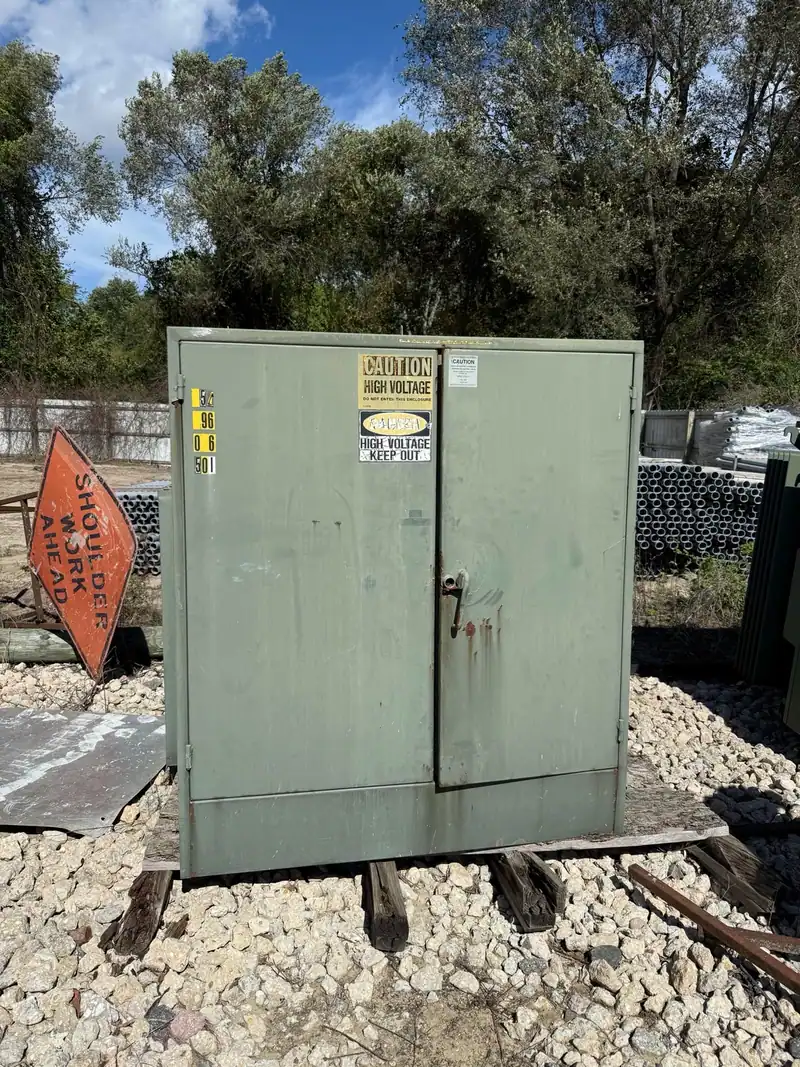
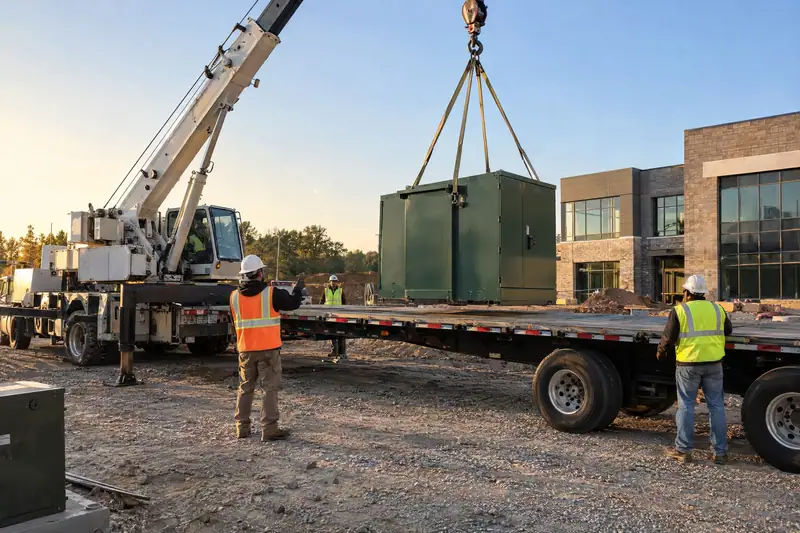
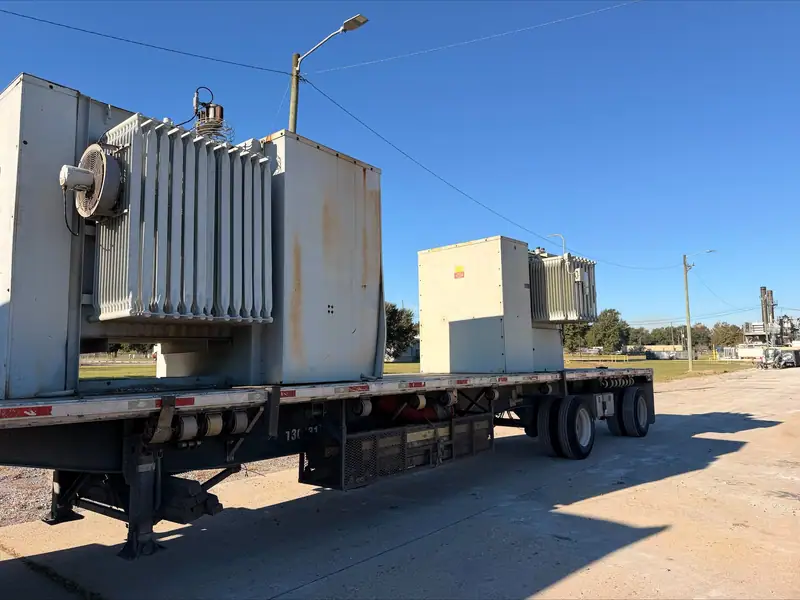
Pickup preparation starts with an accurate description of the site. Note whether the transformer is indoors, on a pad, behind a fence or stored with other equipment. Provide available dimensions and weight information, plus photographs of doors, gates and the route to the loading area. Distinguish a nameplate weight from an estimate.
Send clear nameplate and overall photos, location, quantity and condition notes through request an equipment offer. We review the information and may ask about PCB records, testing or access; if the equipment fits, our written offer states price, freight, loading and payment terms, and pickup is scheduled with you. See how the sale works for details. Your qualified electricians handle de-energizing and disconnecting; we do not perform that work.
Frequently asked questions
Which guide should I read if my transformer nameplate is unreadable?
Start with identification, using overall photographs and any equipment records you already have. Photograph remaining labels, cabinet markings and accessories without opening energized equipment. Old purchase documents or test reports may contain ratings and serial numbers. Keep uncertain information labeled as uncertain rather than assigning specifications from a similar-looking transformer.
Do I need a new test report before selling a used transformer?
Do not assume a new test report is required before submitting a used transformer. Share existing reports, service history and known condition first. Whether additional information is needed depends on the equipment and the questions left unresolved. A past passing test describes results at that time, not a guarantee of current condition.
Can I list a transformer as PCB-free based on its manufacture date?
No, a manufacture date alone does not document a transformer’s current PCB status. PCB status must be disclosed and documented, with records tied to the equipment wherever possible. If you have only a date or an old label, identify that limitation clearly and consult your own qualified environmental professional about documentation questions.
How should I organize information for several surplus transformers?
Create a separate record for each transformer, using its serial number or a clearly assigned inventory identifier. Match nameplate photos, overall photos, condition notes and reports to that record. State quantities explicitly, and note differences between otherwise similar units, especially voltage, kVA, cooling ratings, missing parts and storage conditions.
What pickup details matter for a transformer inside a building?
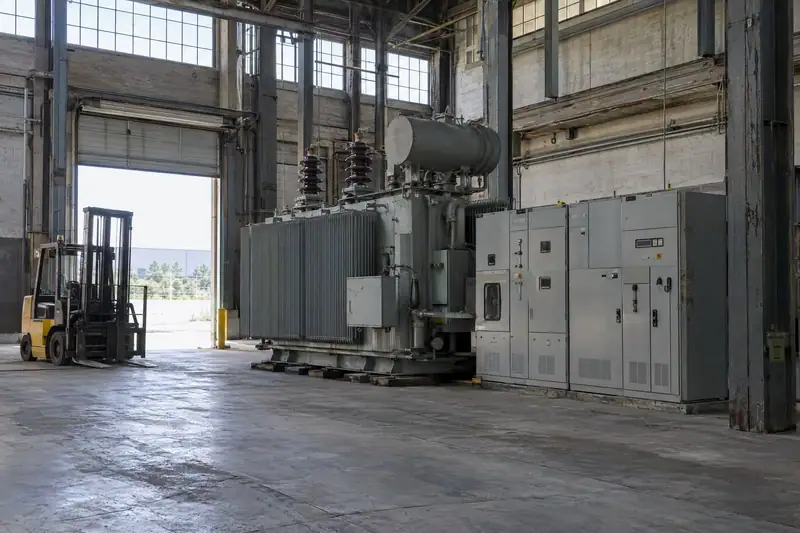
Door clearance, the route outside, access restrictions and available weight information are important for an indoor transformer. Photograph narrow passages and note stairs, changes in floor level or fixed obstructions. Do not assume the unit can exit intact. Your qualified electricians must handle de-energizing and disconnecting before pickup arrangements proceed.