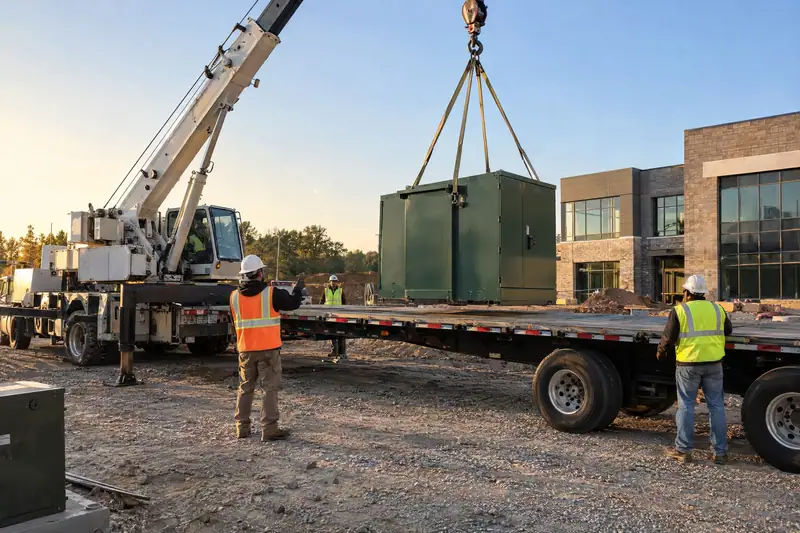
A transformer can be perfectly usable and still have no place on your next project. The service voltage changed, the owner supplied an extra unit, or a canceled job left a purchased transformer sitting beside your shop. We buy that equipment rather than asking you to keep carrying it as dead inventory.
Virginia Transformer Buyers works with electrical contractors throughout Virginia, from a single leftover dry-type transformer to a yard containing several equipment types. Contractors are among the equipment sellers we work with. We buy all brands, with single-phase units starting at 10 kVA and three-phase units starting at 15 kVA, through MVA-class power transformers.
01Turn job leftovers into a defined sale
Change orders often leave equipment that no longer matches the approved design. A revised secondary voltage, a different service arrangement or an increased load can make the original transformer surplus before it is ever energized. Tell us whether it was installed, energized, stored or still in its original packaging.
Canceled jobs create a different problem: equipment has been purchased, but there is no project against which to use it. We buy new-surplus transformers as well as used units removed during upgrades. Do not assume a transformer needs to be obsolete or worn out before you can sell it.
Owner-furnished overages need a clear ownership check before a sale. Identify who owns the equipment and who is authorized to sell it, especially when the transformer remains at the customer's property. A purchase order, storage location or contractor label alone does not resolve that question.
02Wrong voltage for your job can still be useful equipment
When electrical contractors sell surplus transformers, the mismatch that stopped installation is important information, not a complete description of the unit. Send the actual primary and secondary ratings. A 12470GrdY/7200 primary and 480Y/277 secondary identify a different application from a 480-volt primary and 208Y/120 secondary.
For surplus pad-mount transformers, include photos showing the cabinet, compartments and visible connection arrangements without entering energized equipment. For dry-type units, show the enclosure, nameplate and any visible shipping damage. Include phase, kVA, frequency and tap information when available.
Larger power transformers need their full rating information, including cooling classes such as ONAN/ONAF and the associated kVA or MVA ratings. Do not describe a multi-rating unit using only its highest rating. Existing drawings and test reports can help explain what is actually on hand.
03Sell one leftover unit or organize a whole yard
We buy a single qualifying transformer as well as multi-unit inventories. You do not need a matching lot to start the conversation. A yard may contain pole-mount units, dry-type transformers, cast resin units and oil-filled equipment from unrelated projects.
For a mixed inventory, give each transformer a simple identifier and use it in the photos and inventory list. Marking units A, B and C prevents a nameplate from being paired with the wrong cabinet. Separate available equipment from units reserved for active jobs or owned by someone else.
Storage history matters for oil-filled transformers and dry-type equipment alike. Note outdoor storage, missing covers, visible leaks, corrosion or water exposure. For liquid-filled units, identify the fluid from available records, including mineral oil or FR3 natural ester; PCB status must be disclosed and documented.
- Unit identifier, quantity and exact storage location
- Nameplate photo paired with an overall photo
- Installed, disconnected, never energized or condition unknown
- Missing parts, damage and available test records
04Good photos reduce back-and-forth on a quote
A readable nameplate is more useful than a description such as “large three-phase transformer.” Photograph it straight on, with enough light to read the ratings, serial number and impedance. Add overall views that show the enclosure, base and condition rather than sending only a close-up of the manufacturer logo.
Photos help us review the equipment promptly, but they do not establish every operating or condition detail. Include existing test data if you have it, and say when operating condition is unknown. A job specification describes what was ordered; the nameplate identifies the transformer actually available.
Send photos, location, quantity and condition notes through the offer form. We review them and may ask about PCB documentation, test data or access. If the equipment fits, we send a written offer specifying price, freight, loading and payment terms; pickup is scheduled with you, and payment follows those terms. See how the sale works for details.
05Plan pickup around the work, not just the address
A transformer at an active jobsite may be accessible only during a particular phase of work. Tell us about gate hours, delivery restrictions, shared loading areas and dates when the site must be cleared. Pickup scheduling needs to account for those limits rather than treating every location as an open storage yard.
Identify whether the unit is still connected, bolted in place, inside a building or behind other equipment. We do not perform electrical disconnect work. Your qualified electricians must de-energize and disconnect the equipment; do not assume pickup includes that scope.
Loading responsibilities belong in the written offer. Share available lifting access, equipment weight if documented, and any obstacles before arrangements are finalized. Our transformer pickup preparation guide covers preparation details. We do not ask sellers to drain transformer fluid.
06Separate usable surplus from failed equipment
Unused does not automatically mean undamaged, and used does not automatically mean failed. Describe what you know: never energized, operating when removed, tripped in service or stored without a recent test. Specific condition notes are more useful than calling everything in the yard either “good” or “scrap.”
We buy failed transformers case by case. Disclose known faults, fire damage, leaks, missing components and any incident records available. Keep failed units clearly identified within a larger inventory so their condition is not confused with usable surplus.
Frequently asked questions
Can I sell a transformer ordered for a job that was canceled?
Yes, we buy new-surplus transformers left from canceled jobs. Send the nameplate and overall photos, and tell us whether the unit was ever installed or energized. Include storage conditions and any missing accessories or shipping damage. Confirm that you own the equipment or have authority to sell it.
Will you buy a transformer with the wrong voltage for my project?
Yes, we buy surplus transformers whose voltage ratings do not fit the seller's project. The actual nameplate ratings matter, not the voltage the job originally required. Include primary and secondary voltages, phase, kVA and tap information so we can identify the equipment accurately.
Can I sell only the unassigned transformers in my yard?
Yes, you can offer the unassigned transformers without offering equipment reserved for current jobs. Identify each available unit and keep its photos matched to its nameplate. Clearly distinguish customer-owned equipment and committed stock from the inventory you are authorized and ready to sell.
Can pickup wait until my electrician disconnects the transformer?
Pickup is scheduled with you, and the disconnect status should be disclosed before scheduling. Your qualified electricians handle de-energizing and electrical disconnection; we do not perform that work. Explain your job schedule and access restrictions so the written arrangements account for readiness, loading and site access.
Do you buy transformers removed after a fault?
We review failed transformers case by case, including units removed after a fault. Describe the event, known damage and any available test results rather than listing the unit as ordinary used equipment. For liquid-filled transformers, disclose leaks and provide documented PCB status as part of the equipment information.