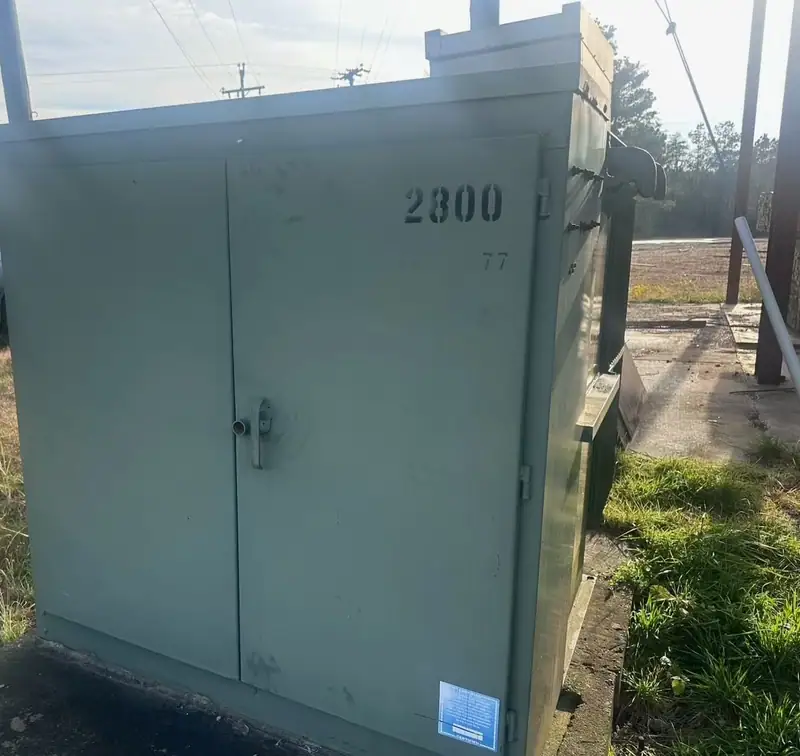
A Cooper Power Systems nameplate can appear on a utility pole transformer, a residential single-phase pad-mount or a three-phase unit serving an industrial facility. We buy these transformers, including new-surplus equipment and units retired during electrical upgrades. Send the actual ratings rather than relying on a project description such as “Cooper distribution transformer.”
Cooper Power Systems became part of Eaton when Eaton acquired Cooper Industries in 2012. Older Cooper markings and newer Eaton markings help identify the equipment, but neither replaces the nameplate specifications. Our Eaton transformer page covers equipment carrying that brand. Virginia Transformer Buyers is an independent buyer, not affiliated with Cooper, Eaton or any other manufacturer.
01Cooper transformer lines we buy
We buy Cooper three-phase pad-mount transformers used for commercial, industrial and utility distribution. On these units, the kVA rating, primary voltage, secondary voltage and connection arrangement establish what the transformer actually does. A 480Y/277 secondary is different from a 208Y/120 secondary, even when the cabinets look similar.
We also buy single-phase pad-mount transformers and pole-mount transformers, starting at 10 kVA. Three-phase purchases start at 15 kVA and extend through MVA-class equipment. For single-phase units, photograph both voltage ratings and any dual-voltage or reconnectable markings.
Cooper substation transformers need a different set of photos than a small distribution unit. Show the high- and low-voltage bushings, radiators, terminal arrangements and any attached compartments. For unit substations, identify which components belong to the transformer and which are separate switchgear or distribution equipment.
02Read the nameplate before identifying the model
A useful Cooper identification starts with a legible photo of the complete nameplate. Include the serial number, manufacturing year if shown, kVA, phase, frequency, primary and secondary voltages, impedance and tap information. If the year is not printed clearly, do not guess it from the paint color or cabinet style.
Voltage notation matters. For example, 12470GrdY/7200 identifies a grounded-wye system rating with a 7,200-volt phase-to-ground value; it should not be shortened to “7,200 volts” without the original context. Our transformer nameplate guide explains the fields worth capturing before sending photos.
On larger units, include cooling-class markings such as ONAN or ONAF and each associated kVA rating. Photograph fluid information, total weight and any separate accessory plates. If the nameplate references an IEEE C57 standard, include that line in the photo rather than treating the standard number as a model number.
- Capture the full serial number, including letters and suffixes.
- Show primary and secondary ratings exactly as printed.
- Include impedance, tap range and connection diagrams when present.
- Photograph fluid labels and any replacement or service plates.
03Why Cooper, McGraw-Edison and RTE labels overlap
Cooper acquired McGraw-Edison's power systems business in 1985 and RTE Corporation in 1988. As a result, Cooper, McGraw-Edison and RTE nameplates often share designs. A familiar cabinet layout can be a useful clue, but the nameplate is the reliable starting point for identifying the unit.
Do not relabel an older RTE or McGraw-Edison transformer as Cooper simply because it resembles another unit on the site. Send the manufacturer name exactly as marked, along with any catalog, style or serial identifiers. We buy all brands, so an older nameplate does not exclude the transformer.
For mixed inventories, keep each unit's photos tied to its own serial number. Similar-looking transformers can have different voltages, impedances or fluid types. Our transformer brands overview covers other manufacturer markings; brand names describe the equipment only and do not imply manufacturer affiliation.
04FR3 fluid, cabinet condition and connection details
Cooper popularized Envirotemp FR3 natural ester fluid in distribution transformers. If your unit carries an FR3 label, photograph it along with the nameplate. Natural ester and mineral oil are different insulating fluids, so “oil-filled” alone is not a complete fluid description. Do not assume fluid type from the Cooper brand.
For pad-mount transformer equipment, we pay attention to the cabinet, doors, bushings and connection configuration. State whether the unit is dead-front or live-front and whether the primary arrangement is loop feed or radial feed, if known. Photograph accessible compartments only when your qualified personnel confirm access is safe.
Describe visible leaks, corrosion, damaged bushings, missing elbows or arresters, and missing compartment parts. PCB status must be disclosed and documented; an FR3 label is not a substitute for that documentation. Do not drain the fluid. Existing fluid records and test reports help explain condition without changing the equipment before review.
05Typical Cooper transformer sources across Virginia
Virginia sellers may have Cooper transformers left from utility distribution changes, commercial service upgrades, industrial shutdowns or canceled construction projects. Single-phase pad-mount and pole-mount units can come from distribution inventories, while larger three-phase equipment can be associated with manufacturing sites, campuses and commercial properties.
We serve sellers in every Virginia region, including Northern Virginia, Richmond and Central Virginia, Hampton Roads, the Shenandoah Valley and Southwest Virginia. We also review neighboring-state and nationwide equipment on request. Location and access matter, especially when a transformer remains inside a fenced enclosure or beside operating electrical equipment.
New-surplus inventory and used equipment need different condition notes. For stored units, describe storage conditions, missing accessories and any handling damage. For retired equipment, state whether it was operating when removed and whether test records exist. For multiple units, provide a serial-number list instead of one description for the entire lot.
06Prepare your Cooper equipment for an offer
When you are ready to sell Cooper Power Systems transformer equipment, distinguish an operating takeout from a failed or damaged unit. We buy used and decommissioned transformers; failed units receive case-by-case review. Describe a known fault plainly, including fire damage, a cracked bushing, a winding failure or an unresolved leak.
Send photos, location, quantity and condition notes through Get an Offer. We review the information and may ask about PCB documentation, test data or site access; if the equipment fits, we send a written offer covering price, freight, loading and payment terms, then schedule pickup with you. See how the buying process works for details.
We do not perform electrical disconnect work. Your qualified electricians must de-energize and disconnect the equipment. Identify whether it is still connected, already removed or sitting in storage, and describe loading access without assuming freight or loading is included outside the written offer.
Frequently asked questions
Can I sell a Cooper transformer with an RTE or McGraw-Edison nameplate?
Yes, we buy transformers marked RTE or McGraw-Edison as well as Cooper. Cooper acquired those businesses, so related designs can appear under different names. Send the manufacturer marking exactly as shown and include the serial number, ratings and overall photos. Do not identify the unit by cabinet appearance alone.
Does an FR3 label change the information you need?
Yes, an FR3 label provides important fluid identification, but we still need the complete nameplate and condition details. Photograph the fluid label and disclose any known fluid replacement or service history. PCB status must also be disclosed and documented; natural ester labeling alone does not establish the equipment's complete fluid history.
Do you buy Cooper pad-mount transformers missing elbows or arresters?
We buy used Cooper pad-mount transformers, and missing accessories should be identified in the condition notes. Show which elbows, arresters, bushings or cabinet parts are absent rather than describing the unit as complete. Broken bushings or other damage require case-by-case review. Only qualified personnel should access electrical compartments.
Can I sell a Cooper substation transformer with two kVA ratings?
Yes, we buy Cooper substation transformers with multiple nameplate ratings. Send every rating and its associated cooling class, such as ONAN and ONAF. Include photos of radiators, fans and controls so the equipment shown can be matched to the nameplate. Note any missing or damaged cooling components.
Do you need the manufacturing year to buy an older Cooper transformer?
Send the manufacturing year if it is shown, but do not guess when it is missing or unreadable. The serial number, electrical ratings, fluid documentation and physical condition still provide important identification information. Photograph the entire plate and any separate service labels, particularly when the transformer has been repaired or modified.