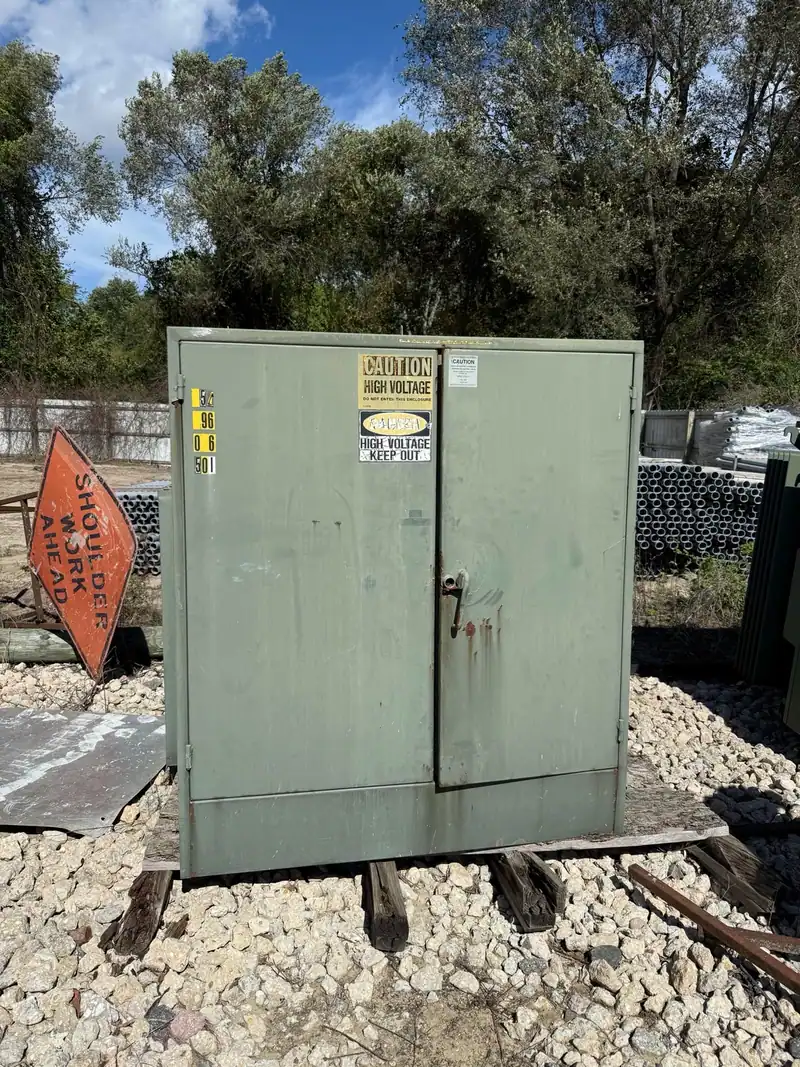
A 167 kVA single-phase transformer can serve a substantial individual load or operate as one unit in a three-transformer bank. This rating appears on utility-style pole-mounts and single-phase pad-mounts serving high-load residential properties, small commercial buildings and other distribution loads. The enclosure and connections help identify its application, but the nameplate establishes the electrical rating.
We buy this size as individual transformers and as part of a bank. If you want to sell 167 kVA single-phase transformer inventory, identify each unit rather than describing everything as one large transformer. Our transformer size guide helps distinguish individual nameplate ratings from the capacity assigned to an entire installation.
01What the 167 kVA Single-Phase Rating Means
The 167 kVA rating describes apparent-power capacity under the transformer’s stated operating conditions. It is not a weight, a voltage or a direct statement of usable kilowatts for every load. Real power in kW also depends on power factor, while actual loading limits depend on the nameplate and operating conditions.
For single-phase equipment, full-load current equals kVA × 1,000 ÷ winding voltage. At 240 volts, a worked example is 167 × 1,000 ÷ 240, or approximately 696 amps. Use the amp table on this page for other listed voltages; our kVA and full-load amps guide explains how winding voltage affects the calculation.
A 120/240-volt secondary needs particular care when interpreting current. The 240-volt calculation does not mean the full transformer rating can automatically be assigned to either 120-volt leg alone. Winding arrangement and load balance matter, so send the connection diagram rather than relying on a handwritten amperage label.
02Pad-Mounts, Pole-Mounts and Three-Transformer Banks
At this size, the physical form often tells us more about the intended installation than the rating alone. Single-phase pad-mount transformers use a ground-level enclosure with cable compartments. Photographs should show the cabinet, doors and exterior identification; interior photographs should only be supplied when your qualified personnel can obtain them safely.
A 167 kVA pole-mount typically has a tank with mounting hardware and external bushings. For pole-mount transformer equipment, show the mounting brackets, bushings and any visible leaks or damage. Do not climb a pole or approach energized terminals to take sale photos.
Three single-phase units can be connected as a three-phase bank when their ratings and connections support that arrangement. Tell us whether you have one unit, two remaining units or the complete bank. We pay attention to each transformer’s voltage, polarity and connection information, not just a site label calling the installation a roughly 500 kVA bank.
Full-load amps for a 167 kVA single-phase transformer
The amp table on this page uses the standard formula Amps = kVA × 1,000 ÷ volts. Match the voltage on your nameplate to read the rated full-load current of each winding.
| Winding voltage | Full-load amps |
|---|---|
| 120 V | 1,392 |
| 240 V | 696 |
| 480 V | 348 |
| 2,400 V | 69.6 |
| 7,200 V | 23.2 |
| 7,620 V | 21.9 |
| 7,970 V | 21 |
| 14,400 V | 11.6 |
| 19,920 V | 8.4 |
03Voltage Combinations Worth Checking
Distribution-style 167 kVA units may have a 120/240-volt secondary with a primary suited to the local utility system. A marking such as 12470GrdY/7200 identifies a grounded-wye system designation and its phase-to-neutral voltage. Do not shorten that nameplate entry to “12 kV” when requesting an offer.
Other units may have different primary voltage classes or secondary arrangements intended for banked service. A 240/480-volt secondary marking is not interchangeable with 120/240 volts. Likewise, a three-phase bank labeled 480Y/277 does not establish the individual transformer’s winding voltage without the connection details.
Photograph the complete voltage and tap information, including any dual-voltage markings. An external tap handle or selector does not prove the present electrical configuration. We use the documented rating and connection information; your qualified electrician should handle any verification requiring access to electrical components.
04Confirm 167 kVA on the Individual Nameplate
The clearest identification is a legible manufacturer nameplate showing 167 kVA and single-phase service, sometimes marked “1 PH.” A property inventory, utility asset number or enclosure stencil is useful supporting information, but it should not replace the original electrical data. Photograph the plate straight on and close enough to read the smaller fields.
We buy all brands, including equipment described on our ERMCO transformer page. Manufacturer names identify the equipment only; Virginia Transformer Buyers is an independent buyer and is not affiliated with any manufacturer, including Virginia Transformer Corp of Roanoke.
- Rated kVA, phase designation, manufacturer and serial number
- Primary and secondary voltages, taps and connection diagram
- Impedance, frequency and temperature-rise information where listed
- Cooling designation, such as ONAN, and fluid type where identified
- Total weight and fluid quantity, if shown on the plate
05Physical Size, Weight and Pickup Access
There is no single shipping weight or cabinet dimension for every 167 kVA transformer. Tank design, voltage class, fluid volume and enclosure construction change the physical size. A pole-mount tank and a pad-mount cabinet with the same kVA rating can require different handling arrangements.
Send nameplate weight, approximate exterior dimensions and photographs of the access route. Tell us whether the unit is on a pole, secured to a pad, stored indoors or already disconnected in a staging area. Gates, overhead obstructions, soft ground and restricted loading space can affect pickup planning.
We do not perform electrical disconnect work or ask sellers to drain fluid. Use your own qualified electricians to de-energize and disconnect the equipment. Disclose known leaks, damaged lifting points or loose components so the written freight and loading terms address the actual condition.
06What Affects Buyer Interest in This Size
The appeal of a 167 kVA unit is its fit for substantial single-phase loads and compatible bank applications. That does not make every unit equally marketable. We pay attention to usable voltage combinations, documented condition, complete bushings and cabinet components, and whether multiple units form a compatible set.
A removed working transformer, unused spare and failed unit need different condition descriptions. Existing test reports can help explain a used unit’s condition, but do not arrange testing solely on assumptions about what we require. Failed or damaged transformers are reviewed case by case, with the failure history and visible damage clearly disclosed.
Fluid information also matters. Tell us whether the plate identifies mineral oil or FR3 natural ester, and provide available supporting records. PCB status must be disclosed and documented; age, appearance or a seller’s assumption is not a substitute for that documentation.
07Send the Details Needed for a Written Offer
Send clear nameplate and overall photos, location, quantity and condition notes. We review the details and may ask about PCB documentation, existing test data or site access. If the equipment fits, we send a written offer specifying price, freight, loading and payment terms; pickup is scheduled with you, and payment follows those terms. See how our buying process works for details.
Ready to sell 167 kVA single-phase transformer equipment? Request an offer for your 167 kVA units and identify whether the submission covers a single pad-mount, a pole-mount or a complete bank. Include a separate readable nameplate photo for every unit.
Frequently asked questions
Can I sell just one 167 kVA transformer from a three-unit bank?
Yes, Virginia Transformer Buyers buys individual 167 kVA single-phase transformers as well as complete banks. Identify which unit remains and provide its own nameplate and condition details. A former bank’s total rating does not describe the individual unit’s voltage or connections, so include any available bank diagram as supporting information.
Is a bank of three 167 kVA transformers the same as one 500 kVA transformer?
No, three separate 167 kVA single-phase transformers are physically and electrically different from one three-phase transformer. A site may describe the bank as roughly 500 kVA, but each unit retains its own nameplate rating. Virginia Transformer Buyers needs the individual plates and bank connection information to identify the equipment accurately.
Will you buy a 167 kVA transformer with a 120/240-volt secondary?
Yes, Virginia Transformer Buyers buys 167 kVA single-phase transformers with 120/240-volt secondaries. Send the complete primary voltage, tap range and connection diagram along with the secondary marking. Those details distinguish units that look similar externally but were built for different distribution systems or operating configurations.
Can I sell a 167 kVA pole transformer that is still installed?
You can submit an installed 167 kVA pole transformer for review, but your qualified electricians must de-energize and disconnect it. Virginia Transformer Buyers does not perform disconnect work. State that it is still on the pole and describe access; do not climb or approach energized equipment to obtain photographs.
What if the nameplate says 166.7 kVA instead of 167 kVA?
Send the nameplate as marked; do not round or alter the rating in your documentation. Virginia Transformer Buyers buys single-phase transformers across this size range. The exact kVA entry, voltages and connection information are more useful than forcing the unit into a rounded inventory description.
Do you buy failed 167 kVA single-phase transformers?
Virginia Transformer Buyers reviews failed 167 kVA single-phase transformers case by case. Describe the failure, known leaks, bushing damage and any existing test results. PCB status must be disclosed and documented. Leave fluid in place and provide photographs obtainable safely, rather than opening or dismantling equipment for the submission.