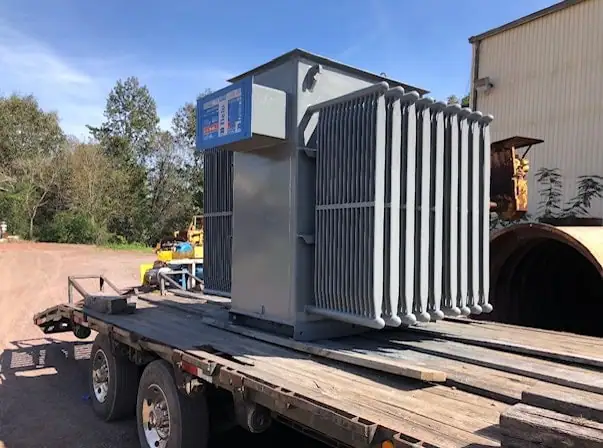
A Virginia Transformer Corp unit may become available after a plant upgrade, canceled project, utility change or replacement of a building’s electrical service. We buy new-surplus and used transformers across Virginia, including equipment still installed and units already removed from service. The manufacturer’s name helps identify the equipment, but the rating and condition tell us much more.
If you want to sell Virginia Transformer Corp transformer equipment, start with the actual unit rather than an old project description. A readable nameplate and current photos help distinguish one transformer from another, especially when a site has several similar units. Our transformer nameplate guide explains the fields that are useful for identifying equipment.
01Identify the Virginia Transformer Corp unit precisely
Look for the manufacturer’s name, serial number, year of manufacture and any model, catalog or drawing number on the nameplate. Record the rated kVA or MVA, phase, frequency, primary and secondary voltages, and winding connections. Send a straight-on photograph with enough resolution to read the smaller entries, not just the manufacturer’s logo.
Match each nameplate photo to an overall photograph of that same transformer. On a multi-unit site, label your photos by equipment tag or serial number so ratings do not get mixed together. A procurement record can provide context, but it should not replace the installed unit’s nameplate.
- Manufacturer, serial number and manufacture year
- kVA or MVA rating, phase and frequency
- Primary and secondary voltages and tap information
- Impedance, cooling class and temperature-rise entries
- Fluid type, fluid quantity and total weight where shown
- Site equipment tag and quantity of matching units
02Virginia Transformer Corp equipment we buy
We buy Virginia Transformer Corp three-phase pad-mount, substation, power and dry-type transformers. Our buying range includes three-phase equipment from 15 kVA through MVA-class power transformers, as well as single-phase units from 10 kVA. New-surplus, used and decommissioned equipment can fit; failed units require case-by-case review.
Identify the configuration as well as the rating. For three-phase pad-mount transformers, show the cabinet, connection compartments and available connection information. For substation transformers, show the transformer’s relationship to adjoining switchgear, bus connections or separate enclosures. Those details help describe what is actually included in the sale.
Power and dry-type configurations
For power transformers, photograph radiators, fans, bushings and attached control cabinets. For dry-type units, include the enclosure and any existing safe-access photos of the coil assembly. Do not open energized compartments to take pictures; visible exterior information is enough to begin.
03Ratings and accessories that matter beyond the brand
We pay attention to the complete voltage designation, not just a shorthand such as “12 kV to 480.” A nameplate entry such as 12470GrdY/7200 or 480Y/277 carries connection information that a rounded voltage does not. Include the winding diagram, tap positions and impedance when legible. These details help distinguish transformers that otherwise share a manufacturer and kVA rating.
Cooling information matters on larger liquid-filled units. ONAN and ONAF ratings identify different cooling arrangements, and a transformer may list more than one capacity associated with those arrangements. Photograph fans, radiators, gauges, control cabinets and tap-changing equipment. Tell us if any accessories have been removed, stored separately or replaced.
04Describe condition, storage and fluid status
“Used” can describe a working transformer retired during an upgrade or a unit removed after a fault. Tell us why it left service, whether it was operating at removal and how it has been stored. Useful photos show bushings, cabinet corrosion, damaged doors, missing covers, leaks and disconnected accessories. Include existing test reports if you have them, with dates and the matching serial number.
For liquid-filled equipment, identify the fluid from the nameplate or documentation. Mineral oil and FR3 natural ester are different insulating fluids; do not infer fluid type from appearance. PCB status must be disclosed and documented. We do not ask sellers to drain fluid, and missing records should be stated plainly rather than replaced with assumptions.
05Common Virginia sources and site details
Typical sources of surplus transformers include manufacturing plants, commercial properties, institutional facilities, electrical contractors and unbuilt projects. A plant may replace a transformer when production loads change; a contractor may hold new-surplus equipment after a project is canceled. These situations can produce very different condition histories, even when the units carry the same Virginia Transformer Corp nameplate.
We serve sellers in every region of Virginia and review equipment in neighboring states and nationwide on request. Describe whether the unit is indoors, outdoors, behind fencing or connected to adjoining equipment. Include available weight and dimension records, access restrictions and any loading limitations. Sellers use their own qualified electricians to de-energize and disconnect equipment; we do not perform electrical disconnect work.
06An independent buyer, not the Roanoke manufacturer
Virginia Transformer Corp is a transformer manufacturer headquartered in Roanoke, Virginia, founded in 1971. Its family of companies includes Georgia Transformer. Virginia Transformer Buyers is an independent equipment buyer and is not affiliated with Virginia Transformer Corp. Brand names on this page describe equipment, not a manufacturer relationship.
To sell Virginia Transformer Corp transformer equipment, send a clear nameplate photo, overall photos, location, quantity and condition notes through Get an Offer. We review the details and may ask about PCB status, test data or site access. If the equipment fits, our written offer specifies price, freight, loading and payment terms; pickup is scheduled with you and payment follows those terms. See how the buying process works for details.
Frequently asked questions
Are Virginia Transformer Buyers and Virginia Transformer Corp the same company?
No. Virginia Transformer Buyers is an independent equipment buyer and is not affiliated with Virginia Transformer Corp, the manufacturer headquartered in Roanoke. We use the manufacturer’s name only to describe transformers we buy. If you are comparing nameplates across a mixed equipment inventory, our transformer brands page provides another starting point.
Can I sell an older Virginia Transformer Corp transformer?
Yes, we buy older used and decommissioned Virginia Transformer Corp transformers. The manufacture year is useful identification information, but it does not describe present condition by itself. Include the serial number, ratings, service history and storage details. Note any leaks, bushing damage, missing accessories or known faults so the unit is described accurately.
Do you buy unused Virginia Transformer Corp units from canceled projects?
Yes, we buy new-surplus Virginia Transformer Corp transformers from canceled projects and other surplus inventories. Include the nameplate and current photos even if the unit has never been energized. Describe storage conditions, shipping damage and whether fans, radiators, controls or other supplied components are still with the transformer. Existing project documents can supplement that information.
What if my Virginia Transformer Corp transformer has multiple MVA ratings?
Send every listed rating along with the cooling-class entries and photos of the cooling equipment. A liquid-filled transformer can have different ratings for natural cooling and fan-assisted cooling, so one MVA figure may not describe the complete unit. Also identify missing or disconnected fans and radiators rather than assuming the highest nameplate rating tells the whole story.
Can I sell a failed Virginia Transformer Corp transformer?
Failed Virginia Transformer Corp transformers are reviewed case by case. Describe the failure, the removal circumstances and any known internal or external damage. Include available test reports, fluid information and photos of affected components. PCB status must be disclosed and documented. Do not drain fluid or open equipment solely to prepare it for a buying inquiry.
Is a Georgia Transformer nameplate enough to identify the unit?
A Georgia Transformer nameplate identifies the named manufacturer, but the full rating and serial information are still needed to identify the equipment precisely. Georgia Transformer is part of Virginia Transformer Corp’s family of companies. Photograph the nameplate as it appears rather than relabeling the unit, and include its voltages, capacity, year and condition.