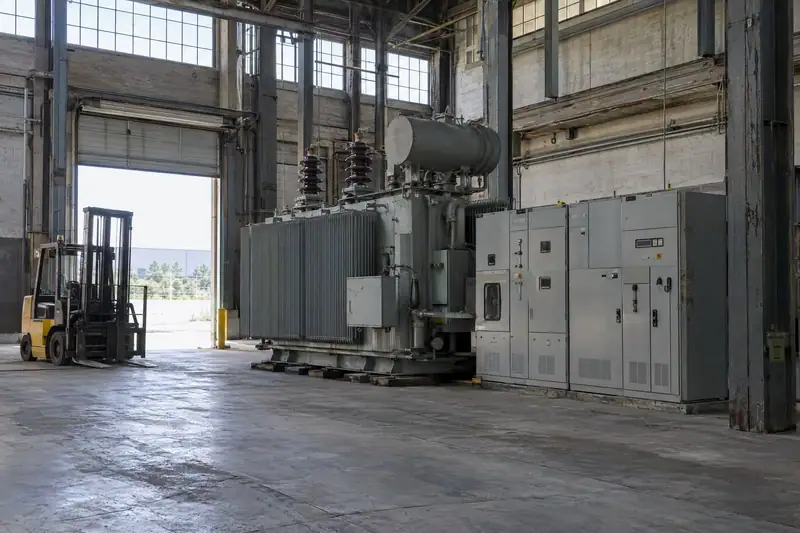
A plant closure can leave transformers scattered across outdoor substations, indoor electrical rooms and production areas. Virginia Transformer Buyers buys surplus equipment from manufacturers, plant managers, demolition and decommissioning contractors, and property owners. We buy all brands, including single-phase units from 10 kVA and three-phase units from 15 kVA through MVA-class equipment. Our transformer seller overview covers other seller situations.
When industrial plants and facility closures sell surplus transformers, equipment identification and removal sequencing matter as much as the inventory itself. A transformer behind an intact wall is a different loading problem from one already staged outdoors. Keep equipment identifiable while production lines, cable, busway and surrounding structures are being removed.
01Identify Transformers by Asset, Not Just by Room
We buy outdoor substation transformers, indoor unit substations, dry-type and cast resin units, pad-mounts and MVA-class power transformers. A facility inventory should separate each transformer from nearby switchgear, breakers and other electrical equipment. An electrical room label such as “main substation” rarely tells us enough about the transformer inside.
Photograph each nameplate straight on and match it to an asset number or location. We pay attention to manufacturer, serial number, kVA or MVA, primary and secondary voltage, phase, frequency and cooling class. For liquid-filled equipment, fluid type and listed weight also matter. ONAN/ONAF ratings can show more than one capacity on the same nameplate.
For larger power transformers, include photographs of bushings, radiators, control cabinets and any separate accessories. For indoor dry-types, show the enclosure and readable ratings without entering energized compartments. Keep the same identifier on photographs, spreadsheets and any detached components.
- Assign one inventory line to each transformer, even when several share an electrical room.
- Record whether the unit remains installed, is disconnected or is staged for loading.
- List missing parts, visible damage and available maintenance or test records.
- Separate transformer details from associated switchgear and unrelated scrap.
02Sequence Transformer Removal Before Demolition
Identify transformers before demolition removes access roads, overhead clearance or the building envelope. A demolition sequence that works for structural steel may not preserve a practical route for an intact transformer. Flag equipment intended for sale on the demolition drawings or asset list so it is not cut up with surrounding material.
Sellers must use their own qualified electricians to de-energize and disconnect equipment. We do not perform electrical disconnect work. An idle plant, open breaker or stopped production line does not by itself establish that a transformer is safe to handle; the seller’s qualified electrical personnel must manage the isolation work.
Keep the electrical shutdown date separate from the physical removal date. Identify which transformers still serve lighting, security, pumps or other remaining loads before releasing them for removal. The transformer decommissioning checklist can help organize equipment information and site coordination, but it does not replace the seller’s electrical safety procedures.
03Document Indoor Removal Constraints Early
Indoor transformers often sit in rooms built around them. Send photographs of doorways, corridors, loading docks and the route between the unit and the proposed loading location. Include measured clearances and the transformer’s dimensions when available. Enclosure dimensions and total shipping weight are more useful than an estimate based on kVA alone.
Describe basement locations, elevated floors, stairs, pits and restricted overhead access. Do not assume an existing floor, dock or lifting point can support removal loads. Have the appropriate qualified professionals determine lifting methods and structural limits; we do not provide engineering advice.
A unit substation may include a transformer connected to primary equipment and a secondary switchgear lineup. Identify the transformer section and show the connections between sections before dismantling. Preserve nameplates and document detached accessories. Any proposed disassembly or rigging plan should be handled by the seller’s qualified personnel and coordinated with the written loading terms.
04Keep Bundled Lots Clear and Traceable
We buy transformer lots from closures, consolidations and electrical upgrades. A mixed lot might contain working dry-types, spare pad-mounts, new-surplus replacements and a failed substation unit. Separate those conditions in the inventory rather than describing the entire lot as “used electrical equipment.” Failed or damaged units are reviewed case by case.
Include associated switchgear in the site inventory when it affects separation, access or loading, but do not assume it is included in our purchase. The written offer identifies the equipment being bought. Distinguish transformers from breakers, cable, bus duct, capacitors and other items assigned to different buyers or demolition packages.
Where an auctioneer or liquidator controls disposition, establish who can authorize the sale and release each asset. Our page for dealers, auctioneers and liquidators addresses that seller context. For plant closures, keep lot identifiers consistent so the sold transformer is not confused with equipment staying on site.
05Separate Condition Records From Assumptions
A transformer removed during an upgrade is not necessarily failed, and a unit left idle after a closure is not necessarily ready for service. Tell us why each unit came out of service and whether it operated until shutdown. Share existing test reports and maintenance records where available; do not describe an untested unit as tested.
For oil-filled transformers, disclose and document PCB status. Photograph fluid labels and provide available supporting records. Mineral oil and FR3 natural ester are different insulating fluids; identify what the records and labels actually show rather than assuming fluid type from the transformer’s age.
We do not ask sellers to drain fluid or provide environmental advice. Report leaks, fire exposure, damaged bushings, missing components or other known problems before removal arrangements are made. Preserve available records with the asset inventory, particularly when site personnel are leaving and maintenance files may otherwise become difficult to retrieve.
06Align the Sale With the Facility Closure Schedule
When industrial plants and facility closures sell surplus transformers, several parties may control different parts of the job. Name the contact responsible for equipment release, site access and loading coordination. Tell us about demolition milestones, gate restrictions and whether transformers can remain in place until the agreed pickup date.
Send clear nameplate and overall photos, location, quantity and condition notes. We review the information and may ask about PCB status, test data or access. If the equipment fits, we send a written offer specifying price, freight, loading and payment terms; pickup is scheduled with you, and payment follows those terms. See how the buying process works.
We serve sellers throughout Virginia and review equipment in neighboring states and nationwide on request. Request an offer for your plant equipment with the inventory and closure timeline, including any deadline for clearing electrical rooms or outdoor substations.
Frequently asked questions
Can I sell transformers before our plant is fully shut down?
Yes, you can submit transformers for purchase review before the plant is fully shut down. Identify which units are surplus and which still support remaining facility loads. Make the intended shutdown and release dates clear. Your qualified electricians must handle de-energizing and disconnection before equipment is released for physical removal.
Do you buy a unit substation with its attached switchgear?
We buy unit substation transformers, but attached switchgear should not be assumed to be part of the purchase. Send photographs showing the transformer section, adjoining equipment and connections. Identify each section separately in your inventory. The written offer defines the purchased equipment and the agreed freight and loading responsibilities.
What if the transformer cannot fit through the electrical room door?
Document the clearance problem before scheduling removal rather than assuming the transformer can be dismantled. Provide enclosure dimensions, available weight information and photographs of possible exit routes. The seller’s qualified professionals must determine any structural alterations, disassembly or lifting arrangements. We do not provide engineering advice or perform electrical disconnect work.
Can a demolition contractor sell transformers for the property owner?
A demolition contractor can submit equipment information, but authority to sell and release the transformers must be clear. Identify the owner and the party authorized to approve disposition. Also explain who controls site access and loading. Keep sale assets distinct from scrap and equipment covered by other demolition or liquidation agreements.
Will you review a closure lot containing failed and working transformers?
Yes, we buy working surplus transformers and review failed or damaged units case by case within a mixed lot. List each unit’s condition separately, including the reason for retirement and known damage. Provide individual nameplates and disclose and document PCB status for fluid-filled equipment rather than giving one general condition statement for the entire lot.