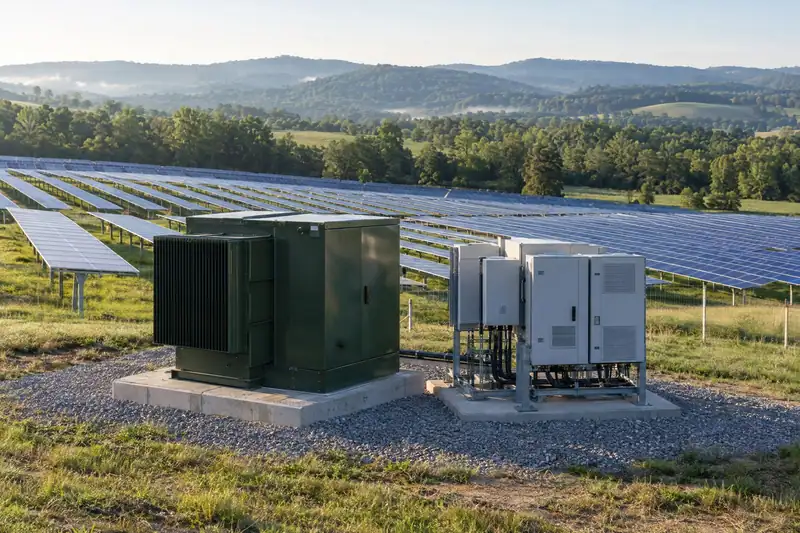
A transformer can become surplus before a renewable project reaches commercial operation. Interconnection changes, revised inverter selections, cancelled construction and spare-equipment decisions can leave usable units outside the final design. We buy transformers from solar, battery storage and wind projects, whether the equipment remains in storage or has been removed from service.
For solar, storage and wind developers, sell surplus transformers with the original application clearly identified. A solar inverter step-up unit, a bidirectional storage transformer and a wind collector transformer may share a voltage class but have different specifications. We work with developers, EPCs and asset owners among the sellers we buy from, including projects throughout Southside Virginia.
01Cancelled Projects, Spare Units and Repowering Removals
We buy unused transformers ordered for projects that changed scope or never entered construction. Equipment still on shipping bases, stored pad-mounts and unused substation units should be described accurately: delivered does not necessarily mean installed, and installed does not necessarily mean energized.
For new-surplus project transformers, purchase specifications, factory reports and storage records help explain what the equipment is and how it has been kept. Note missing accessories, opened compartments, shipping damage or outdoor storage rather than relying on the word “new.”
Repowering creates a different surplus stream. Higher-output inverters, revised collector designs or changed interconnection requirements can displace operating equipment. We buy used removals and project spares; identify operating history, removal dates and the reason each unit became available, especially when a lot mixes unused spares with retired equipment.
02Inverter-Duty Pad-Mounts for Solar and Battery Storage
We buy inverter-duty pad-mount transformers used between power conversion equipment and a medium-voltage collector system. Nameplates may show one or multiple low-voltage windings, project-specific winding connections and a medium-voltage rating such as 34,500 volts. Photograph every plate when ratings or winding details appear on separate labels.
Solar and battery storage units should not be treated as interchangeable solely because their kVA and voltages match. Storage systems can transfer power in both directions, while inverter applications may carry specific harmonic, grounding or duty requirements. Original specifications help establish the intended application without guessing from the enclosure.
We pay attention to bushing arrangements, compartment layout, taps, impedance and cooling ratings. Identify whether the fluid is mineral oil or a natural ester such as FR3, using the equipment records. For projects using cast resin transformers, include enclosure details and photographs of the windings and terminals.
0334.5 kV Collector Units and Wind Project Equipment
We buy 34.5 kV collector transformers from solar, storage and wind projects. State the exact nameplate voltage and winding connection, not just “35 kV class.” A grounded-wye designation and a delta designation communicate different information; the full rating matters when describing available equipment.
Wind equipment deserves a clear installation history. Tell us whether the transformer served an individual turbine, a collector circuit or the project substation. Pad-mount, dry-type and other configurations differ in enclosure, access and connection arrangements, even when the units came from the same wind project.
For multi-unit lots, use equipment IDs that tie photos and records to each transformer. Similar-looking collector units can have different impedance values, tap positions or accessories. A simple inventory prevents a spare from being confused with a failed removal and makes differences within the lot visible.
- Rated kVA or MVA, phase and frequency
- Complete high- and low-voltage ratings and winding connections
- Impedance, tap range and available cooling ratings
- Bushing or connector details and accessory condition
04Substation GSUs and Larger Renewable Project Transformers
We buy MVA-class power transformers and substation transformer equipment from renewable projects. Distinguish the main generator step-up transformer from collector pad-mounts and station-service equipment. A project inventory that calls everything a “GSU” can hide important differences in ratings and configuration.
For a large GSU, capture all cooling-stage ratings, including ONAN and ONAF where listed. Identify high-, low- and tertiary-winding ratings, load tap changer details, transport weight and installed accessories. Radiators, fans, bushings and control cabinets may be stored separately, so document what belongs to the unit.
For equipment removed during repowering, operating records and available test reports provide useful context. State whether protection operated, whether a fault involved the transformer and whether repairs were performed. We review failed or damaged units case by case; do not describe a faulted transformer as a routine serviceable removal.
05Documentation That Describes the Actual Equipment
The strongest equipment package connects the nameplate to the original specification and current condition. Include factory test reports, outline drawings, winding diagrams and accessory lists when available. If reports reference IEEE C57 standards, retain their original identifiers and dates rather than summarizing them as “passed testing.”
Disclose and document PCB status. For fluid-filled equipment, existing fluid records, maintenance reports and leak history help describe condition; we do not ask sellers to drain fluid. Separate factory test results from later field tests, and identify any work performed after the latest report.
Send clear nameplate and overall photos, location, quantity and condition notes. We review the equipment and may ask about PCB status, test data or site access. If it fits, our written offer spells out price, freight, loading and payment terms; pickup is scheduled with you, and payment follows those terms. See how the purchase process works.
06Southside Virginia Projects and Equipment Access
We buy renewable-project transformers throughout Southside Virginia and every other Virginia region. Equipment may be at a solar site, a project substation or a storage location. Identify the transformer’s current location rather than only the project headquarters or the address shown on purchasing documents.
Rural project access can differ substantially from warehouse access. Note gate restrictions, road conditions, overhead obstructions and whether equipment remains on a foundation. Large GSU descriptions should distinguish assembled dimensions from documented shipping dimensions; loading and freight responsibilities belong in the written offer.
We do not perform electrical disconnect work. Sellers use their own qualified electricians to de-energize and disconnect equipment, and we do not provide engineering, legal or environmental advice. If your project has surplus units available, request an equipment offer with the project-specific information above.
Frequently asked questions
Can I sell solar transformers from a cancelled project that were never energized?
Yes, we buy new-surplus solar transformers from cancelled projects, including units that were never energized. Describe whether each unit was delivered, installed or kept in storage, and identify missing accessories or damage. Original specifications and factory reports help distinguish unused equipment from equipment that simply has no recorded operating history.
Do you buy transformers used with battery energy storage systems?
Yes, we buy transformers used with battery energy storage systems. Identify the power conversion system application, winding ratings, connection arrangement and any original duty requirements. Do not assume a storage transformer matches a solar inverter transformer because the voltage ratings are similar; project specifications and winding diagrams help explain the differences.
Can I sell a mixed lot of 34.5 kV solar and wind collector transformers?
Yes, we buy mixed lots of solar and wind collector transformers. List each unit separately by equipment ID, serial number, kVA, voltages and condition. Identify unused spares, operating removals and failed units individually. Differences in winding connections, impedance or accessories should remain visible rather than being combined into one general lot description.
What records matter for a substation GSU removed during repowering?
Nameplate information, factory reports, available field tests and the reason for removal matter for a repowering GSU. Include cooling-stage ratings, winding diagrams, tap changer information and an accessory inventory. State whether the transformer experienced a fault or underwent repairs, and distinguish records taken before that event from records produced afterward.
Will you buy a failed inverter-duty transformer instead of scrapping it?
Failed inverter-duty transformers are reviewed case by case, not accepted automatically. Describe the failure, visible damage, fluid condition and available diagnostic records, and disclose and document PCB status. Keep the equipment’s condition clear when comparing selling versus scrapping a transformer; a failed unit needs a different description from a working project spare.
Do you buy renewable project transformers outside Virginia?
Yes, Virginia Transformer Buyers also reviews equipment in neighboring states and nationwide on request. Identify the equipment’s actual location, especially when a Virginia developer owns units stored at an out-of-state project or warehouse. Available site access, loading arrangements and equipment dimensions are relevant to the freight and loading terms of any written offer.